
MSP-PODCAST: Scaling Naturalistic Emotion Recognition through Smart Retrieval
Building Naturalistic Emotionally Balanced Speech Corpus by Retrieving Emotional Speech from Existing Podcast Recordings
The paper introduces the MSP-PODCAST corpus, a large-scale, naturalistic speech emotion database built by retrieving emotional segments from existing podcast recordings. It utilizes a machine learning-based retrieval framework combined with crowdsourced annotations to achieve a balanced emotional distribution across the arousal-valence space.
TL;DR
The MSP-PODCAST project addresses the "data scarcity" in affective computing by mining thousands of hours of unscripted podcast audio. By using machine learning to "search" for emotional needles in the neutral haystack of daily conversation, the authors created one of the largest and most balanced naturalistic emotional speech corpora to date.
Background: The "Acted" vs. "Spontaneous" Dilemma
Historically, speech emotion recognition (SER) researchers faced a trade-off:
- Acted Data (e.g., IEMOCAP): Balanced and clear, but "theatrical" and unrealistic.
- Spontaneous Data (e.g., Call Centers): Natural, but highly skewed (mostly neutral or purely negative) and difficult to scale due to privacy and cost.
The MSP-PODCAST corpus breaks this deadlock by leveraging the vast, publicly available world of podcasts under Creative Commons licenses.
The Core Innovation: Emotion Retrieval
Instead of annotating everything, the authors built a filter. They used existing datasets to train "Emotion Retrievers" based on three paradigms:
- Classification (BOC-DL): Categorizing segments into high/low arousal.
- Regression (SVR): Predicting a continuous score for emotional intensity.
- Preference Learning (GP-Rank): Ranking segments relative to one another.
This allowed them to specifically target "High Arousal" or "Negative Valence" samples from a pool of 84,125 segments, ensuring the final database wasn't just a sea of neutral "bored" talk.
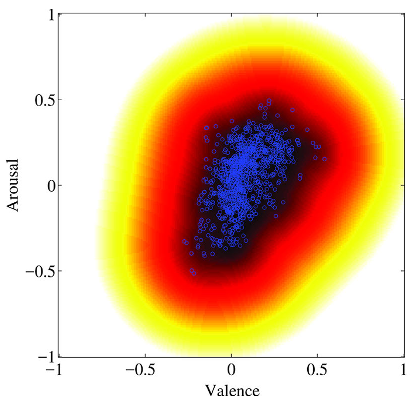 Figure 1: The automated pipeline from podcast download to quality-controlled crowdsourcing.
Methodology and Quality Control
The pipeline involves several rigorous stages:
- Diarization & VAD: Identifying single-speaker turns and removing noise/music.
- ML Retrieval: Using models like Gaussian Process Ranking (GP-Rank) to select the most "emotionally promising" segments.
- Crowdsourcing with Real-Time QC: Using Amazon Mechanical Turk (AMT) with a twist—the system inserts "gold standard" reference segments. If a worker's performance drops, the task stops immediately to prevent "garbage" data.
Experimental Results: Achieving Balance
The goal was a "balanced" distribution. While datasets like VAM are heavily biased toward negative valence (due to the nature of the TV talk shows they use), MSP-PODCAST shows a much broader spread across the Arousal-Valence space.
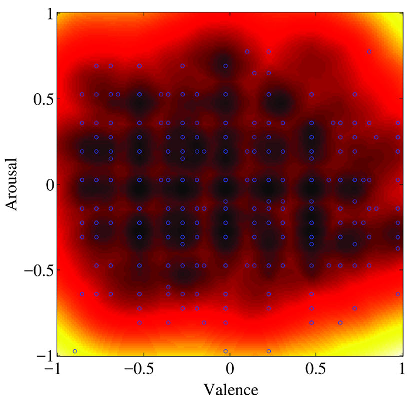 Figure 2: Distribution of existing corpora (top) vs. the target coverage. Notice how spontaneous sets like SEMAINE (c) and RECOLA (d) are clustered in neutral zones.
The study found that GP-Rank significantly outperformed simple classification in finding segments with distinct valence (positive vs. negative), proving that ranking is often better than labeling when dealing with the ambiguity of human emotion.
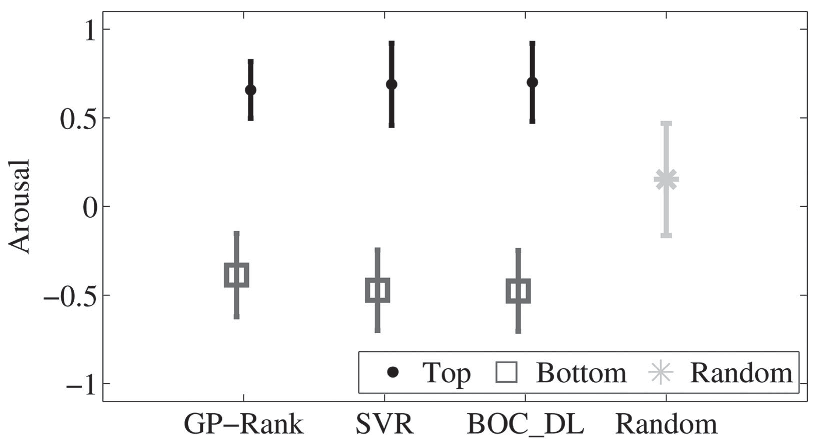 Figure 3: Histograms showing the effective separation of high/low emotional attributes using the proposed retrieval methods.
Deep Insight: Why This Matters
The true value of this paper isn't just a new dataset; it's a procedural blueprint.
- Inter-speaker Variability: By using 151+ speakers from different podcasts, the models become more robust to individual quirks.
- Scaling for Deep Learning: While most datasets are less than 10 hours, this method has already pushed MSP-PODCAST toward 30+ hours, finally providing enough fuel for complex Deep Neural Networks (DNNs).
Conclusion & Future Outlook
By shifting the focus from "how to record" to "how to find," the authors have provided a scalable path for emotion AI. The next frontier involves extending this to "Categorical Retrieval" (e.g., finding specifically "disgusted" or "fearful" speech) to further balance the categorical aspect of the corpus.
Key Limitation: The reliance on audio-only podcasts means facial expression data is missing, though the retrieval framework could theoretically be applied to YouTube or other video platforms in the future.