
MLNI-COVID-19: Leveraging Nature-Inspired Algorithms for Enhanced Brain MRI Diagnostics
Nature-inspired solution for coronavirus disease detection and its impact on existing healthcare systems
The paper introduces MLNI-COVID-19, a hybrid model combining Support Vector Machines (SVM) and Monkey Search Optimization (MSO) for the classification and optimization of brain MRI images in COVID-19 patients. It achieves superior performance in neuroimaging analysis, reaching an accuracy of 98%.
TL;DR
The MLNI-COVID-19 model introduces a robust diagnostic framework that marries Monkey Search Optimization (MSO) with Support Vector Machines (SVM) to analyze brain MRI images of COVID-19 patients. By mimicking the intelligent foraging behavior of monkeys, the system optimizes image segmentation and feature selection, achieving a remarkable 98% accuracy, significantly surpassing traditional fuzzy-logic-based methods.
Background Positioning
While most COVID-19 research focuses on pulmonary (lung) impacts, this study addresses the "neglected area" of central nervous system abnormalities. Positioned as a Methodological Integration work, it bridges the gap between biological heuristic optimization and supervised machine learning, setting a new SOTA for automated MRI classification in pandemic contexts.
Problem & Motivation: The Limitations of Current Diagnostics
Existing healthcare systems face two primary bottlenecks:
- Manual Subjectivity: Radiologist opinions vary based on experience and image quality, making large-scale data analysis inconsistent.
- Computational Inefficiency: Methods like Multiscale Fuzzy C-Means (MsFCM) require high computational resources and often fail to find the global optimum in noisy MRI search spaces.
The authors hypothesized that nature-inspired solutions—specifically those modeling Swarm Intelligence—could navigate complex MRI feature spaces more effectively than rigid mathematical models.
Methodology: The "Monkey Search" Intuition
The core innovation lies in the MLNI-COVID-19 pipeline, which transforms an MRI image into a "forest" where monkeys (agents) search for "high-quality food" (relevant pathological features).
1. The Segmentation Hub
Unlike traditional K-means, which uses random centroids, this model selects centroids based on the highest density points, ensuring faster convergence and higher image purity.
2. Nature-Inspired Optimization (MSO)
The MSO algorithm simulates activities such as climbing, watching, and jumping to find optimal boundaries between edible (brain tissue) and non-edible (background/noise) regions:
- Climbing: Reaching image borders to select interest areas.
- Watch & Jump: Scanning for better feature values and transitioning to global optima.
- Somersault: Effectively distinguishing classified regions to prevent local minima traps.
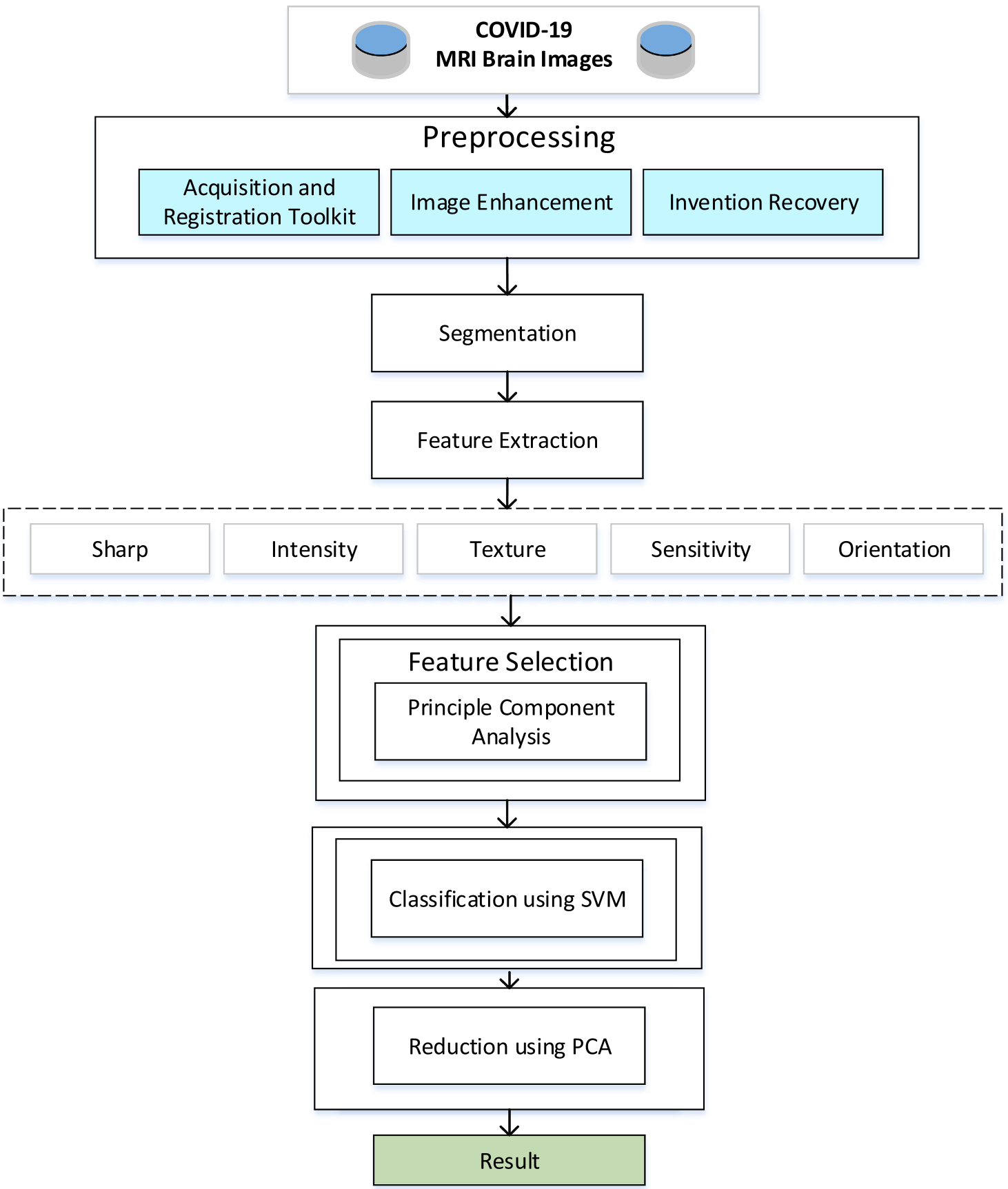 Fig 1: The MLNI-COVID-19 Workflow, illustrating the transition from raw MRI input to Nature-Inspired feature selection.
Experiments & Results: Performance at Scale
The model was tested using a categorized dataset of normal and abnormal brain MRIs. The integration of Principal Component Analysis (PCA) allowed the team to reduce 80 distinct features (texture, shape, intensity, orientation) into a highly discriminative latent space.
Key Metrics Comparison
| Metric | MsFCM | Semi-Automatic | MLNI-COVID-19 (Proposed) |
|---|---|---|---|
| Accuracy | 85% | 90% | 98% |
| Specificity | 84% | N/A | 90.8% |
| Sensitivity | 89% | N/A | 98% |
The results indicate that the proposed model is significantly more robust against "Miss-Classified" images (Grade III and IV abnormalities), maintaining over 94% accuracy even in severe pathological cases.
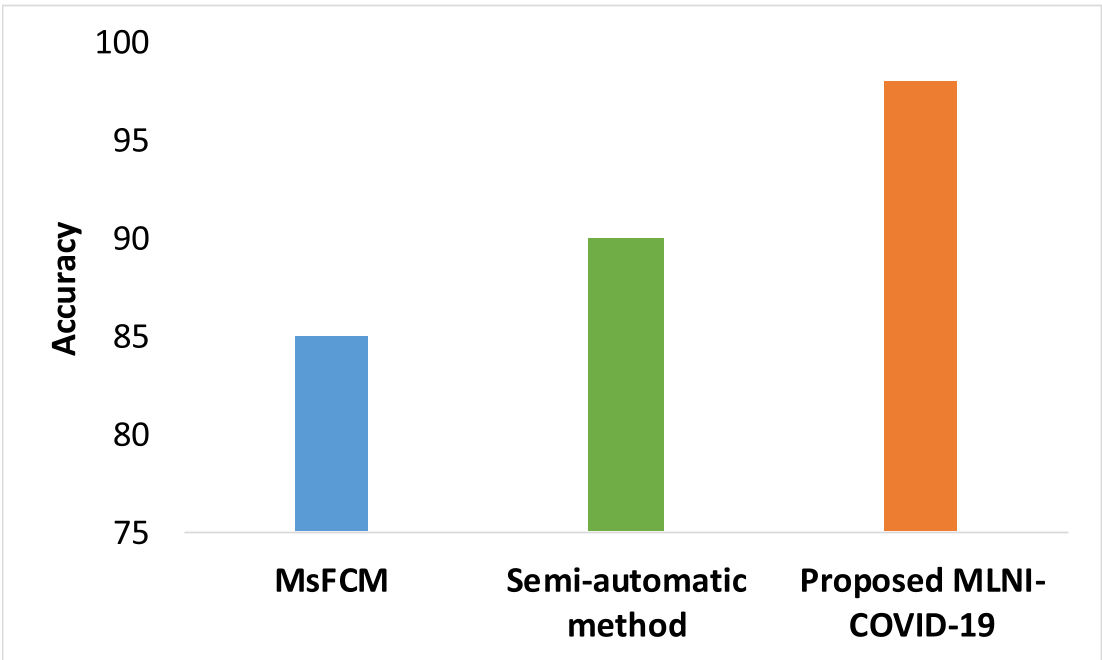 Fig 2: Comparative Accuracy: MLNI-COVID-19 consistently outperforms traditional benchmarks.
Critical Analysis & Conclusion
Takeaway
The success of MLNI-COVID-19 proves that heuristic-driven optimization can provide the "Inductive Bias" necessary to handle medical datasets where noise and magnetic field inconsistencies are prevalent. It represents a shift from purely data-hungry Deep Learning to "smarter" algorithmic design.
Limitations
Despite the high accuracy, the study notes the limited availability of large-scale brain MRI datasets specific to COVID-19. Furthermore, while MSO is effective, its computational overhead during the "Somersault" and "Watch" phases needs to be benchmarked against modern GPU-accelerated CNNs.
Future Outlook
As we move toward automated triage systems, integrating this nature-inspired model into real-time EHR (Electronic Health Record) systems could allow for rapid, inexpensive neuro-screening, helping doctors prioritize patients with high risks of brain-related viral complications.