Socially-Inspired Negotiation: Bridging the Gap Between AI and Human Group Decision-Making
An Approach for a Negotiation Model Inspired on Social Networks
This paper proposes a novel negotiation model for Ubiquitous Group Decision Support Systems (UbiGDSS) that leverages a social networking logic. It introduces a multi-agent framework where agents utilize Public and Private communication channels to simulate real-world meeting dynamics and enhance decision quality.
TL;DR
Researchers João Carneiro, Goreti Marreiros, and Paulo Novais propose a new negotiation model for Ubiquitous Group Decision Support Systems (UbiGDSS). By abandoning rigid, clinical "seller-buyer" logic in favor of a Social Network Logic, the model allows agents to interact via public "posts" and private "chats," fostering a more natural, persuasive, and higher-quality decision-making process that mirrors human face-to-face meetings.
Background: Why Decision Support Systems Often Fail
Despite decades of research into Group Decision Support Systems (GDSS), the business world remains hesitant to adopt them. The authors argue this is because current systems prioritize "optimizing" rounds or time, whereas human decision-makers prioritize the quality of the process. In a real meeting, a participant doesn't just want a result; they want to defend their convictions, hear arguments, and perhaps undergo a "change of heart" through social influence—nuances that current automated negotiation often ignores.
The Core Innovation: Social Network Logic
The paper’s landmark contribution is the shift from a pure "one-to-one" communication model to one inspired by platforms like Facebook®.
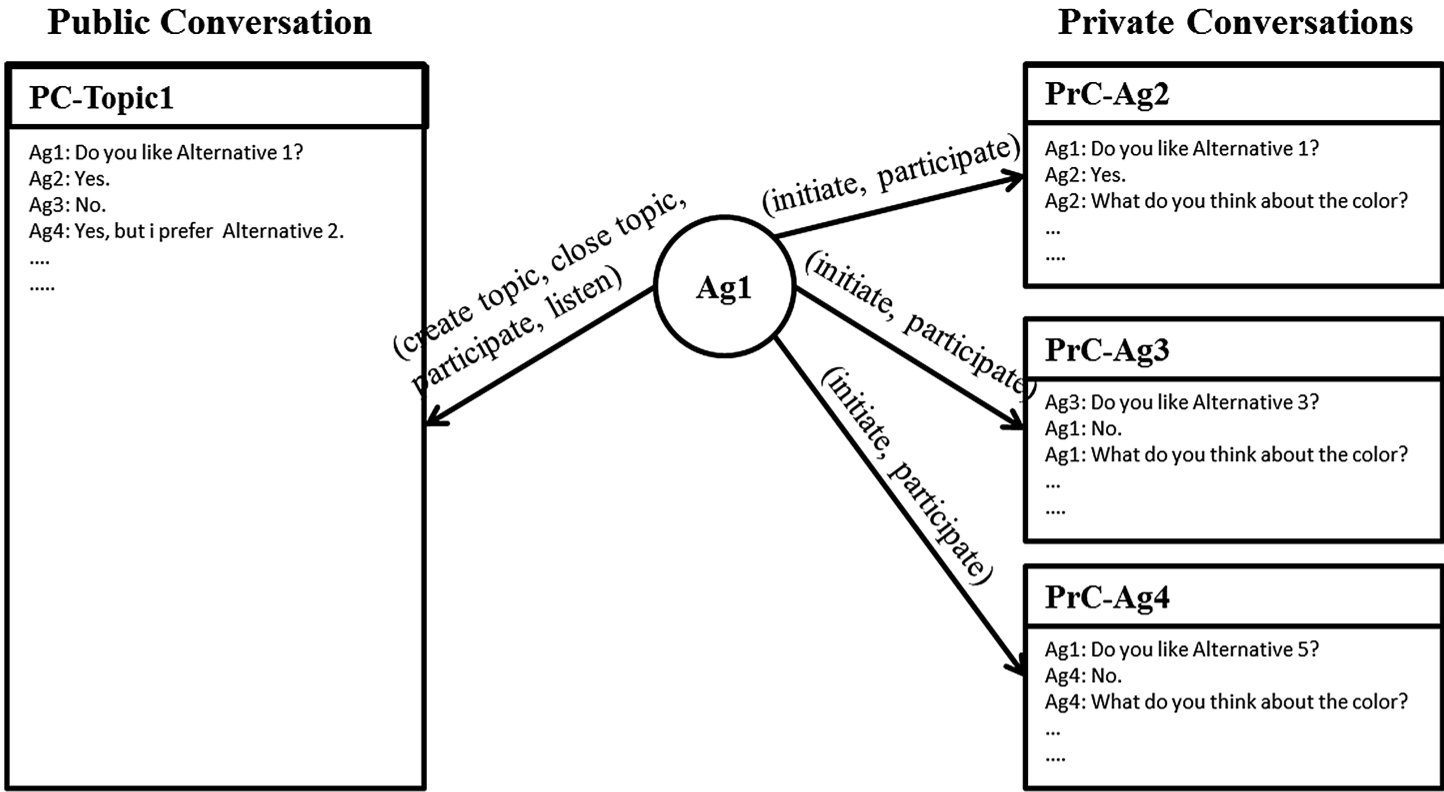
1. Public vs. Private Communication
The model identifies two distinct channels:
- Public Communication (PC): Similar to a group post. All agents can "hear" the message, allowing them to gather intelligence and gauge the group's "temperature" even if they aren't the direct recipient.
- Private Communication (PrC): Like a private chat. This allows for confidential persuasion or alliance-building, an advantage often missing in public-only face-to-face meetings.
2. Multi-Criteria Attribute System
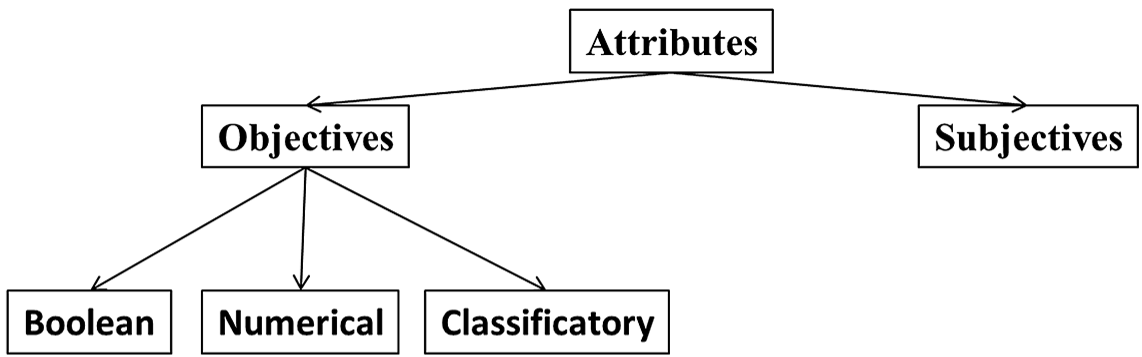
To make agents "intelligent" enough to argue, the authors categorize attributes into:
- Objective: Measurable/Scalable (Boolean, Numerical, or Classificatory). These are factual and "arguable" (e.g., "Car A has better fuel efficiency").
- Subjective: Intangible (e.g., Design, Color preference). The model acknowledges these as "non-arguable" personal tastes, preventing agents from wasting cycles on dead-end arguments.
Methodology: How Agents "Think"
The agents in this model aren't just calculating utilities; they are mapping social dynamics.
The Relational Graph
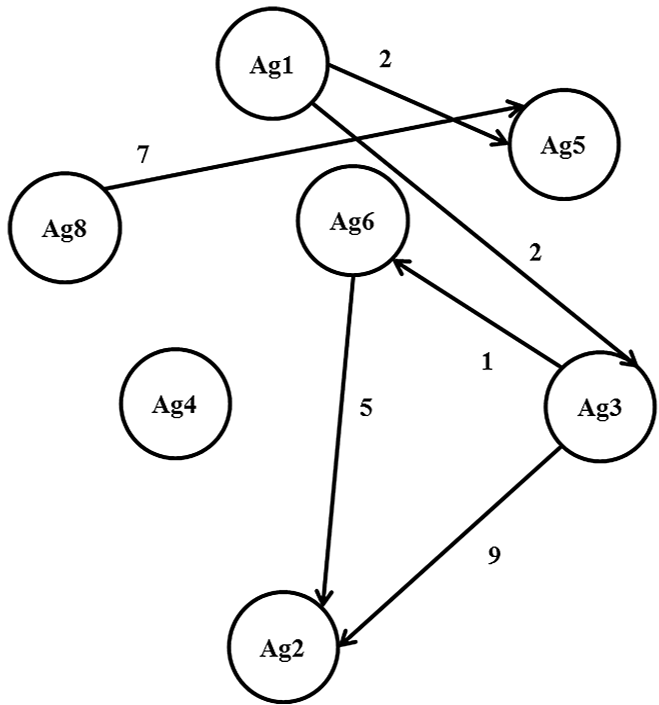
Whenever an agent reads a public message, it updates a directed weighted graph. If Agent A agrees with Agent B’s statement about "fuel consumption," a tie is created or strengthened. Through Social Network Analysis (SNA), an agent can:
- Identify "majority" opinions.
- Find potential allies to persuade.
- Understand the "why" behind another agent's preference.
Satisfaction Prediction
Crucially, agents predict not just the "best" outcome, but their level of satisfaction. This allows an agent to strategically "compromise"—dropping their #1 favorite for a slightly less-preferred option if they predict it will lead to higher group consensus and higher final satisfaction than a deadlock.
Critical Analysis & SOTA Positioning
This work represents a strategic pivot in GDSS literature. While most SOTA works focus on computational complexity (What), this paper focuses on social fidelity (Why).
Key Strengths:
- Transparency: By using a social logic, the system can generate "perception reports" that humans can actually understand, explaining why a certain car was chosen based on the shared arguments.
- Ubiquity: Designed for mobile/anywhere contexts where users can’t always be in the same room.
Limitations:
- Natural Language: The model currently relies on pre-defined attribute types rather than free-form natural language processing.
- Evaluation: As a theoretical framework, its true "business worth" awaits empirical validation in large-scale corporate trials.
Conclusion: A New Era of "Social" AI
The study reminds us that in group decision-making, the "process" is the product. By mimicking the way we interact on social media—listening, reacting, and forming hidden alliances—this model brings us one step closer to GDSS that executives might actually find comfortable to use.