
Beyond the Broadcast: Redefining Social Norms Interventions through Network Science
A Role for Network Science in Social Norms Intervention
This position paper proposes integrating Network Science with Social Norms Theory to enhance public health interventions. By modeling social norms as "complex contagions" within an information diffusion framework, the authors provide a computational basis for designing and evaluating behavioral change strategies in Online Social Networks (OSNs).
TL;DR
Why do public health campaigns—like those aimed at reducing binge drinking or spreading STI awareness—often fail when moved to social media? This paper argues that we are treating social behaviors like simple viruses (simple contagion) when they actually behave like "complex contagions" requiring social reinforcement. By bridging Social Norms Theory and Network Science, the authors propose a paradigm shift: treating interventions as dynamic "control" problems in a shifting network.
The Missing Link: Why Traditional Interventions Stagnate
Social Norms Theory is based on a simple premise: we do what we perceive our peers are doing. If you think everyone is binge drinking, you are more likely to drink. Interventions aim to correct these misperceptions.
However, the authors point out a critical flaw in current OSN (Online Social Network) interventions:
- Static Assumptions: They ignore that friendships and social links are constantly changing (Network Dynamics).
- Simple vs. Complex Contagion: Unlike a cold or a meme (simple contagion), changing a deep-seated behavior requires "social proof" from multiple sources.
- The "Trap" of OSNs: Without the incubation of tight-knit communities, new behaviors are quickly diluted by the "natural mixing" of the broader network.
Methodology: Social Norms as a Linear Threshold Model (LTM)
The paper conceptualizes social norms through the lens of the Linear Threshold Model. In this model, a node (person) switches to a new behavior only if a certain percentage () of their neighbors have already adopted it.
The Power of Community Structure
One of the paper's most profound insights is the role of Modularity.
- In simple contagions (like a virus), tight communities trap the spread.
- In complex contagions (behavior change), tight communities incubate the spread.
Because you need multiple exposures to change, a localized, dense cluster of friends can reinforce a new norm until it reaches a "tipping point" and can spread to the rest of the network.
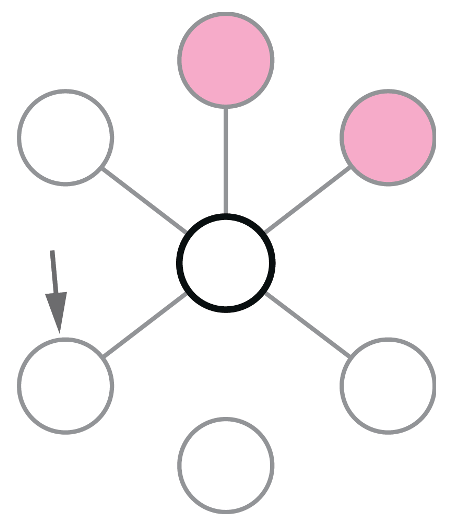 Figure 1: (b) demonstrates state change via social influence, while (c) demonstrates how a change in the network structure alone—without changing neighbor states—can trigger a personal behavioral shift.
Real-Time Intervention: In-situ Evaluation and Feedback
The current "Intervene -> Wait 6 Months -> Survey" cycle is too slow for the digital age. The authors propose:
- Passive Observation: Using OSN data to monitor community health in real-time.
- In-situ Evaluation: Comparing real-world cascades against simulated network models to see if an intervention is "on track."
- Automated Feedback: Sending "individualized normative feedback" (PSA messages) algorithmically when certain behavioral triggers are detected in a user's feed.
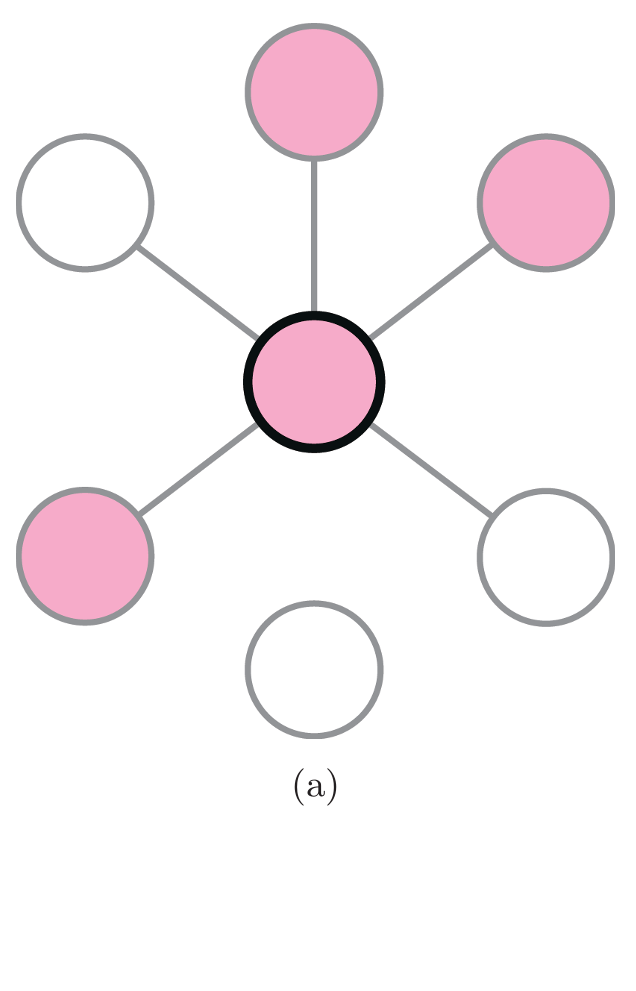 Figure 2: Visual representation of how targeting strategies within a specific network topology can lead to wider diffusion.
Critical Analysis & Conclusion
This paper serves as a bridge between sociology and physics. It moves public health away from "art" and toward "algorithmic engineering."
Key Takeaways:
- Targeting Logic: Don't target random influencers; target high-modularity clusters (like a specific sports team or a dormitory) to create an "incubation chamber" for new norms.
- Dynamic Maintenance: Interventions must continue or be strategically timed to combat the "natural decay" caused by social mixing in OSNs.
Limitations:
While theoretically robust, the authors acknowledge significant IRB and ethical hurdles. Real-time monitoring of social media for health markers (like depression) raises major privacy concerns. Furthermore, the LTM is a simplified model—human behavior is often messier than a single threshold value.
In conclusion, for social norms to survive in the digital age, we must stop broadcasting messages and start engineering social networks for resilience and reinforcement.