
Efficient Influence Domination: Breaking the $O(n^3)$ Barrier in Social Networks
A New Algorithm for Positive Influence Dominating Set in Social Networks
This paper introduces a novel greedy algorithm for the Positive Influence Dominating Set (PIDS) problem in social networks characterized by Power-Law degree distributions. The proposed method drastically reduces time complexity from to while simultaneously achieving a 4% reduction in PIDS size compared to existing state-of-the-art greedy approaches.
TL;DR
Social network analysis often requires finding a "Positive Influence Dominating Set" (PIDS)—a subset of users who can influence the rest of the network. This paper presents a breakthrough greedy algorithm that slashes the computational complexity from to while actually finding smaller influential sets than previous SOTA methods.
Background Positioning
In the landscape of graph theory applied to social media, this work moves beyond traditional Dominating Sets (DS) to address the unique Power-Law nature of Online Social Networks (OSNs). It refines the greedy search strategy for PIDS, moving from high-latency global evaluations to efficient, local-metric-driven selections.
Problem & Motivation: The Scalability Wall
Online Social Networks like Facebook and Twitter don't follow normal distributions; they have "hubs" (a few people with massive followings) and a long tail of users with few connections.
The PIDS problem requires that for every node in the graph, at least half of its neighbors must be in the dominating set. While this is vital for "Viral Marketing" or solving the "College Drinking Problem" (peer influence), finding the minimum set is NP-Complete. Previous algorithms by Wang et al. were too slow () because they recalculated the "influence potential" of every single node in every step of the process.
Methodology: Need-Degree and Cover-Degree
The core innovation lies in the shift from global optimization to local "social pressure" metrics:
- Need-degree: How many more neighbors does a specific node need in the PIDS to be "convinced"?
- Cover-degree: How much "need" can a candidate node satisfy across all its neighbors combined?
Instead of a complex global summation, the algorithm simply:
- Computes cover-degrees for all nodes.
- Picks the node with the maximum cover-degree.
- Locally subtracts from the "need" of its neighbors and updates their neighbors' cover-degrees.
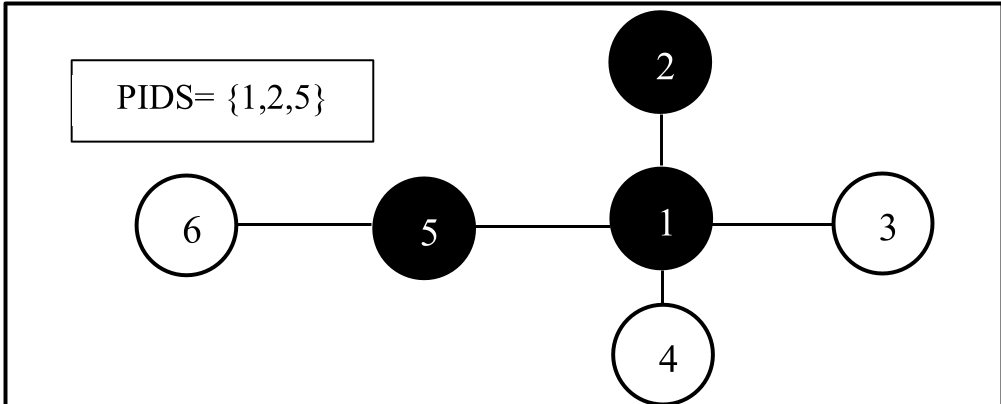 Figure 1: Traditional PIDS representation where hubs (Node 1) play a central role in influence.
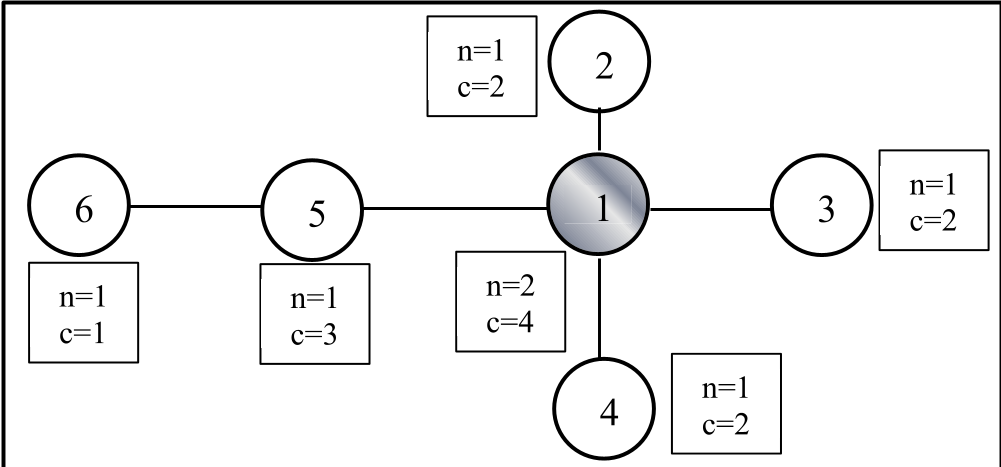 Figure 2: The local accounting mechanism of need-degree and cover-degree that enables speed.
Experiments & Results
The authors tested the algorithm against Wang’s baseline across various network sizes (100 to 300 nodes) and average degrees.
- Complexity: vs . In large networks, this is the difference between seconds and hours of computation.
- Efficiency: The resulting PIDS was consistently ~4% smaller. This translates to lower costs in marketing campaigns.
- Resilience: As the average degree of the network increases, the algorithm performs even better, as it leverages the "hubs" in the Power-Law distribution more effectively.
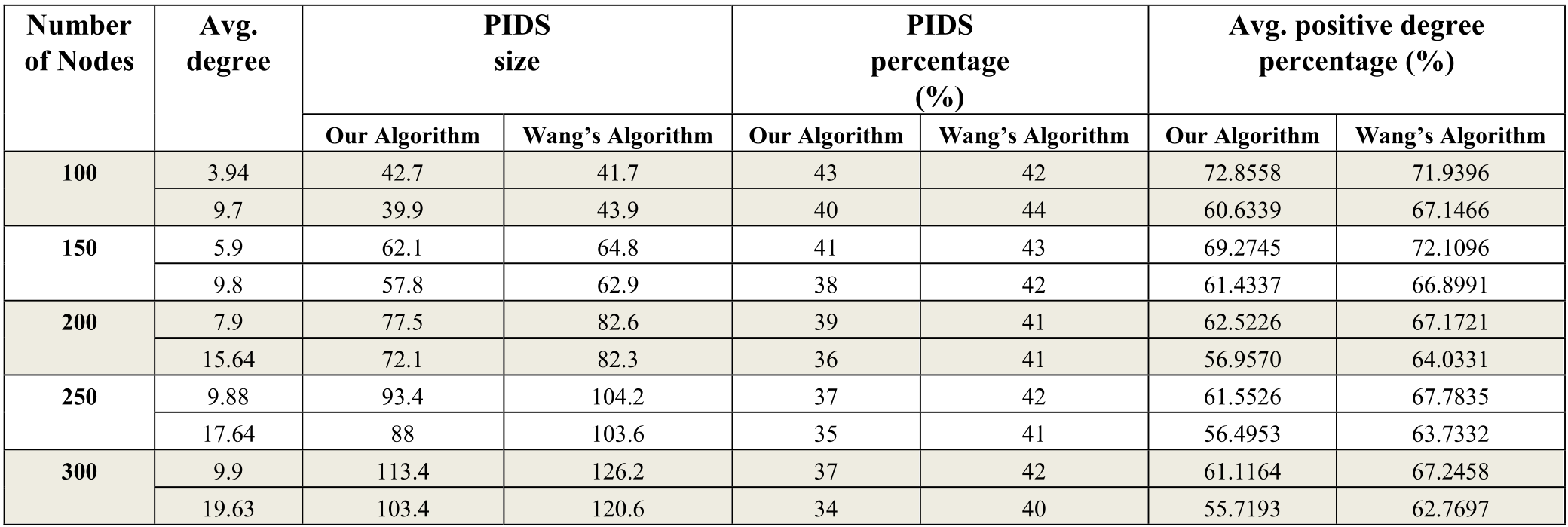 Table 1: Detailed comparison showing smaller PIDS sizes and higher efficiency across different node counts.
Critical Analysis & Conclusion
Takeaway
The paper proves that for social influence problems, local greedy heuristics can outperform global mathematical models in both speed and quality. This is particularly true in Power-Law graphs where hubs dominate the topology.
Limitations
The study focuses on static graphs. In real-world OSNs, the topology is dynamic. It remains to be seen how "Cover-Degree" updates would perform in a streaming graph environment where edges appear and disappear.
Future Work
The authors suggest shifting focus toward Security Concepts, such as using these sets for worm or malware detection. By "infecting" a PIDS with security patches or monitoring tools, one could theoretically protect the entire network more efficiently than through random deployment.