
Swarm Intelligence: Rethinking Business Models via Collective Customer Creativity
Design of New Business Models for Service Integrators by Creating Information-Driven Value Webs Based on Customers' Collective Intelligence
The paper proposes a novel business model framework for service integrators by leveraging swarm intelligence to harness collective customer creativity. It introduces the concept of a "Swarm-Driven Value Web" where customers act as self-organizing agents to design integrated product and service bundles.
TL;DR
The paper shifts the paradigm of service integration from "asking customers what they want" to "observing how a customer swarm creates value." By applying biological principles like self-organization and stigmergy to digital value webs, it proposes a model where service integrators act as knowledge managers of a decentralized, creative "swarm" to identify next-generation service bundles.
The Core Problem: The Blindness of Centrally-Led Design
In the traditional digital market, service integrators attempt to bundle products based on perceived demand—an "inside-out" approach. Even when "co-design" is used (think mi adidas or Lego Factory), the process is still guided by the company.
The authors argue that this misses a goldmine: the Collective Intelligence of the crowd. When customers are treated as individual agents in a self-organizing swarm, they can explore "life intentions" (e.g., mobility, health, travel) far more effectively than a central planner. The bottleneck isn't a lack of customer creativity; it's the lack of a coordination mechanism that doesn't rely on central authority.
Methodology: Engineering the Digital Swarm
The authors propose a Swarm-Driven Value Web structured into three vital layers:
- Customer Layer: Individuals seeking "integrated solutions" rather than single products. In aggregate, they function as a self-organizing swarm.
- Service Integrator Layer: Moves beyond a simple broker to become a "knowledge manager." Their role is to provide the artificial environment (platform) and observe emerging patterns.
- Service Provider Layer: The supply side that reacts to the swarm’s output.
The Concept of Digital Pheromones
Borrowing from myrmecology (the study of ants), the paper suggests that platforms can use indirect communication (stigmergy). Just as an ant leaves a pheromone trail to a food source, a customer leaving a "digital trail" (through clicks, modifications, or interactions) increases the visibility of certain service bundles for others.
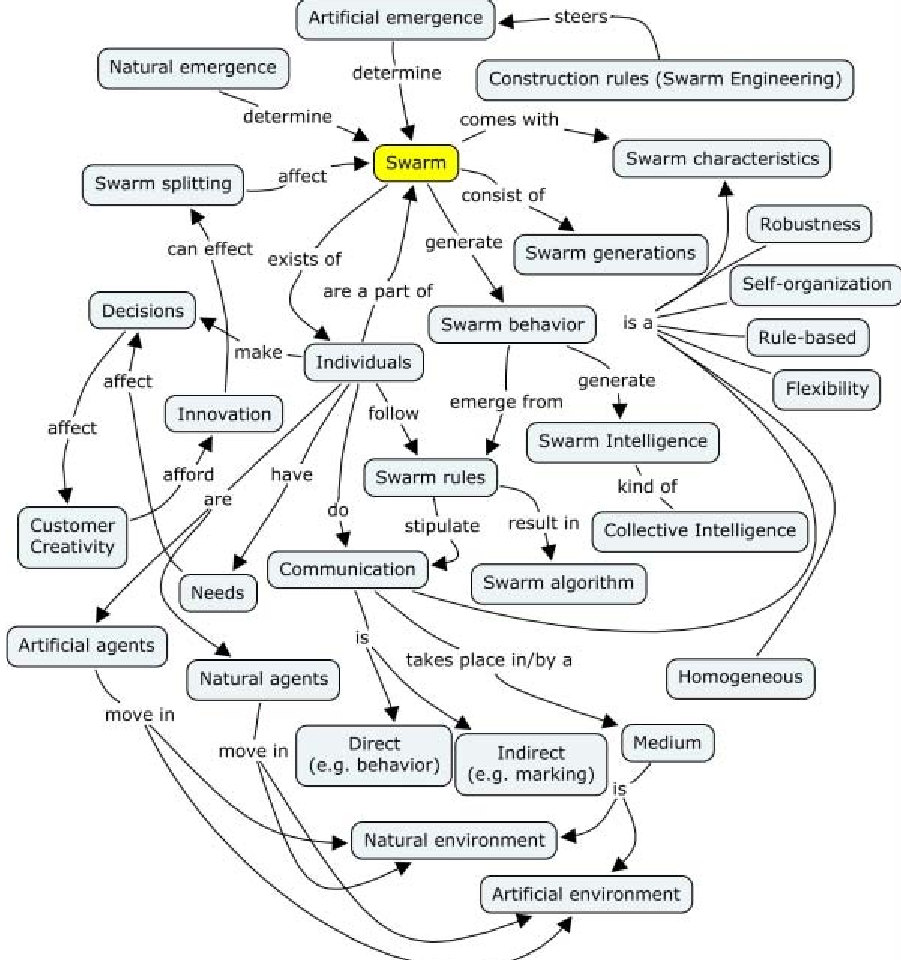 Figure 1: The Swarm Ontology Map, detailing the interdependencies between individuals, communication, and self-organization.
Key Mechanisms for Success
To make this market work, the environment must satisfy several biological criteria:
- Amplification of Fluctuation: "Random walks" or errors by individuals are necessary. They allow the swarm to discover "unexploited food sources"—or in this case, unexplored product combinations.
- Positive/Negative Feedback: Popular service bundles must be amplified (positive) while less useful ones should "evaporate" over time (negative).
- Transparency: Every individual must see the collective information to contribute effectively to the swarm’s output.
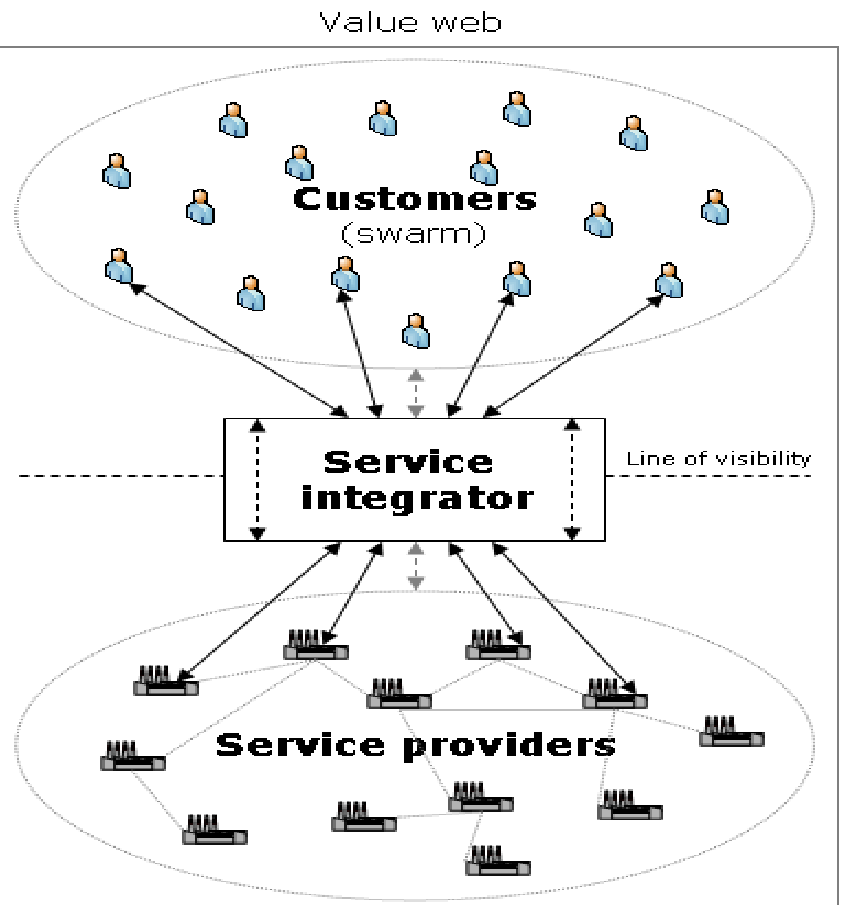 Figure 2: The architecture shows the Service Integrator at the heart, observing the Customer Swarm to inform the Service Provider network.
Critical Analysis & Business Impact
The true innovation here is the reversal of roles. In this swarm-driven model, customers represent the supply side (supplying intelligence and design), while service providers represent the demand side (demanding information on what to produce).
Limitations
- Incentive Design: Why would a customer join the swarm? The paper mentions "shared goals," but in a competitive digital economy, more robust incentive structures (gamification or monetary rewards) might be required.
- The "Informed Minority" Risk: The paper notes that a few informed individuals can guide the swarm. In a business context, this could lead to manipulation or "echo chambers" if not carefully monitored.
Conclusion: From Intermediary to Intelligence Manager
The "Service Integrator" of 2026 is no longer just a middleman; they are a platform architect. By adopting swarm rules, companies can move from "guessing" what customers want to "witnessing" the birth of new market needs in real-time. This "outside-in" perspective is the ultimate form of customer-centricity.