
DEN-ng & FOCALE: Bridging the Semantic Gap in Autonomic Networking
The Design of a New Policy Model to Support Ontology-Driven Reasoning for Autonomic Networking
This paper introduces an enhanced version of the Directory Enabled Networks next generation (DEN-ng) policy model, integrated into the FOCALE autonomic architecture. It achieves a semantically rich framework for autonomic networking by combining object-oriented information models with ontologies to support automated reasoning and context-aware network management.
TL;DR
Managing modern communication systems has surpassed human capacity due to the explosive complexity of converged wired/wireless networks. This paper presents a redesigned DEN-ng policy model within the FOCALE architecture. By transforming traditional rigid policies into a semantically rich Policy Continuum, the authors enable networks to "reason" about their state and automatically adapt to business goals and environmental context.
The Problem: The "Lingua Franca" Crisis
In the world of network management, we face a "tower of Babel" problem. Vendors use different Command Line Interfaces (CLIs) and data formats, meaning a command on a Cisco router doesn't translate easily to a Juniper device.
More importantly, traditional Policy-Based Network Management (PBNM) has failed because:
- Domain Silos: Security policies and management policies use different syntaxes.
- Context Blindness: Policies don't adapt when the environment (e.g., signal interference or user demand) changes.
- Lack of Logic: Existing models can represent facts but cannot reason or discover new knowledge.
Methodology: The Core of the New Policy Model
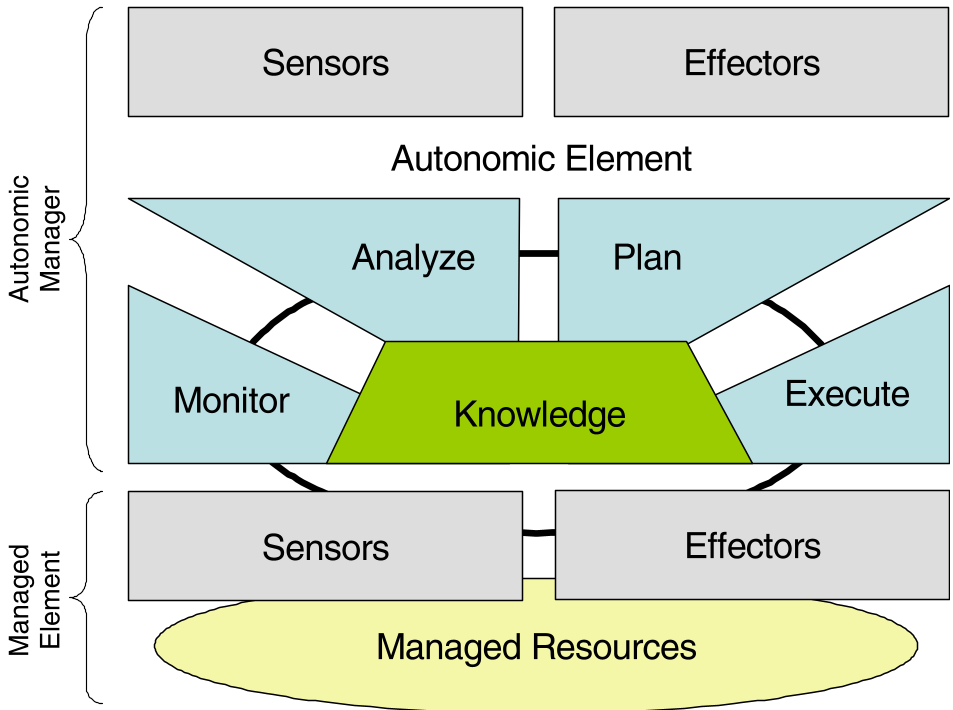
The authors argue that UML (Unified Modeling Language) alone is insufficient for autonomic behavior because it lacks dynamic behavioral semantics. Their solution is the FOCALE loop (Finite state machine—Observe—Compare—Act—Learn—rEason).
1. The Power of Patterns and Roles
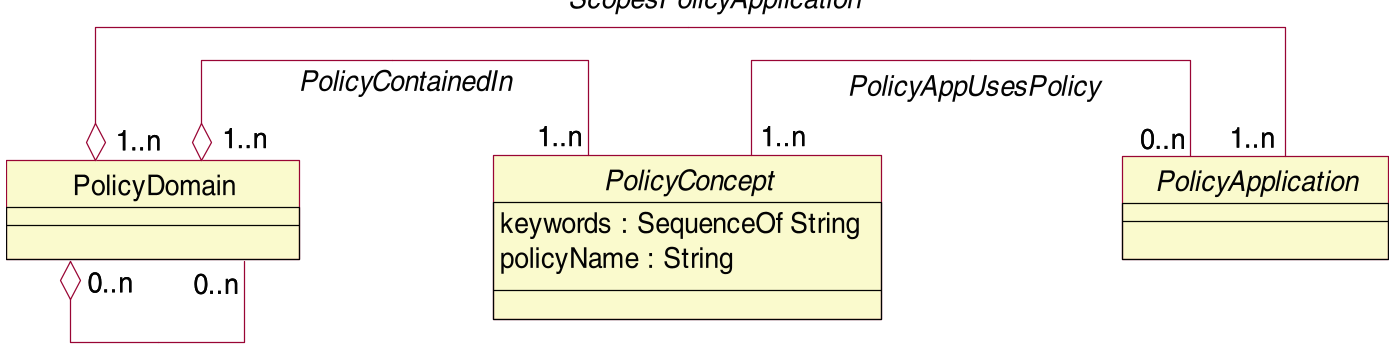
Unlike previous models that fix policies to specific devices, the new DEN-ng model uses Patterns. By defining a PolicyRuleSpecification, the system ensures that all rules (whether Goal-based or ECA-based) share invariant attributes, making the architecture inherently scalable.
2. Redesigning the Rule Structure
The standout innovation is the separation of Structure from Semantics.
ECAPolicyRule: Handles the "Event-Condition-Action" mechanics.ManagementPolicy: Handles the "Deontic" logic—the obligations and permissions.
3. Deontic Policy Refinement
The paper introduces a highly granular approach to Deontic logic. Most systems only recognize Subject-based obligations. This model adds:
- Authorization (May) and Prohibition (May Not).
- Obligation (Must) and Exemption (Need Not).
- Delegation and Revocation (Metapolicies). Crucially, these can be Subject-based (enforced by the actor) or Target-based (enforced by the resource), significantly simplifying conflict resolution in distributed systems.
Context-Aware Adaptation
The FOCALE architecture uses a Context Model to trigger policy shifts. When a sensor detects a change in the environment (e.g., a Radio Access Technology failure), the Context Manager selects a new set of policies. These policies then reconfigure the control loops, essentially swapping out algorithms for analysis or action based on the current situation.
Critical Insight: Why This Matters
The transition from "Information Models" to "Knowledge Multigraphs" is the paper's most profound takeaway. By treating information models as indices into ontologies, the authors provide a pathway for machines to understand meaning rather than just attributes.
SOTA Comparison:
- vs. PMAC/ACPL: PMAC only uses condition-action tuples, which are computationally inefficient. DEN-ng adds an Event clause for temporal predictability.
- vs. Rei/Ponder: These lack a formal information model foundation, making them "islands" of logic that cannot map back to physical hardware effectively.
Conclusion & Future Outlook
The paper lays the groundwork for Seamless Mobility—the ability for users to roam across access modes (Wi-Fi, 4G, Satellite) without service interruption. While the 2009 publication date makes the specific tech stack (UML 2.0, OWL-Lite) seem vintage, the underlying philosophy of Ontology-Driven Reasoning is exactly what modern Intent-Based Networking (IBN) and AI-Driven Operations (AIOps) are striving to achieve today.
Takeaway: The future of networking isn't about better hardware; it's about better semantics.