
Reimagining the Smart Home: Moving Beyond Automation to Social Connection for the Elderly
The New Way of Social Connecting for the Elderly Through Smart Home Applications
The paper introduces a human-centric "Smart Home" framework designed specifically for the elderly to maintain social connectivity and family values. It leverages Smart TV as a central service portal, integrating IoT and Social Networking to facilitate independent living and active social participation.
TL;DR
As the global population shifts toward an "aged society," the tech industry often defaults to seeing the elderly as patients needing monitoring rather than active social beings. This paper challenges that paradigm, proposing a Smart Home framework that prioritizes human-centric connectivity over simple automation. By transforming the Smart TV into a social and service hub, the research suggests we can bridge the digital divide and reinforce traditional family values through technology.
Background: The Rising Silver Tsunami
The World Health Organization (WHO) defines an "aged society" as one where 14% of the population is over 65. Taiwan, the focus of this study, is rapidly heading towards a "hyper-aged society" status (20% by 2025). However, the author notes a critical insight: many elderly individuals are not disabled; they are educated, increasingly tech-savvy, and eager to contribute to their families and society.
Problem & Motivation: "Digital House" vs. "Smart Home"
The paper draws a sharp distinction that is often missed in modern IoT discourse:
- Digital House: Focuses on the premises. It’s about automation, sensors, and "command-and-control" (e.g., turning off lights).
- Smart Home: Focuses on spiritual belongingness. it is about human-centric concepts that connect people and bring meaningful social values to the family.
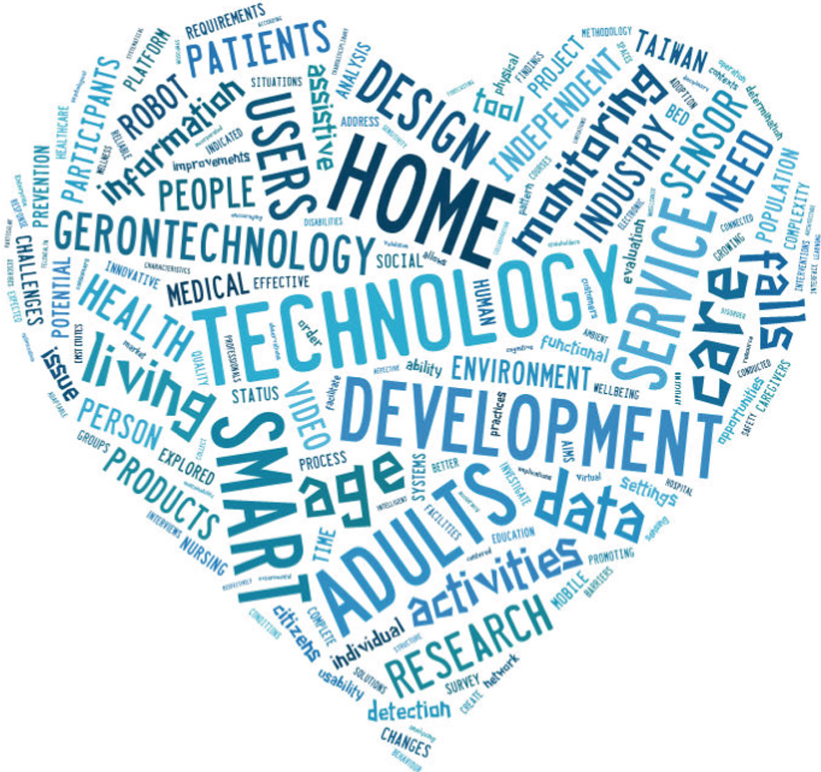
The motivation stems from the fact that current smart home research is heavily weighted toward medical "care" and "monitoring" (see the Tag Cloud below), often ignoring the senior's desire for Actualization—learning, social connection, and even job seeking.
Methodology: Mapping the Elderly Mind
The researcher conducted interviews in Taipei and Kaohsiung using a unique Mind-map structured questionnaire. Instead of simple Yes/No questions, they calculated "competence scores" (1-5) for links between nodes like "Children" and "Remote Care."
Core Concept Categories:
- Digital Devices: Assessing manageability.
- Living: Adoptability of smart appliances.
- Care: Health management activities.
- Actualization: The need for lifelong learning and employment.
Methodology Detail: The Smart TV as the "Command Center"
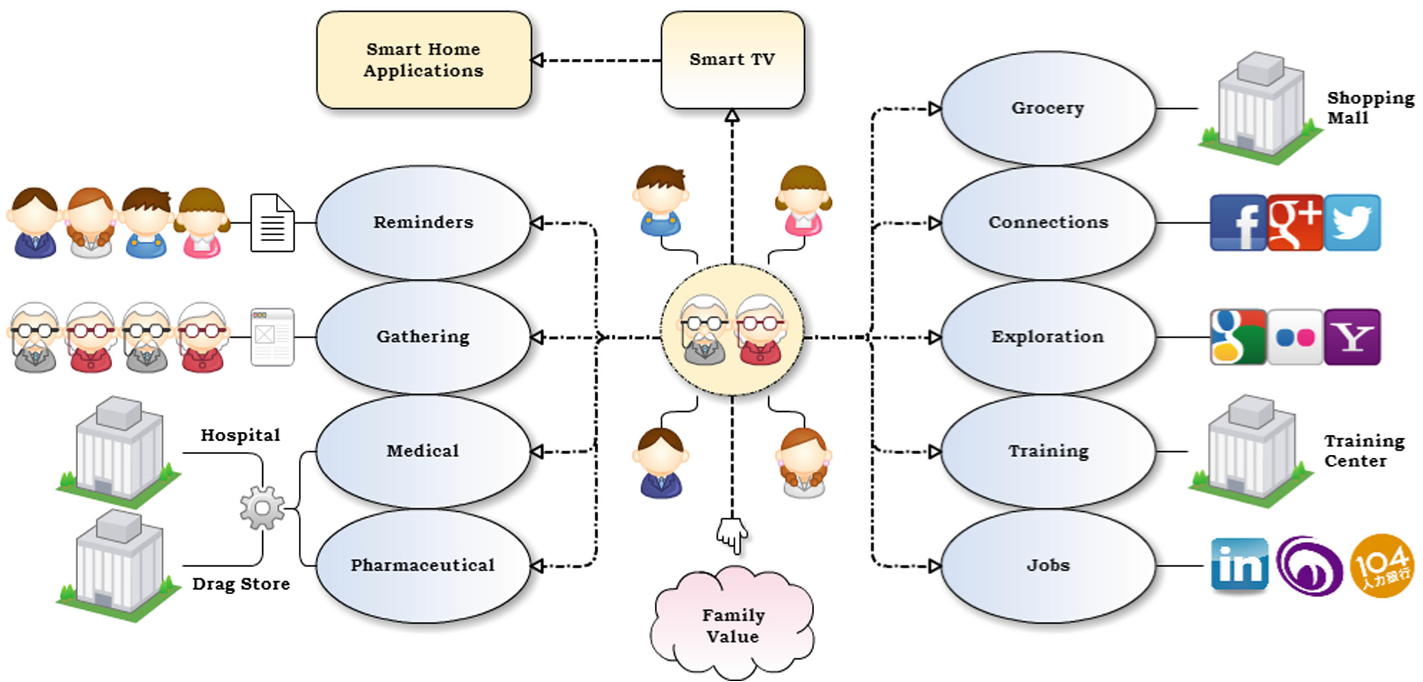
While smartphones are ubiquitous, the paper argues that for the elderly, the Television remains the focus of the living room. By evolving the Smart TV into a "Value Exchange Channel," seniors can:
- Initiate Virtual Gatherings with family members.
- Access Retail Clinics for pharmaceutical needs.
- Participate in Virtual Classrooms to share their knowledge (Actualization).
Experiments & Results: Identifying High-Value Scenarios
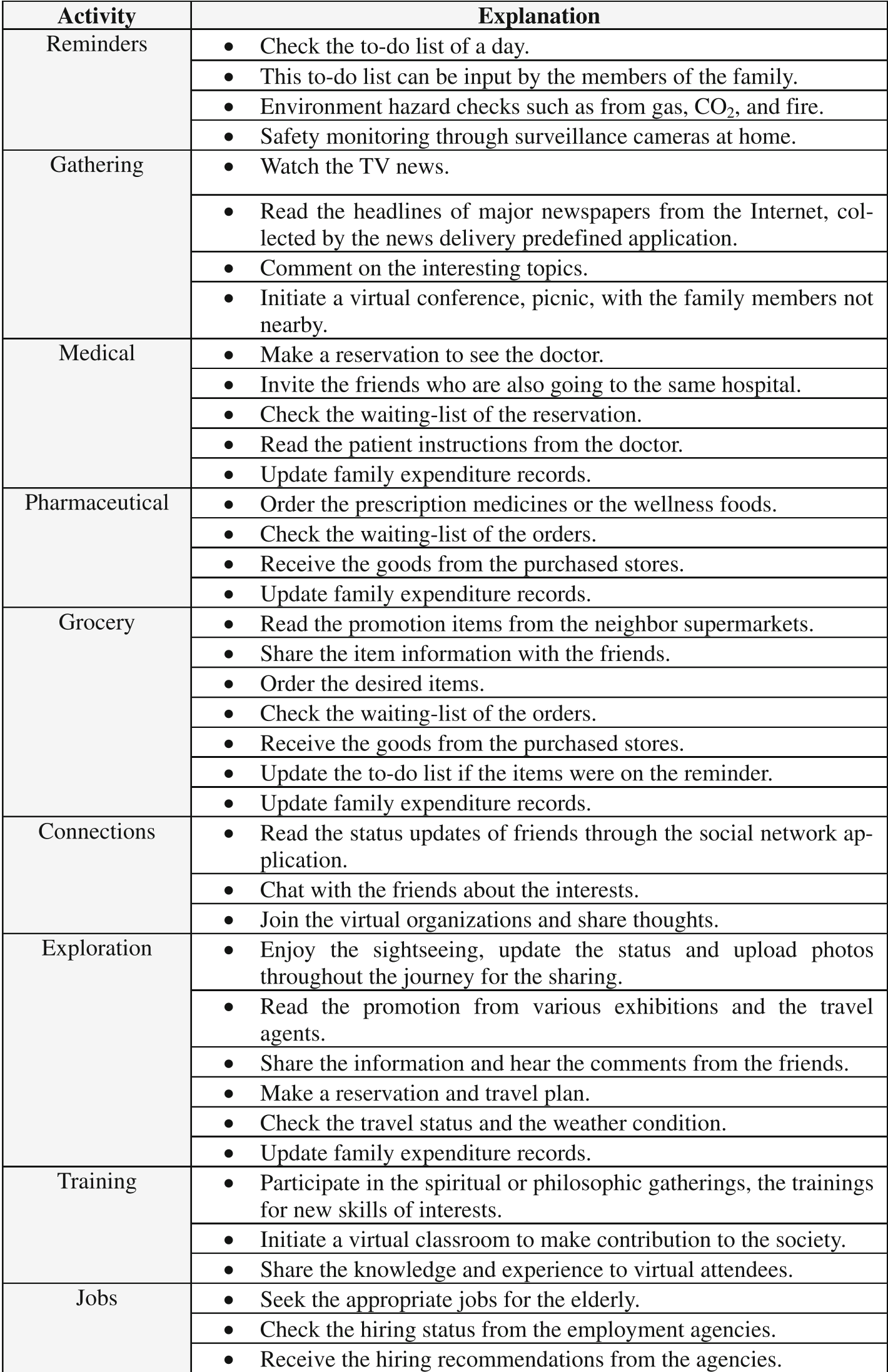
The research posits that elderly individuals have specific user scenarios that differ from younger generations. The study found strong interest in:
- Reminders: Not just for meds, but environmental hazards (CO2, gas).
- Grocery Integration: Reducing the time constraint of physical shopping.
- Job Seeking: Finding age-appropriate employment to maintain a sense of purpose.
Critical Analysis & Conclusion: The Open Innovation Path
The author concludes that "reinventing the wheel" is the biggest hurdle for Smart Home vendors. To achieve the "Service Realization" discussed, companies must adopt an Open Innovation Model—collaborating across industries (healthcare, retail, social media) to integrate these services into a single, cohesive portal.
Key Insights:
- Moving beyond "Safety": While fall detection is important, "Social Connection" is what provides quality of life.
- Cultural Context: In Confucian societies, technology should help elders fulfill their roles in the family (e.g., monitoring grandchildren remotely) to maintain their sense of dignity.
- The Medium Matters: The TV’s large screen and centralized location make it a superior hub for elderly social interaction compared to the small, often overwhelming interface of a smartphone.
Limitations & Future Work:
The paper acknowledges that the technical challenge lies in the integration of disparate apps into one seamless "Social Portal." Future research should focus on the UI/UX design of these Smart TV portals to ensure they don't become just another "digital divide" barrier.