
Bridging Text and Tissue: Ontology-Guided NLP for Digital Pathology
NLP for the Generation of Training Data Sets for Ontology-Guided Weakly-Supervised Machine Learning in Digital Pathology
The paper introduces an ontology-guided Natural Language Processing (NLP) framework designed to automate the generation of high-quality training datasets for digital pathology. By combining dictionary-based decision trees with medical ontologies (ICD-10, ICD-O-3), the method extracts structured clinical data from non-standardized medical reports to support weakly-supervised machine learning.
TL;DR
The medical field is drowning in data but starving for structured labels. This paper presents a robust NLP framework that converts "messy" pathology reports into structured training data for Machine Learning. By using expert-curated decision trees and medical ontologies, the researchers achieved F-Scores of up to 94.7%, providing a scalable solution for weakly-supervised learning in digital pathology.
Background: The Annotation Bottleneck
Digital pathology relies on Whole Slide Images (WSIs)—massive, gigapixel files that capture every cell on a glass slide. To train a "holistic" ML model that predicts disease outcome, we need ground truth. However, manual pixel-level annotation by pathologists is the ultimate bottleneck: it is slow, expensive, and non-scalable.
The solution lies in Weakly-Supervised Learning, where the model learns from global labels (e.g., "this whole slide contains Mamma Carcinoma") rather than local pixels. But where do these labels come from? They are hidden within millions of unstructured pathology reports.
Methodology: Logic Over "Black Boxes"
While modern AI often leans toward opaque deep learning, the authors argue for traceability and explainability. Their system follows a strategic three-step pipeline:
1. The Cleanup Phase
The system first handles the "noise" of real-world clinical data. This includes correcting misspellings, resolving abbreviations, and merging findings. This ensures that the downstream NLP is working on a "clean" semantic foundation.
2. Information Extraction (IE)
Using dynamic regular expressions, the module extracts critical staging parameters:
- TNM Staging: Tumor size (T), Lymph nodes (N), and Metastases (M).
- Receptors: Status for Estrogen (ER), Progesterone (PR), and HER2/neu.
- Logic Mapping: The tool translates phrases like "The basal resection margin was tumor positive" directly into standardized codes like
R:1.
3. Decision Tree Classification
The "brain" of the system is an interactive tree-based approach.
- Nodes: Represent tokens or regular expression patterns.
- Rules: Define constraints like "neighbor proximity" or "negation".
- Leaves: Map to specific ICD-10 or ICD-O codes.
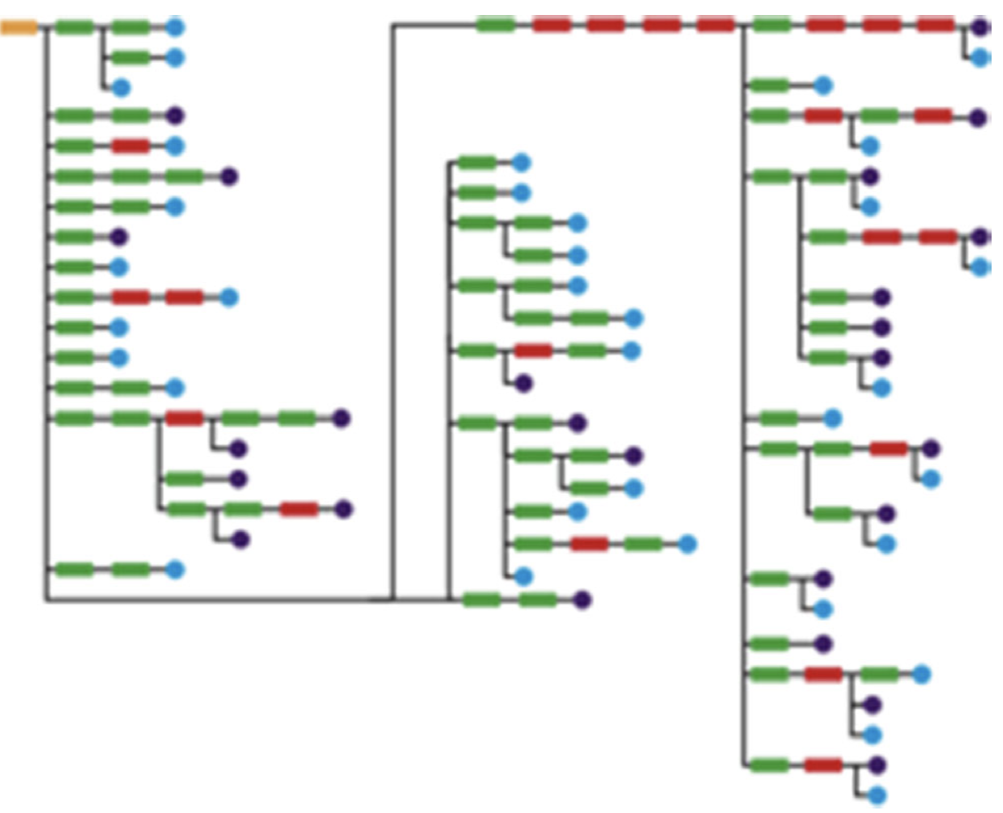 Fig 1: The complexity of the decision tree demonstrates how expert knowledge is encoded into the NLP logic.
Why Decisions Trees?
Unlike a standard neural network, this tree-based approach allows a pathologist to see why a report was classified as a specific cancer type. If two codes compete for the same text fragment, a priority system resolves the conflict (e.g., "Malignant" keywords overrule "Uncertain Behavior").
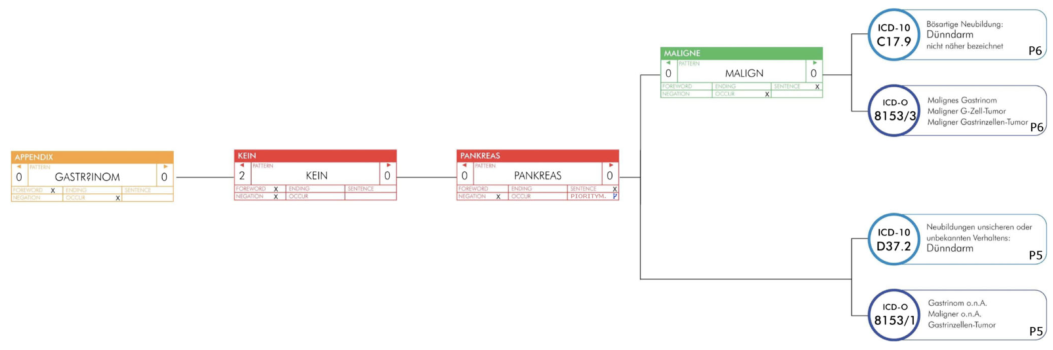 Fig 2: A close-up showing how synonyms and priority values (bottom right of nodes) guide the classification process.
Results and Visualization
The performance metrics are impressive for a clinical setting:
- ICD-O (Oncology) Classification: F-Score of 94.7%.
- Tumor Staging: F-Score up to 96.8%.
To validate the data before feeding it into ML models, the authors used "Medical Data Glyphs". These are visual symbols arranged in an "age pyramid," where each glyph represents a patient case. This allows researchers to spot outliers—such as a survival rate that doesn't match a stage—before the data ever reaches the training stage.
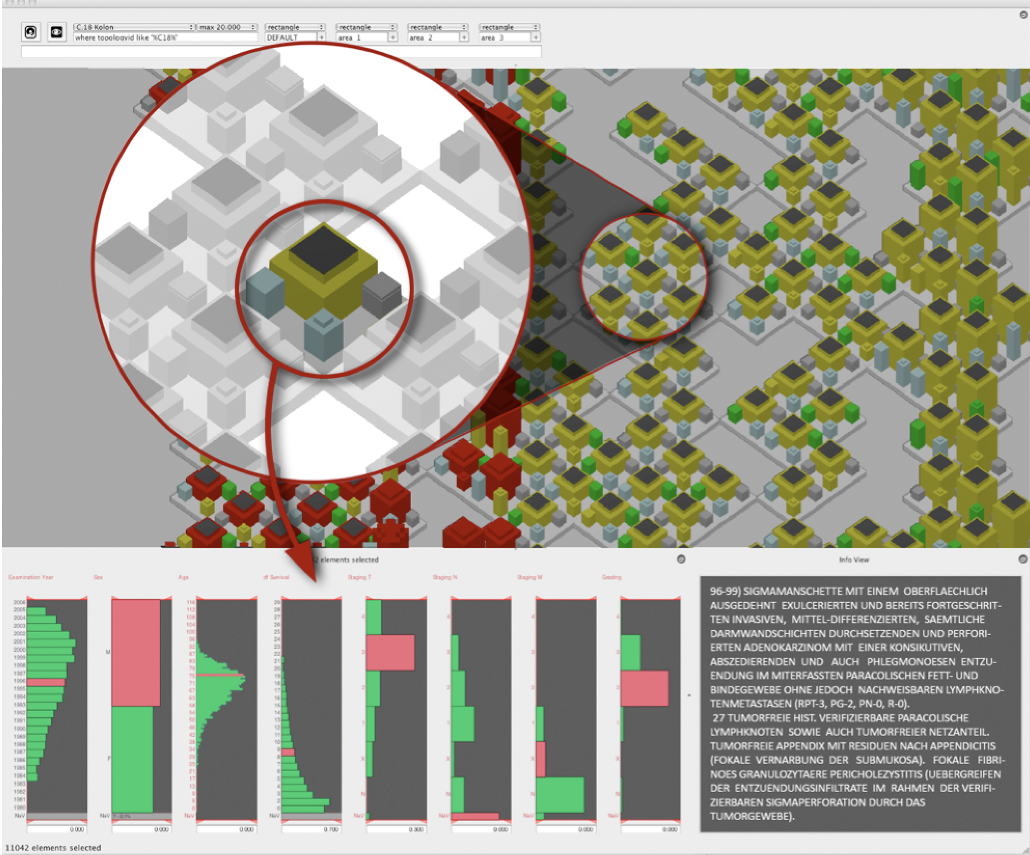 Fig 3: Age pyramid visualization of lung and thyroid cancer cases. This visual "Data Quality Assessment" ensures the training set is reliable.
Future Outlook: Capturing the "Pathologist's Eye"
The authors conclude by looking toward Causability. Future work involves recording a pathologist's eye movements and dictations during a diagnosis to create a "prospective dataset." This will allow AI to not only see the final diagnosis but to learn the process of observation—essentially training a re-linking algorithm that connects the visual path to the textual description.
Conclusion
This work demonstrates that "Big Data" in medicine doesn't need to be "Messy Data." By leveraging ontologies as a guiding light for NLP, we can transform thousands of legacy reports into a structured engine for the next generation of digital pathology AI.