
Flow State Recognition: Sensing the "Zone" Without Touching the Developer
Towards Non-Invasive Recognition of Developers' Flow States with Computer Interaction Traces
Towards Non-Invasive Recognition of Developers’ Flow States proposes a machine learning framework to identify the "flow state" of software developers using computer interaction traces (keyboard, mouse, IDE functions, and window switching). The system achieves a peak recognition accuracy of 92.6% using a hierarchical model designed to reflect the psychological dimensions of flow.
TL;DR
Researchers from Nanjing University have developed a way to detect when a programmer is "in the zone" (Flow State) simply by analyzing how they move their mouse and type. By moving away from clunky heart-rate monitors and annoying pop-up surveys, their hierarchical machine learning model reaches 92.6% accuracy in identifying these peak productivity periods.
The "Observer's Paradox" in Software Engineering
The "Flow State" is the holy grail of productivity—a state of total immersion where time disappears and code seems to write itself. However, studying flow is notoriously difficult because of the Invasiveness Paradox:
- If you ask a developer "Are you in flow?" via a survey, you've just broken their flow.
- If you strap an EEG headset or a galvanic skin response sensor to them, the physical discomfort prevents them from entering flow in the first place.
This paper tackles this by treating a developer's interaction with their computer (keyboard rhythms, mouse trajectories, and window management) as a "digital fingerprint" of their internal psychological state.
Methodology: Mapping Psychology to Machine Learning
The core innovation of this work is its Hierarchical Recognition Model. Instead of treating flow as a simple "Yes/No" binary label, the authors decompose it into four psychological pillars: Concentration, Involvement, Enjoyment, and Skill-Challenge Balance.
1. Feature Engineering
The system tracks 73 unique features, including:
- Keystroke Dynamics: Digraph and trigraph latencies (the time between specific key sequences).
- Mouse Patterns: Dragging length, scroll frequency, and movement efficiency.
- OS/IDE Context: How often the developer switches to Slack/Browser vs. staying in the IDE.
2. Architecture: Biological Logic meet SVM
The model uses a two-tier approach:
- Layer 1 (Dimension Assessment): Separate Random Forest classifiers estimate the intensity of each of the four pillars of flow.
- Layer 2 (Classification): A Support Vector Machine (SVM) takes those four dimension scores and makes the final "In Flow" vs. "Not in Flow" call.
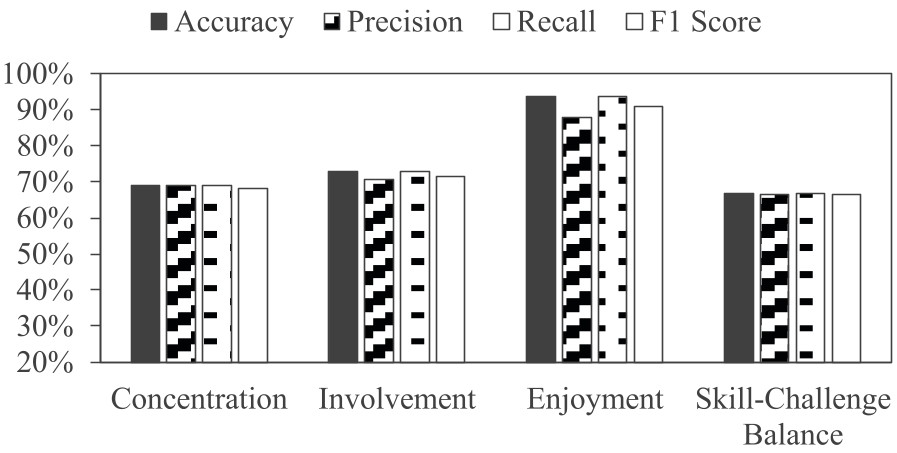 Fig 1. The hierarchical model (a) vs the simple baseline (b).
Experiments and Results
The team conducted a 17-day field study at a Chinese IT firm. The results were telling:
- Accuracy Boost: The hierarchical approach reached 92.6% accuracy, significantly better than a standard "flat" classifier.
- The Power of Recall: In applications like "FlowLight" (a signal that tells coworkers not to interrupt), missing a flow state is a disaster. The hierarchical model improved recall for positive flow states by 31.5% over the baseline.
- Efficiency: The model processes 30 minutes of interaction data in less than a second, making it viable for real-time "Do Not Disturb" automation.
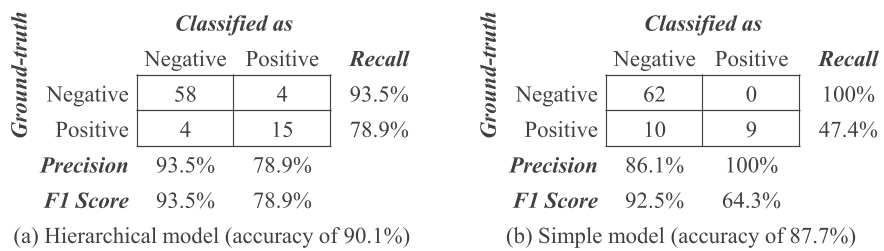 Fig 2. Confusion matrices showing the hierarchical model's superior ability to identify true positive flow states.
Critical Insight: The "Company vs. Developer" Privacy Gap
An interesting "Lesson Learned" reported by the authors is that while developers found the tracking non-invasive (since it's just background software), companies were terrified. Four out of five companies rejected the study not because of employee privacy, but because of corporate security—fearing that tracking window titles or IDE interactions might leak proprietary architectural secrets.
Conclusion & Future Outlook
This paper proves that we don't need "Cyberpunk" style brain-computer interfaces to understand the human mind at work. By analyzing the subtle rhythms of how we use our tools, IDEs of the future could automatically silence notifications, suggest breaks when we are frustrated, or adjust task difficulty to keep us in the "Optimal Zone."
Key Limitation: The study used a small sample size (6 main participants). Future work will need to validate if "Flow" looks the same for a Junior Web Developer as it does for a Senior Systems Engineer.