
Modeling the Ghost in the Machine: Nonlinear Dynamics of Single Hippocampal Neurons
Nonlinear Dynamic Modeling of Synaptically Driven Single Hippocampal Neuron Intracellular Activity
2011-01-13
Summary
Problem
Method
Results
Takeaways
Abstract
This paper introduces a high-order nonlinear dynamic model for hippocampal CA1 pyramidal neurons, integrating subthreshold postsynaptic potentials (PSPs) and suprathreshold action potentials into a single mathematical framework. By employing Volterra kernels with Laguerre expansions, the model achieves a normalized mean square error (NMSE) of 14.4% for PSP prediction and a spike prediction error rate (SPER) of 18.8%.
## TL;DR
Researchers have developed a sophisticated mathematical framework that predicts how a single neuron in the hippocampus processes incoming electrical signals into both subthreshold "whispers" (PSPs) and suprathreshold "shouts" (spikes). By using **Volterra kernels** and **Laguerre expansions**, the model captures the nonlinear "memory" of the neuron with high accuracy (85.6% waveform precision) while remaining efficient enough for real-time simulation.
## The Biological Balancing Act
In the world of computational neuroscience, there is a traditional tug-of-war. On one side, **mechanistic models** (like Hodgkin-Huxley) are biologically realistic but computationally heavy. On the other, **integrate-and-fire models** are fast but miss the nuanced nonlinearities of synaptic integration.
The authors of this paper argue that the "truth" lies in a data-driven approach. They focused on the **CA1 pyramidal neuron**, the primary "executor" of the hippocampus, to solve a specific problem: How can we predict the continuous membrane potential of a neuron using only the timing of incoming spikes?
## The Architecture: A Hybrid Approach
The proposed model is an elegant three-part engine that mimics the physical flow of information through a cell:
1. **Feedforward Transformation**: Uses 1st, 2nd, and 3rd-order Volterra kernels to turn presynaptic input spikes into Post-Synaptic Potentials (PSPs). This captures "short-term plasticity"—the way a neuron's response changes based on the history of recent inputs.
2. **The Threshold**: A simple but effective gate. If the simulated voltage hits the limit, a spike is triggered.
3. **The Feedback Loop**: Once a neuron fires, it isn't "reset" to zero. A feedback kernel simulates the "after-potentials" that influence how soon the neuron can fire again.
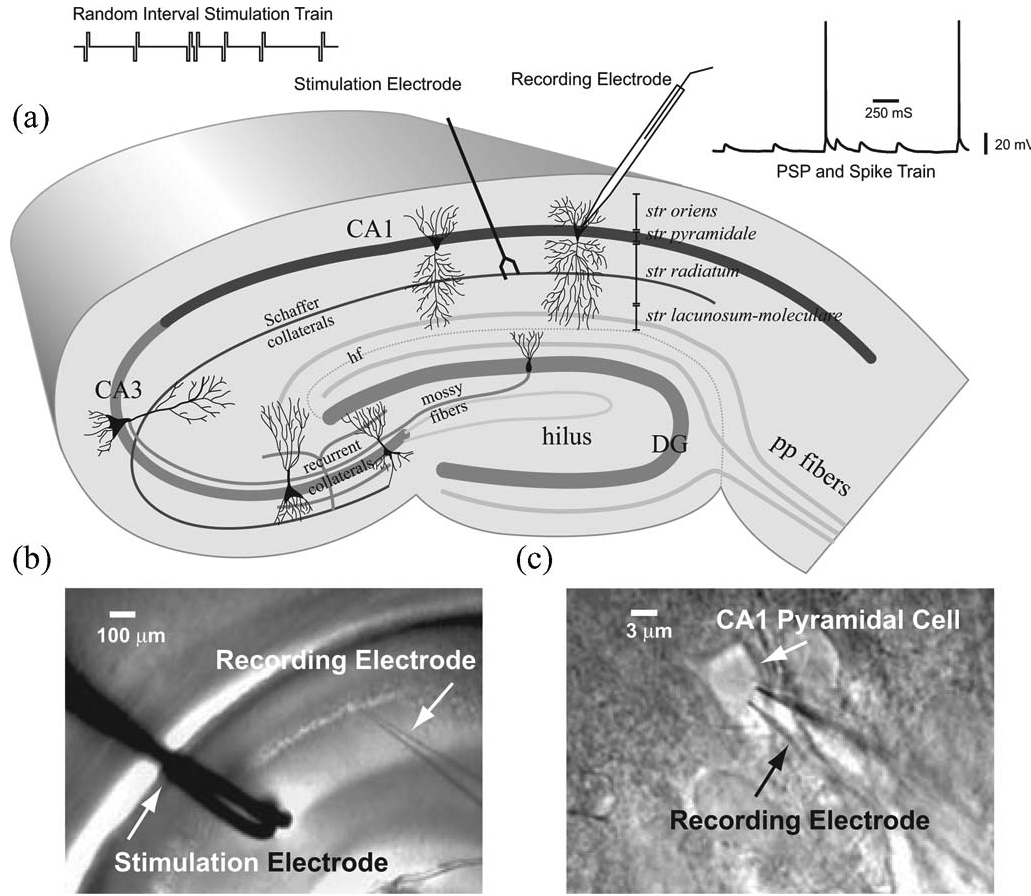
*Fig 1: The model structure combining feedforward kernels (k), threshold (θ), and feedback (H).*
## Why Nonlinearity Matters (The K1 vs. K3 Debate)
The core of the paper’s contribution is proving that **linear models (K1) are simply not enough**.
* **K1 Models** can predict the general shape of a response but fail to account for "paired-pulse" effects where two quick pulses create a much larger (or smaller) response than expected.
* **K3 Models** (up to 3rd order) include interaction terms. They "remember" the intervals between the last three pulses, allowing the model to capture the complex facilitation and depression observed in real biological tissue.
The results are striking: moving from a linear (K1) to a 3rd-order (K3) model improved prediction accuracy by nearly **19%**.
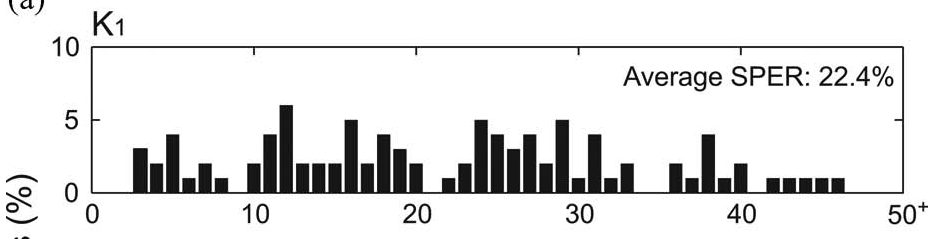
*Fig 2: Distribution of NMSE (Error) showing that K3 (red) consistently shifts towards high accuracy compared to K1 (blue).*
## Mathematical Intuition: The Volterra Kernel
Think of the Volterra kernels as "temporal filters." The **1st-order kernel** is the average response to one pulse. The **2nd-order kernel** is the correction factor for two pulses at a specific interval. By using **Laguerre expansions**, the authors reduced thousands of possible points of data into just a few dozen expansion coefficients ($c_k$). This isn't just a math trick; it’s a way to extract the "essential features" of the neuron's dynamic behavior.
## Critical Analysis & Future Outlook
**Strengths**: Unlike purely abstract models, every parameter here is "constrained" by actual patch-clamp data. This provides a "biophysical signature" for the neuron that could be used to study how diseases (like Alzheimer's) or drugs change the cell's processing logic.
**Limitations**: The current model uses a **constant threshold**. In reality, a neuron's threshold is "dynamic"—it moves up and down depending on how tired the cell is. The authors acknowledge that adding a dynamic threshold is the next frontier.
**Conclusion**: This research is a cornerstone for **Neural Prostheses**. If we can perfectly model how a CA1 neuron transforms CA3 inputs, we can potentially build silicon chips that replace damaged hippocampal tissue, restoring memory function in patients.