
The Threshold of Truth: Is Certainty the Only Norm for Assertion?
Norms of assertion and communication in social networks
This paper presents a Bayesian social network model to evaluate the "Veritistic Value" of different norms of assertion. Using the Laputa simulation environment, it investigates whether a certainty rule (probability 1) or a lower probability threshold maximizes social epistemic good in a community of inquirers.
TL;DR
Should you only say what you know for certain, or is it enough to say what is highly probable? By leveraging Bayesian simulations, this paper discovers that while the "Certainty Rule" is ideal for long-term inquiry, a lower threshold (around 0.92) actually serves society better when time and communication cycles are limited.
Contextualizing the Epistemic Stalemate
In the world of epistemology, two camps have long been at odds. One side, led by figures like Timothy Williamson, argues for the Knowledge Rule: "Only knowledge warrants assertion." If knowledge requires a subjective probability of 1, then you must be certain to speak. The second camp argues for Rational Credibility, suggesting that if a proposition is highly probable (e.g., 0.9), you are justified in asserting it.
The authors, Erik J. Olsson and Aron Vallinder, move beyond abstract intuition. They ask a functional, social question: Which rule, if followed by everyone, maximizes the "Veritistic Value" (the aggregate true belief) of a whole community?
Methodology: Bayesian Social Networks
To answer this, they employed a formal Bayesian model. In this setup:
- Inquirers: Agents conduct their own "reality checks" (inquiry) and talk to peers (communication).
- Updating: Agents use Bayesian conditionalization, adjusting their trust in others based on the reliability of the reports received.
- Veritistic Value (V-value): A metric that measures the community's average subjective probability in the truth.
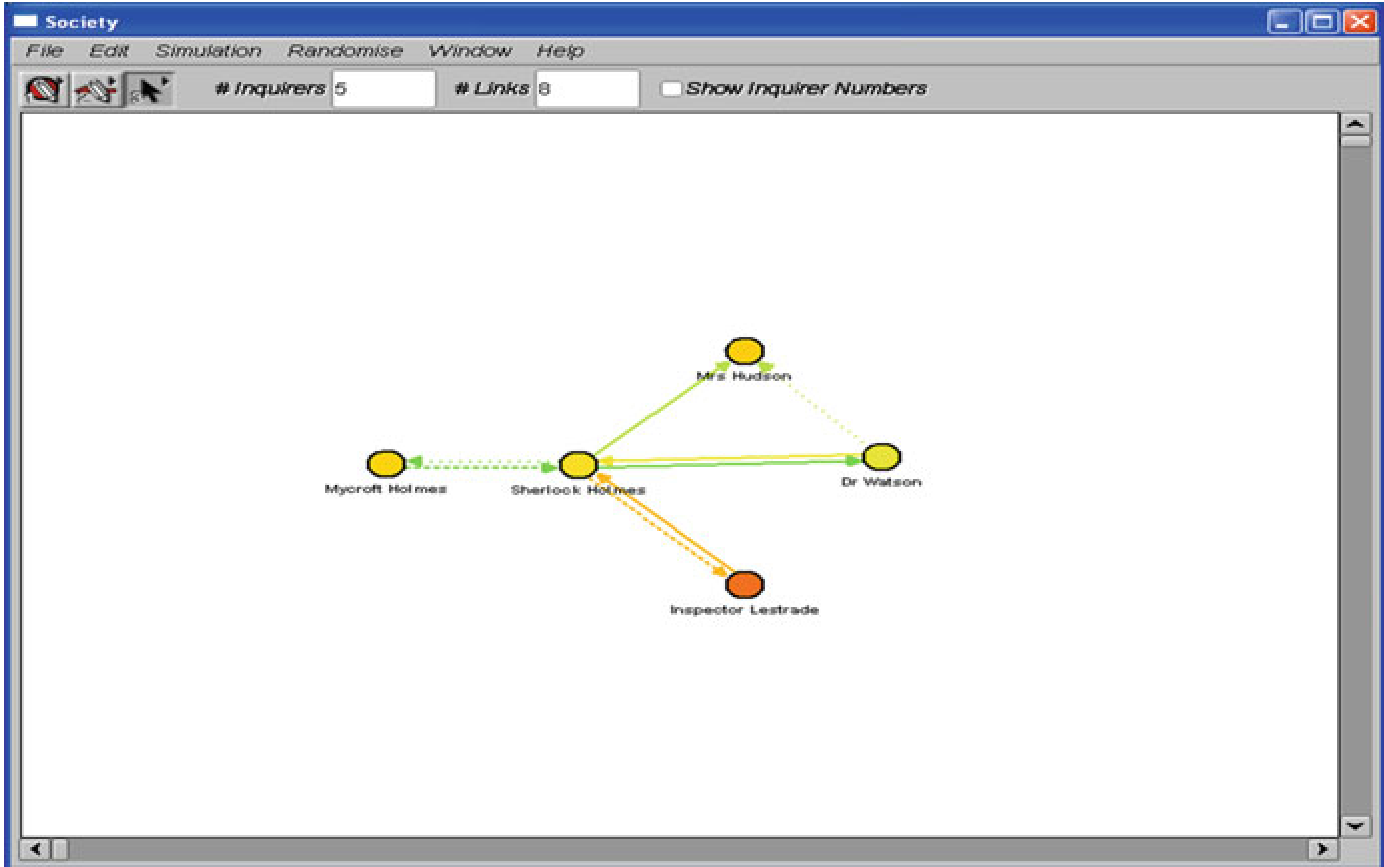 Figure 1: The Laputa Batch Window used to set variables like inquiry accuracy, network size, and communication chance.
Simulation Results: The Limit of Inquiry
Using the Laputa simulation tool, the researchers ran thousands of trials. They found a fascinating relationship between time and the optimal threshold.
- Finite Inquiry: When agents only have 10 steps of interaction, a threshold of 0.92 maximizes the social V-value.
- Infinite Inquiry: As the number of steps increases, the optimal threshold creeps toward 1.0.
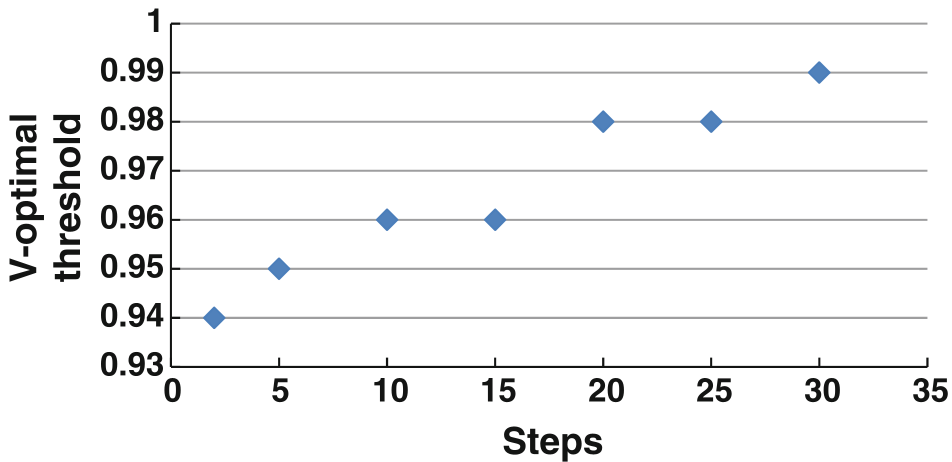 Figure 2: Plot showing that as the duration of inquiry increases, the community benefits from stricter assertion norms.
Why not always demand certainty?
If the threshold is 1.0, agents stay silent until they are absolutely sure. In the short term, this starves the network of useful information. A lower threshold allows "barely reliable" information to circulate, which—despite higher risk of error—helps the community reach the truth faster in time-constrained scenarios.
Deep Insights & Critical Analysis
The beauty of this work lies in its "Kantian" approach: evaluating a norm by the consequences of its universal implementation.
Key Findings:
- Robustness: The ~0.99 optimality is remarkably stable across different network sizes and link densities.
- The Exception: If a community already starts with high belief in the truth, lower thresholds are actually better because there's less risk of spreading falsehoods.
- The Paradox of Communication: More talking isn't always better. If assertion thresholds are too low, high "link chance" (connectivity) can actually decrease the overall V-value by amplifying noise.
Conclusion
This paper effectively reconciles the two warring camps of epistemology. The "Certainty Rule" is the gold standard for the limit of inquiry—the ideal end-state of science. However, for the practice of communication in the messy, finite world, a high-but-not-perfect probability threshold (the Rational Credibility rule) is veritistically superior.
For researchers in AI and multi-agent systems, this provides a rigorous framework for setting "honesty" parameters in communicative agents to ensure collective convergence on truth.