
Emotion-Aware Classrooms: Bridging the Affective Gap in HCI Education
A Novel Interaction System Based on Management of Students’ Emotions
The paper introduces an intelligent Human-Computer Interaction (HCI) system for traditional classrooms that leverages facial emotion recognition and cloud computing to monitor and manage students' affective states. By integrating emotion recognition into the teaching loop, the system provides teachers with decision support to switch pedagogical strategies—such as interactive multimedia or digital games—based on real-time emotional feedback.
TL;DR
This paper presents a novel interaction system designed to optimize classroom learning by managing students' emotions. By combining facial emotion recognition with cloud-based decision support, the system allows teachers to monitor real-time emotional states—such as interest, boredom, and frustration—and adapt their teaching methods (e.g., games or multimedia) accordingly to maximize cognitive efficiency.
Background & Motivation: Why Emotions Matter for Cognition
In the hierarchy of educational needs, emotion is often the "silent variable" that dictates success. While pedagogical research has long established that positive emotions (pleasure, curiosity) enhance creativity and negative emotions (anxiety, boredom) block cognitive processing, traditional classrooms rely on the teacher's intuition to gauge the room.
The authors argue that in an era where computers are central to education, the Human-Computer Interaction (HCI) should go beyond just delivering content—it should sense the user's internal state. The core motivation is to transform the classroom into a responsive, four-dimensional ecosystem where cloud computing and AI assist the teacher in "emotional management."
Methodology: The Architecture of Affective Feedback
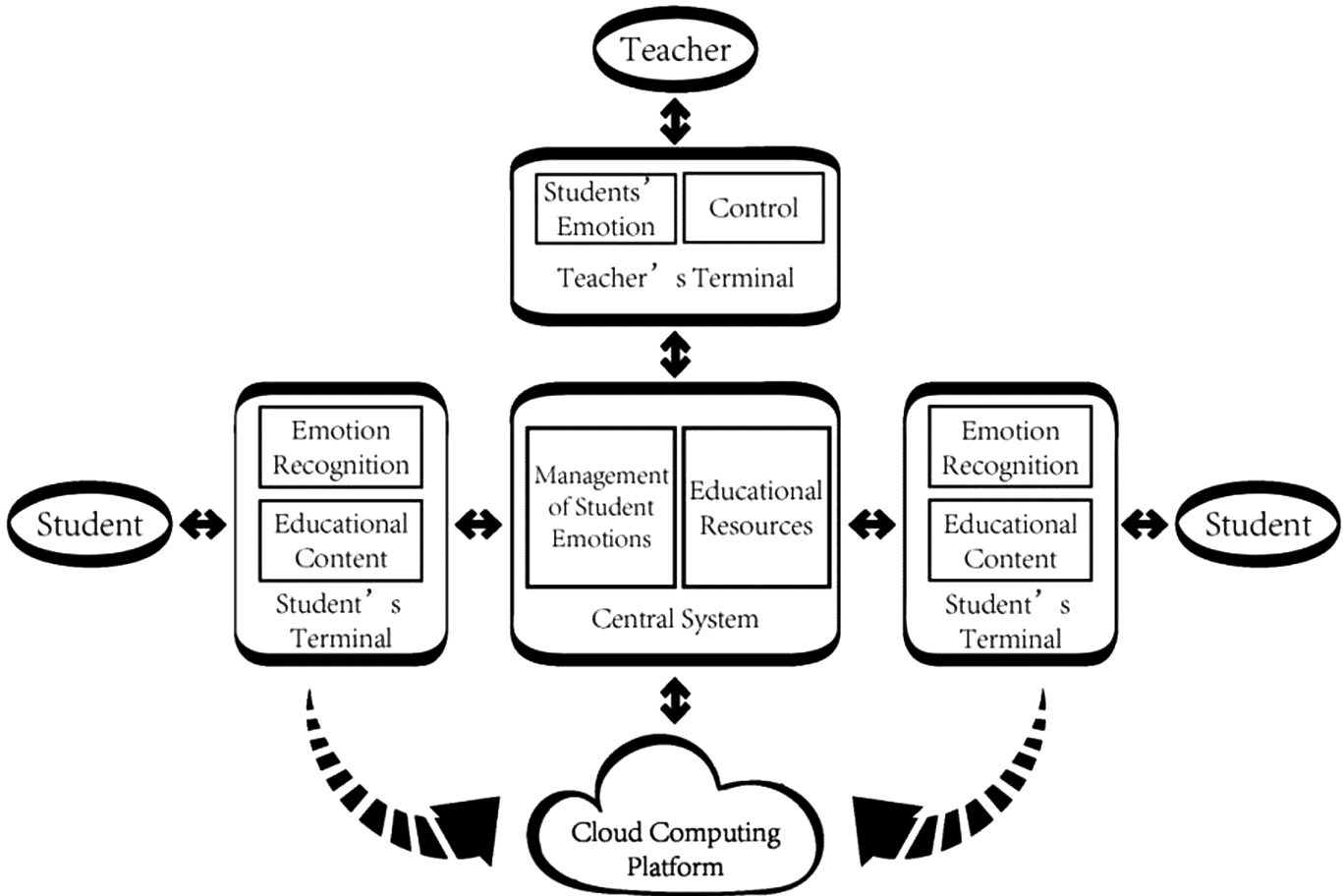
The proposed system is structured around three main tiers: the Student's Terminal, the Teacher's Terminal, and the Central Cloud System.
1. The Interaction Loop
- Data Capture: Common and infrared cameras capture facial data at the student's desk.
- Emotion Recognition: The system utilizes an anthropometric model to detect facial feature points. Instead of the standard "Big Six" emotions (anger, fear, etc.), it focuses on the Circumplex Model of Affect, which categorizes emotions relevant to learning: interest, engagement, confusion, and frustration.
- Decision Support: Data is sent to a cloud platform that stores long-term learning habits and provides the teacher with actionable insights.
2. Strategic Intervention
Once the system detects a dip in positive emotion (e.g., high boredom levels), the teacher can pivot to:
- Interactive Multimedia: Using simulations to foster relaxation and engagement.
- Digital Games: Leveraging "Edutainment" to raise motivation.
- Competitive Activities: Using gamified tasks to stimulate passion.
Experimental Results & Insights
The efficacy of the recognition algorithm was tested across 20 students. The results (as shown in the confusion matrix below) indicate that the system is particularly adept at identifying Frustration (90%) and Boredom (80%), which are the most critical "red flags" in a learning environment.
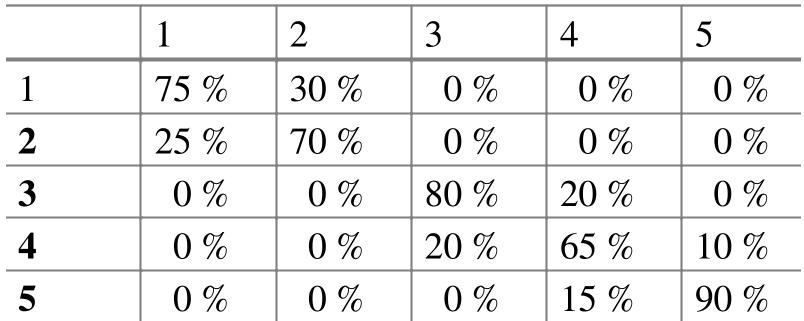 Table 1: Accuracy of recognition across 5 states: (1) Interest, (2) Satisfaction, (3) Boredom, (4) Confusion, (5) Frustration.
While Confusion (65%) and Satisfaction (70%) showed slightly lower accuracy—likely due to the subtle physical differences between these states—the overall performance proves that automated emotion tracking is a viable tool for real-time classroom adjustment.
Critical Analysis & Future Outlook
The strength of this work lies in its holistic view of the classroom. It doesn't treat AI as a replacement for the teacher, but as a "sensor" that enhances the teacher's awareness of their students' mental states.
Limitations:
- The current system relies primarily on facial expressions. In a real-world setting, lighting conditions and head movements (looking down at a book) can hinder recognition.
- The anthropometric model is a "classical" approach; modern Transformers (like ViT) might offer higher accuracy, though at a higher computational cost.
The Takeaway: The paper effectively shifts the focus of educational tech from "content delivery" to "emotional synchronization." As we move toward more sustainable and intelligent education, the ability to quantify the "vibe" of a classroom will become a standard requirement for smart schools.