
MOBA: Decoding the Complexity of Social Networks with Multi-objective Bat Algorithms
A Novel Multi-objective Optimization Algorithm for Social Network
This paper introduces the Multi-objective Bat Algorithm (MOBA), an evolutionary meta-heuristic designed to handle complex information diffusion in social networks. By integrating Pareto optimality and a novel density mechanism into the standard Bat Algorithm, it effectively balances intensification and diversification in multi-objective search spaces.
TL;DR
Understanding how information spreads in a social network is no longer a simple linear equation. Real-world networks involve conflicting news, diverse sources, and non-linear interactions. This paper presents MOBA (Multi-objective Bat Algorithm), a nature-inspired heuristic that uses echolocation principles combined with a sophisticated Density Mechanism to solve multi-objective optimization problems more efficiently than traditional PSO or Simulated Annealing variants.
Context & Motivation: Why Single-Diffusion Fails
Most prior work relies on single-diffusion models. However, in the modern digital age, an individual's decision is a result of "Competing Information"—where different sources might contradict one another. Modeling this as a multi-objective problem is computationally "expensive."
The authors' core insight is that searching for a Pareto Front (the set of optimal trade-off solutions) is the key. But there’s a trap: most algorithms get stuck in "extreme Pareto space" (boundaries) or become redundant. MOBA was designed to "see" the density of the search space, much like a bat uses sound to navigate complex environments.
Methodology: The Echolocation of Global Optima
1. The Core Bat Framework
The Bat Algorithm inherently balances Intensification (exploiting a local area like Particle Swarm Intelligence) and Diversification (exploring new areas like Simulated Annealing).
2. The Density Mechanism (The Secret Sauce)
To prevent the "crowding" of solutions, the authors introduced a density evaluation based on the Riemann Integral. By calculating the area of undominated space, the algorithm can mathematically determine which regions are "empty" and likely to yield new, high-value Pareto solutions.
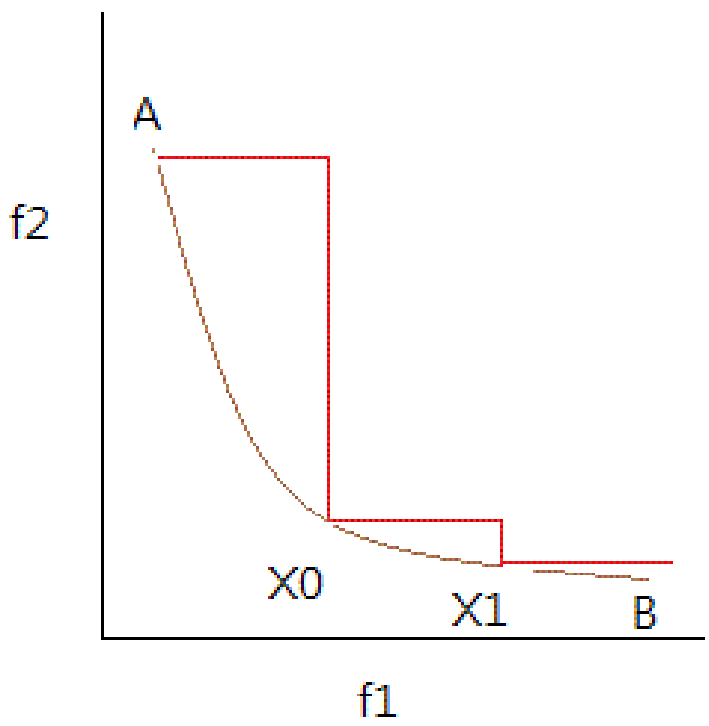 Fig 1: Using Riemann partitions to compare undominated space. A lower density partition signifies a higher probability of discovering new optimal solutions.
3. Survival Time & Weight Allocation
MOBA employs two conflicting weights:
- (Density Weight): Encourages moving toward loose, unexplored points.
- (Survival Time Weight): Penalizes solutions that remain static for too many iterations (redundancy).
Experimental Validation: Benchmarking Success
The researchers tested MOBA against the standard ZDT benchmark functions, which are the "Gold Standard" for evaluating multi-objective optimization.
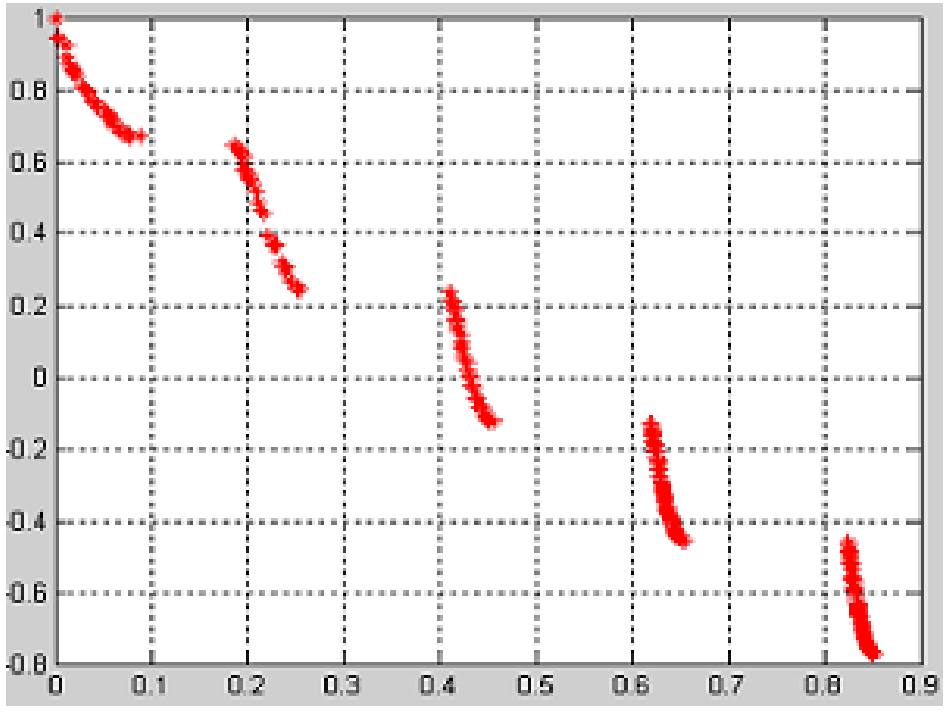 Fig 2: MOBA's performance on the ZDT3 test function, showing its ability to capture disjoint segments of the Pareto front.
One of the most innovative contributions is the termination condition. By monitoring the arithmetic mean distance (), researchers can pinpoint exactly when the algorithm has found the "extreme boundaries," significantly reducing wasted CPU cycles.
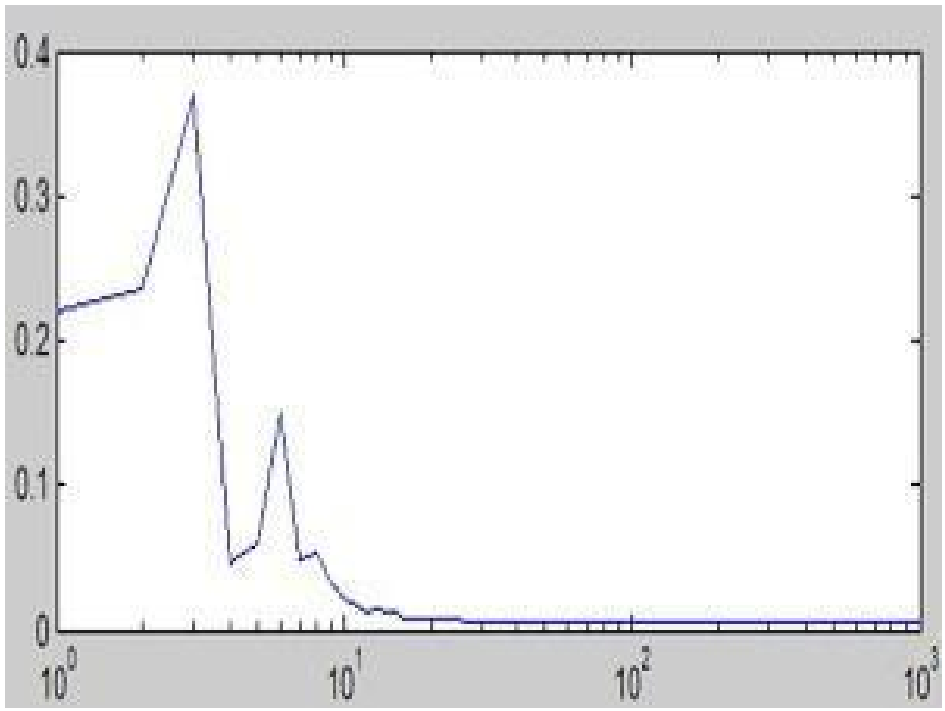 Fig 3: The decreasing peaks of indicate that the search space is becoming saturated and the optimal front has been identified.
Critical Insight & Future Outlook
While MOBA solves the "execution time vs. search quality" trade-off brilliantly, it opens the door to a more profound application: Social Resource Allocation. By modeling social networks as multi-diffusion environments, organizations can use MOBA to predict how a product's reputation scales when facing "competing information."
Limitations: The current study focuses on linear and non-linear mathematical benchmarks. The true test will be applying MOBA to massive, real-time social datasets (like Twitter/X or LinkedIn) where the network topology changes every second.
Conclusion
MOBA is a powerful bridge between biological intuition and rigorous mathematical optimization. It proves that by adding a "density-aware" lens to evolutionary algorithms, we can navigate the darkness of complex social interactions just as effectively as a bat hunting in the night.