NTSC: Strengthening the Foundation of Trust in Social IoT via Edge Computing
NTSC: a novel trust-based service computing scheme in social internet of things
The paper introduces NTSC, a novel trust-based service computing scheme for the Social Internet of Things (SIoT) that utilizes edge computing to ensure data and service integrity. By leveraging static sensors as benchmarks to evaluate crowdsourced data providers, the framework achieves SOTA-level precision in service evaluation and trustworthiness.
TL;DR
The "Social Internet of Things" (SIoT) relies on crowdsourced data to drive services like traffic prediction and health monitoring. However, malicious actors often provide fake data or biased feedback. NTSC (Novel Trust-based Service Computing) solves this by using local edge nodes and trusted static sensors to vet data providers. The result? A 26.4% boost in service trust and over 20% better evaluation precision compared to traditional blockchain-based methods.
The "Trust Crisis" in Crowdsourcing
In a typical SIoT ecosystem, your smartphone isn't just a receiver; it's a data provider. If a group of devices reports fake traffic jams to clear a route, the resulting service becomes untrustworthy. Prior works (like BNNC) often focused on making sure the communication was secure, but they didn't effectively question the honesty of the data itself. Furthermore, current systems are vulnerable to "on-off attacks," where malicious users behave well locally but act maliciously across different regions.
Methodology: The NTSC Framework
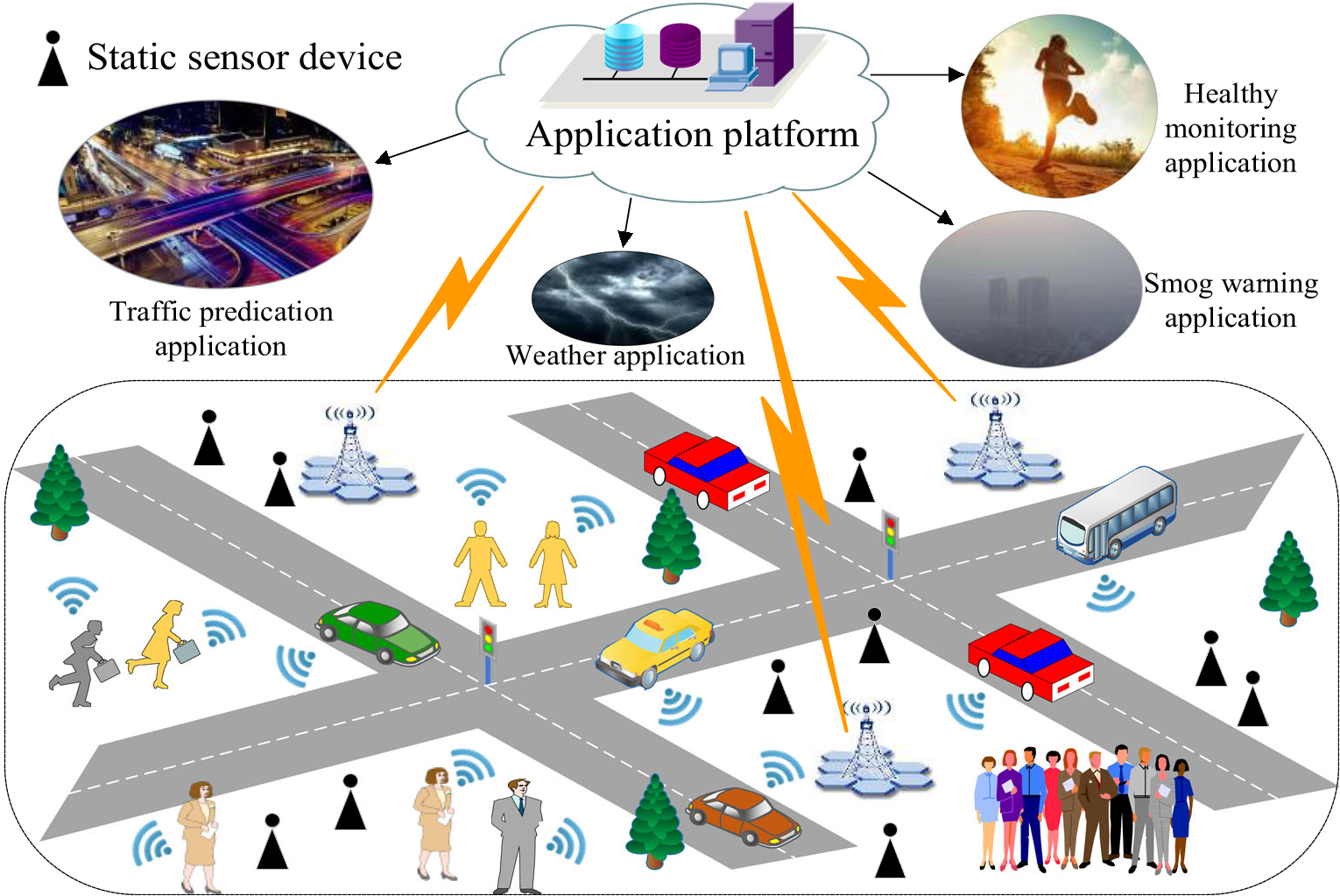
The authors propose a hierarchical architecture consisting of Smart Devices, Static Sensors, Edge Nodes, and a Cloud Server.
1. Filtering at the Source (Data Trust)
Instead of trusting all mobile data, NTSC uses Static Sensor Devices (deployed by trusted institutions like governments) as a ground-truth benchmark.
- Quality of Data (QoD): Measures the distance between mobile reports and the static sensor "Data Standard."
- Quality of Timeliness (QoT): Ensures that data isn't just accurate, but relevant to the current time window.

2. Weighted Service Evaluation (The Feedback Loop)
Once a service is consumed, the requester provides feedback. NTSC applies a trust-weighting mechanism: the higher the user's historical trust, the more their feedback influences the service's score.
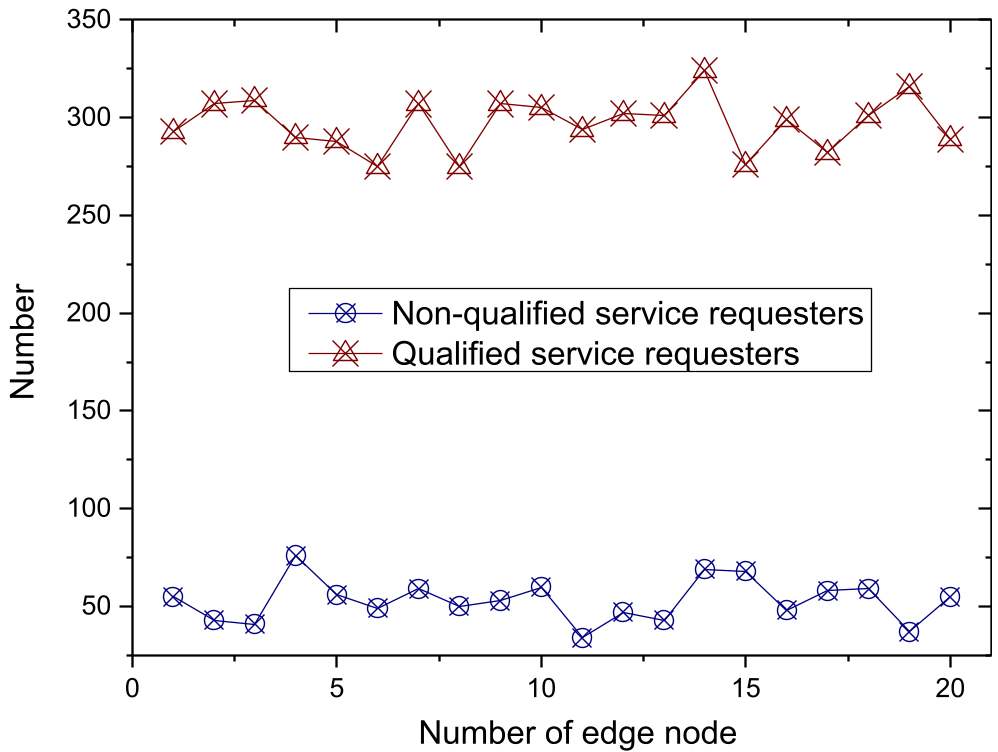
- Local Evaluation: Edge nodes filter out users below a threshold .
- Global Evaluation: The cloud collects local scores and applies a Standard Gaussian Distribution (SGD) filter to remove outlier "local evaluations" that might be skewed by coordinated local attacks.
Experimental Insights
The researchers conducted extensive simulations with 10,000 nodes and 20 edge nodes.
Trust Improvement
By filtering out unqualified participants using the benchmark data, NTSC significantly outperformed the BNNC scheme. The service trust improvement scales with the strictness of the threshold, showing a robust resistance to malicious noise.
Precision Gain
A critical finding was the refinement of Service Evaluation Precision. By weighting feedback based on user trust, the system becomes resilient to "balloting" or "smearing" attacks where malicious users try to artificially inflate or deflate service ratings.

Deep Insight & Conclusion
The genius of NTSC lies in its hybrid trust model. It doesn't just rely on social reputation; it anchors social trust to physical reality (static sensors). Moving the bulk of the computation to the Edge also addresses the latency and bandwidth issues that plague purely cloud-based trust management.
Takeaway for the Future: While NTSC is a major step forward, the authors correctly identify that the central Cloud Server remains a "Single Point of Failure." Future iterations incorporating Blockchain for the global aggregation phase could create a truly immutable and decentralized trust ecosystem.
Applications
This framework is ready-made for:
- Traffic Predication: Filtering out fake congestion reports.
- Health Monitoring: Ensuring wearable data isn't spoofed for insurance fraud.
- Smog Warning: Correlating citizen sensor data with official government stations.