
The Physics of Society: Why 1:3 is the Magic Ratio for Community Survival
Nucleation of Social Groups: The Role of Centrality Inequality and Social Mobility
The paper investigates the structural stability of 10,122 online communities using a longitudinal dataset of 134K users. It identifies a "two-phase" network structure and proposes the "Nucleation Ratio"—the balance between a stable core and an ephemeral periphery—as a critical predictor of community survival.
TL;DR
Why do some online communities flourish for a decade while others ghost out in months? By analyzing 10,000+ communities over 12 years, researchers found that the secret isn't "equal participation," but a specific structural inequality. A stable community requires a 1:3 ratio between its "Nucleus" (power users) and its "Periphery" (casual lurkers/newcomers).
The "Gravity" of Social Status: Motivation & Problem
Most network theories, such as Preferential Attachment, explain how "the rich get richer" in terms of links. However, they treat networks as static snapshots. In reality, people move. They join, get active, lose interest, and leave. This is Social Mobility.
The authors argue that previous research neglected the "metabolism" of these groups. They set out to answer:
- How hard is it to climb the social ladder?
- Does a community need a "ruling class" (nucleus) to stay alive?
- Is there an optimal balance of inequality?
Methodology: Mapping the Social Ladder
The researchers utilized a massive dataset from "Tapuz," an Israeli forum site, tracking nearly 10 million posts. To understand the dynamics, they looked at:
- Transition Matrices: Mapping the probability of a user moving from degree in one period to degree in the next.
- The Nucleation Ratio: Defining the "Nucleus" as users whose neighbors are all connected to each other (Clustering Coefficient = 1).
The Negative Drift
One of the most striking findings is that social mobility is overwhelmingly negative.
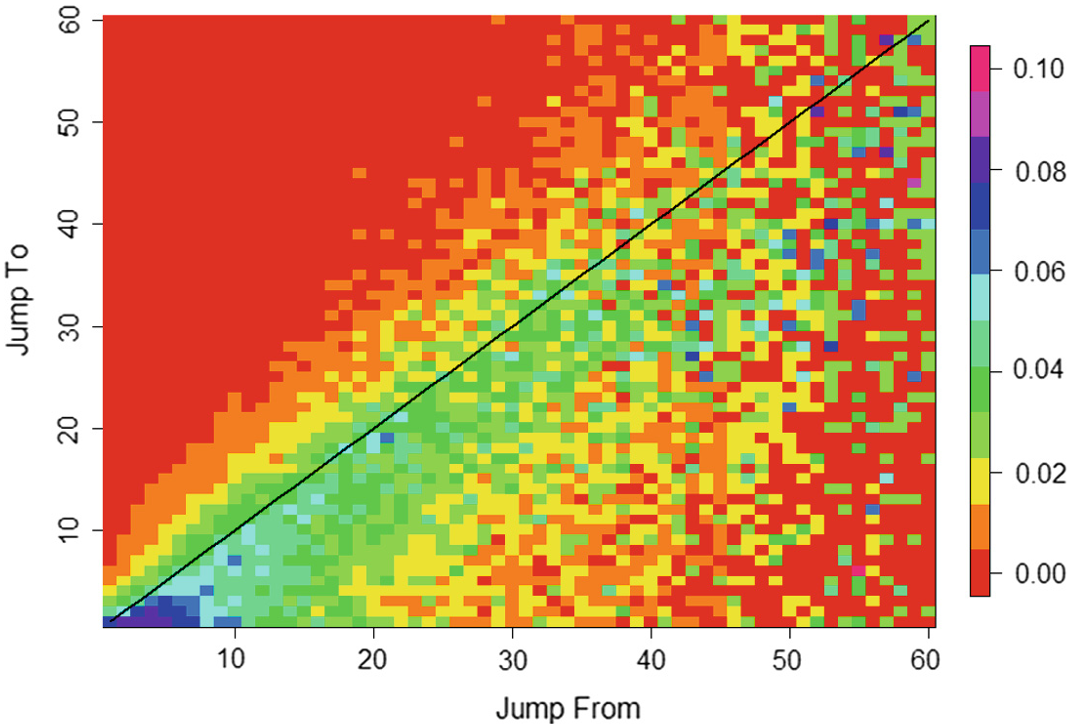 Figure 1: The red line (expected future degree) stays consistently below the green line (stability). On average, everyone is losing connections.
This "negative drift" implies that communities are in a constant state of decay. To survive, they need a constant influx of "fresh blood" from the periphery to counteract the attrition of the core.
The Two-Phase Structure: Core vs. Cloud
The study reveals that networks exist in two distinct phases:
- The Nucleus: A microscopic, highly stable core. Once you "penetrate" this core, your lifetime in the community increases by three orders of magnitude.
- The Cloud: A large, ephemeral population in the outer shells. These users have high turnover but are essential.
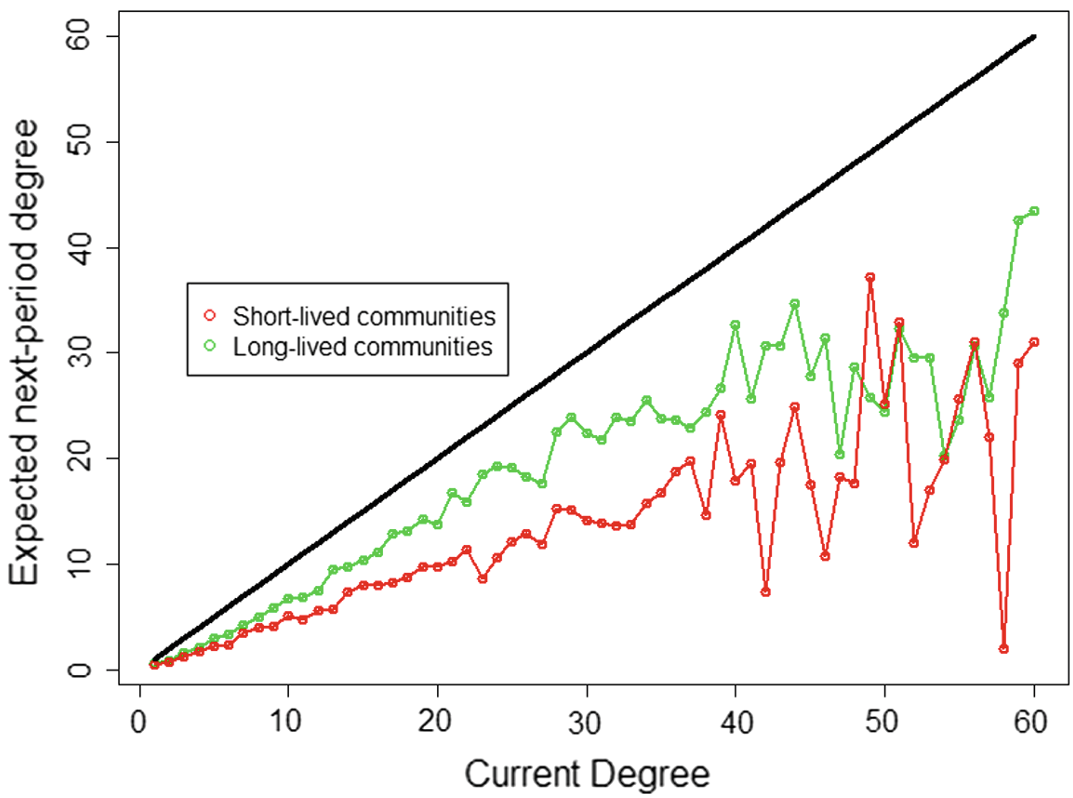 Figure 2: Lifetime jumps exponentially once a user passes the 50th percentile of centrality.
The Magic Ratio: 1 Nucleus to 3 Periphery
The most actionable insight of the paper is the Nucleation Ratio. By plotting future activity against the percentage of users in the nucleus, a clear "Goldilocks zone" emerges.
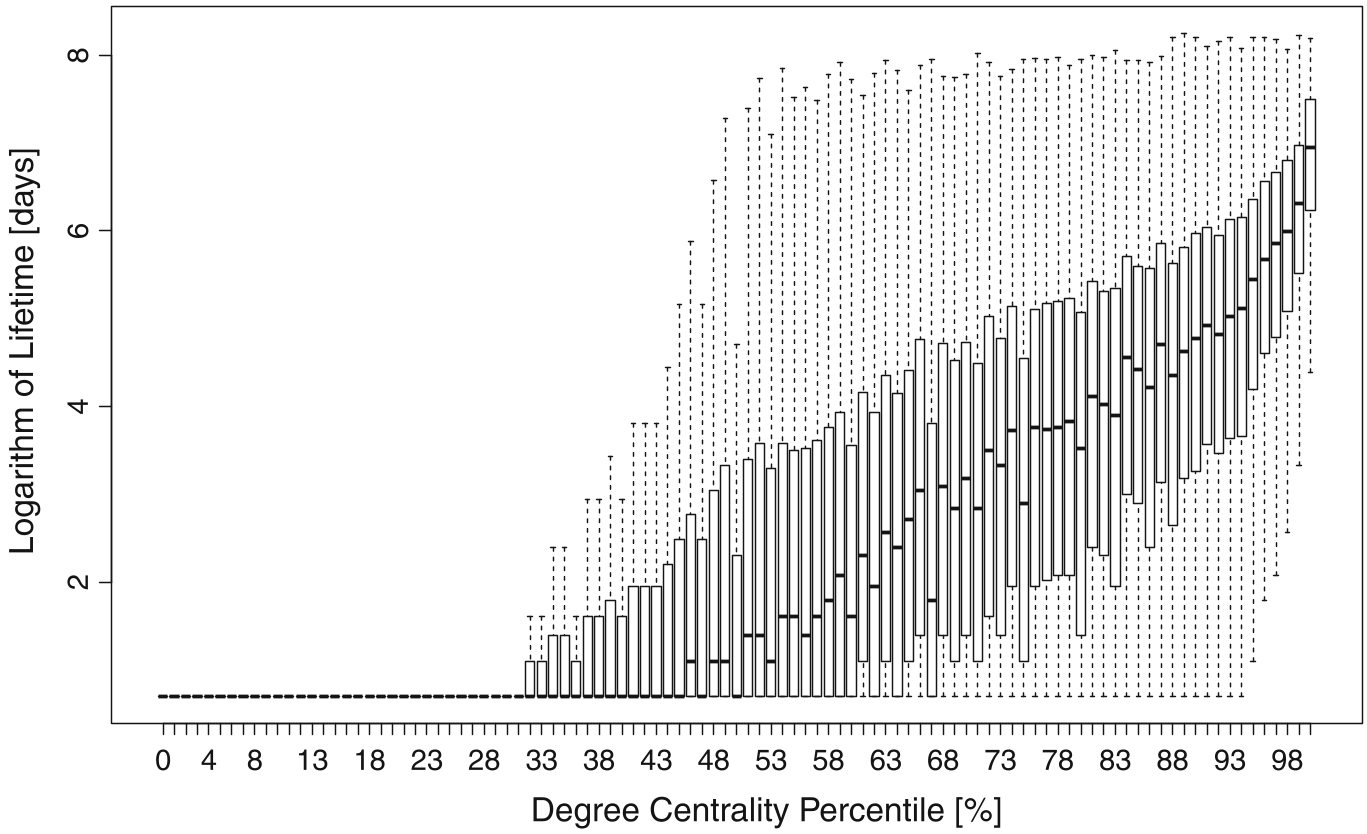 Figure 3: Peak future activity occurs when the nucleus is roughly 25% of the total population.
Why does the 1:3 ratio work?
- Too much Nucleus (>25%): The community becomes an insular "echo chamber." Without enough peripheral users to provide a fresh "audience" and new ideas, the core eventually burns out.
- Too little Nucleus (<25%): The community lacks "glue." There aren't enough stable power users to anchor the conversations, and the ephemeral cloud simply drifts away.
Critical Insight & Conclusion
This research challenges the democratic ideal that "everyone should be equally active." Instead, it suggests that structural inequality is a functional necessity for social survival.
Takeaways for Community Builders:
- Don't ignore the "Lurkers": They are the "periphery" that fertilizes the core.
- Monitor the Nucleation Ratio: If your "power user" group is growing too large relative to your total base, your community might be heading toward a collapse due to lack of external stimulus.
- Stability requires Barriers: The difficulty of entering the nucleus is actually what makes it stable. If it were too easy to join, the core would become as ephemeral as the periphery.
Future Outlook: While this study focused on discussion forums, the "1:3 nucleation ratio" likely applies to DAO governance, open-source projects, and even corporate cultures. The balance between "institutional memory" (the core) and "diverse input" (the periphery) is the universal key to longevity.