
O3R: Bridging the Semantic Gap in Web Usage Mining via Domain Ontologies
O3R: Ontology-based mechanism for a human-centered environment targeted at the analysis of navigation patterns
The paper introduces O3R (Ontology-based Rules Retrieval and Rummaging), a human-centered environment designed to analyze Web Usage Mining (WUM) patterns. By integrating domain ontologies with filtering, clustering, and "rummaging" mechanisms, it bridges the semantic gap between raw URLs and meaningful user behaviors.
TL;DR
Web Usage Mining (WUM) often leaves analysts drowning in a sea of meaningless URLs. This paper presents O3R, a framework that transforms raw navigation logs into high-level conceptual stories using ontologies. By allowing analysts to "rummage" through data—drilling up to general behaviors and down to specific clicks—O3R turns a months-long analytical bottleneck into a two-hour interactive session.
The "URL Problem": Why Raw Logs Fail Analysts
In the world of Web Usage Mining, the discovery of patterns is easy, but understanding them is hard. Analysts face two major hurdles:
- The Semantic Gap: A log entry like
/cgi-bin/forum?id=102is just syntax. The meaning (e.g., "Student seeking help on Assignment 1") is lost. - Pattern Overload: Mining algorithms frequently produce thousands of rules, many of which are redundant or structurally similar.
Traditionally, fixing these required a "return to start" approach: re-preprocessing the data, re-tagging URLs, and re-running the mining algorithm—a cycle that is slow, expensive, and frustrating for domain experts.
Methodology: Semantic-Driven Analysis
The core innovation of O3R is its Dynamic Enrichment mechanism. Instead of freezing the meaning of data during preprocessing, O3R keeps the mapping flexible through an ontology.
1. The Multi-Dimensional Ontology
O3R categorizes every URL into two primary dimensions: Service (the action, e.g., "Post Message") and Content (the subject, e.g., "Assignment Tutorial"). This allows an analyst to look at the same data through different lenses.
2. The Rummaging Mechanism
"Rummaging" allows for exploratory interpretation:
- Drill-up/Drill-down: A user can see a pattern about a "Chat" session and drill up to see it as a "Communication Service" pattern.
- Property Detailing: Clicking a node reveals metadata (e.g., this specific chat was about "How to submit files").
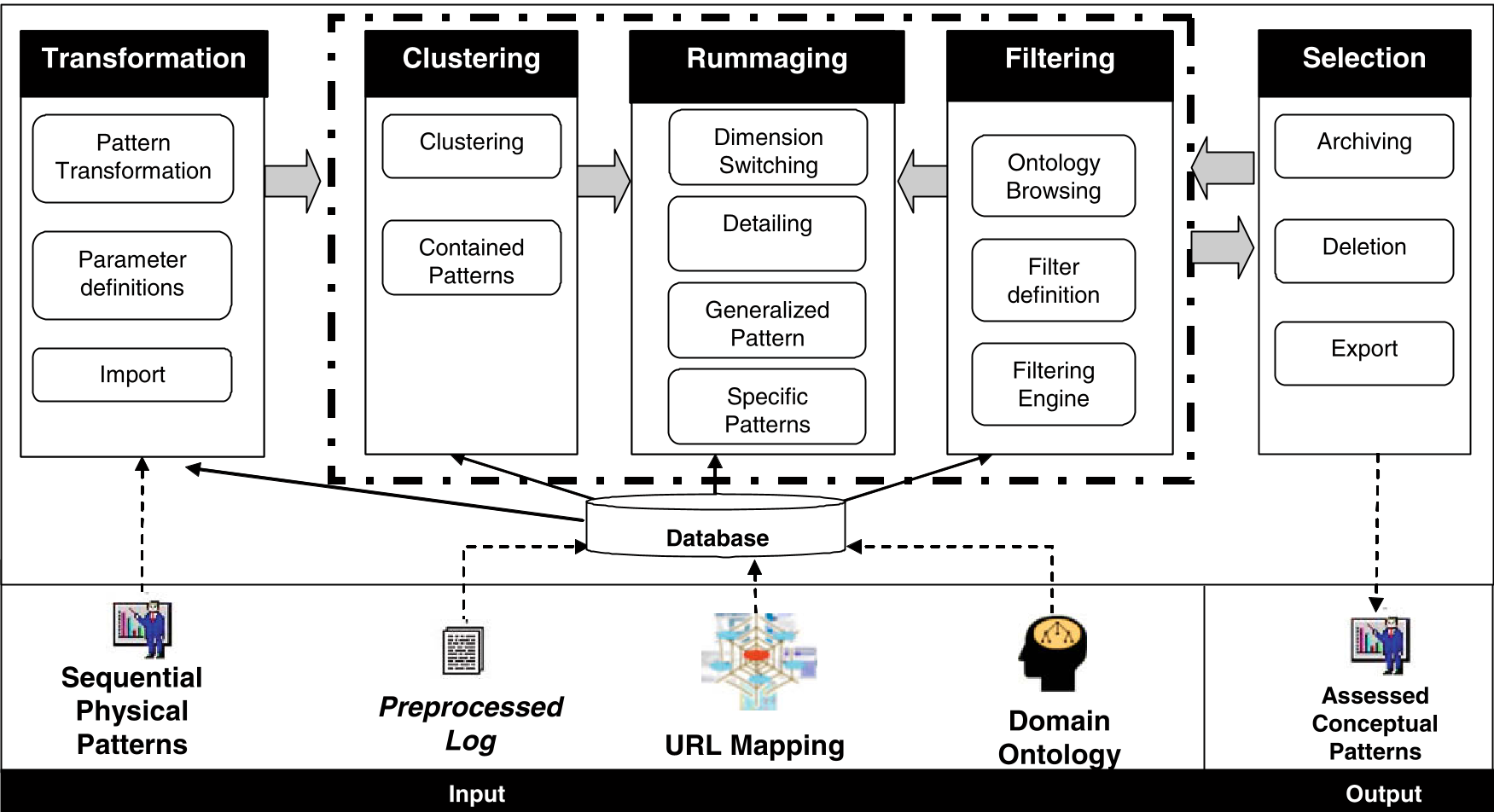 Figure 1: The O3R Architecture, showing the transformation from physical patterns (URLs) to conceptual sequences.
Experiments: Real-World Impact
The researchers tested O3R on a virtual learning environment.
Case Study: Detecting Disorientation
By using Similarity Filtering and Clustering, a domain expert quickly identified that many students were getting "trapped" in a loop. They would try to submit an assignment, fail to find the link, return to the home page, and start over.
In a traditional setup, identifying this would require manual log inspection. In O3R, the expert used "Maximal Sequence" clustering to group similar navigation failures and saw the loop instantly in the visualization.
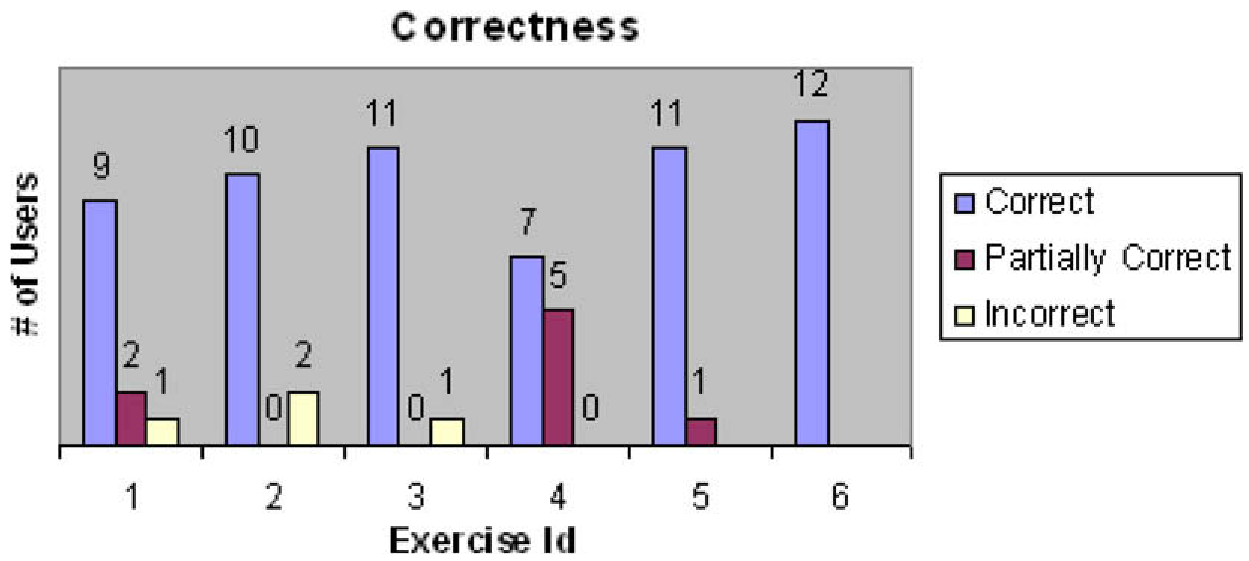 Figure 2: User test results showing high accuracy (90%+) across different complex analytical tasks.
Critical Insights & Takeaways
The brilliance of O3R isn't just in the tech—it's in the User-Centric Design.
- Value of Intuition: The study found that users didn't need to be Web Usage Mining experts. As long as they understood the domain (teaching/learning), the ontology allowed them to navigate the data effectively.
- Efficiency: The reduction from "months of iteration" to "hours of rummaging" proves that the bottleneck in AI/Data Science is often the Human-Computer Interface, not the algorithm itself.
Limitations
While powerful, O3R assumes a high-quality ontology is already available. In rapidly changing web environments, maintaining this mapping between URLs and OWL/RDF concepts could become its own bottleneck.
Conclusion
O3R demonstrates that the future of data mining isn't just about faster algorithms, but about creating environments where humans can ask "Why?" and "What if?" without being buried by raw data. By treating pattern analysis as an exploratory, semantic journey rather than a batch-processing task, O3R sets a high bar for human-centered AI tools.