
OICRM: Bridging the Semantic Gap in Spatial Co-location Rule Mining
OICRM: An Ontology-Based Interesting Co-location Rule Miner
OICRM is an interactive spatial data mining system designed to extract meaningful co-location rules by integrating user-defined ontologies. It leverages a rule schema and specific operators (P, C, U) to filter the "rule explosion" typical in spatial databases, delivering high-utility insights through a structured semi-automated pipeline.
TL;DR
OICRM (Ontology-based Interesting Co-location Rule Miner) is a specialized framework designed to solve the "rule overload" problem in spatial data mining. By combining domain ontologies with interactive user feedback, it allows experts to filter out statistical noise and focus on patterns that are semantically meaningful and practically useful.
Background: The Curse of Rule Explosion
Spatial co-location mining identifies sets of features (e.g., "Cafes" and "Libraries") that appear together in geographic space more often than chance. However, as the number of features increases, the number of potential rules grows exponentially.
Current SOTA methods often rely on thresholds like prevalence and conditional probability. While mathematically sound, these metrics fail to capture user intent. A rule might be statistically significant but common knowledge (e.g., "Gas stations are near Highways"), making it "uninteresting" to a researcher looking for novel insights.
Methodology: Human-in-the-Loop Mining
The OICRM architecture moves beyond raw number-crunching by introducing a three-stage interactive pipeline:
1. The Formula Sub-system (Knowledge Integration)
Users define an Ontology representing the hierarchy and relationships of spatial features. Based on this, they generate a Rule Schema (RS). The core innovation lies in the three operators:
- P(RS) - Pruning: Automatically discards rules the user already knows or finds irrelevant.
- C(RS) - Confirming: Targets specific hypotheses the user wants to validate.
- U(RS) - Unexpectedness: The most powerful tool, which identifies "surprising" rules where the antecedent or consequent deviates from the user's background knowledge.
2. The Mining & Refilter Sub-systems
The system first generates "coarse" rules that satisfy the basic constraints. Then, a secondary mining step applies two loss-less filters to remove redundant logical implications, ensuring the final output is concise.
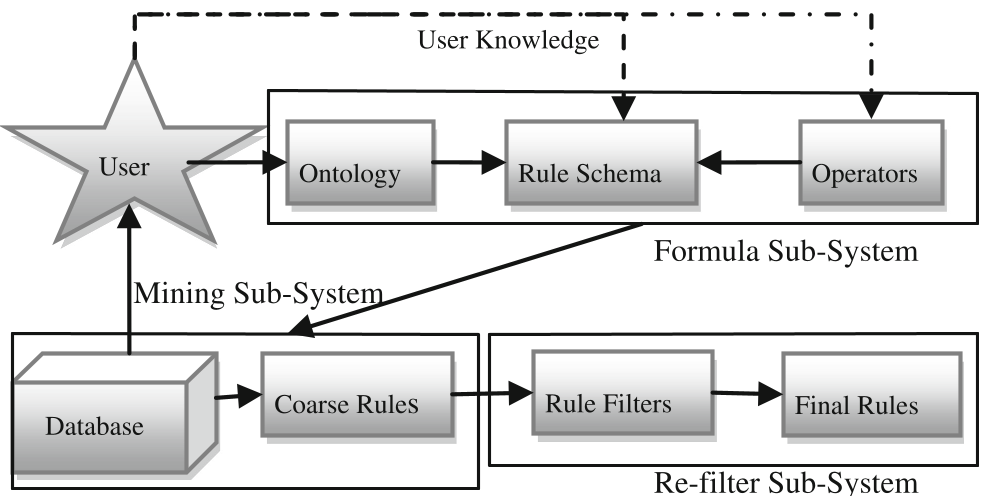 Figure 1: The OICRM framework, highlighting the interaction between the formula sub-system and the spatial database.
Experiments and Demonstration
The authors demonstrated the system using Points of Interest (POI) data from Beijing. By setting a Rule Schema such as Accommodation -> Sights, the user can specifically investigate the relationship between tourism lodging and attractions.
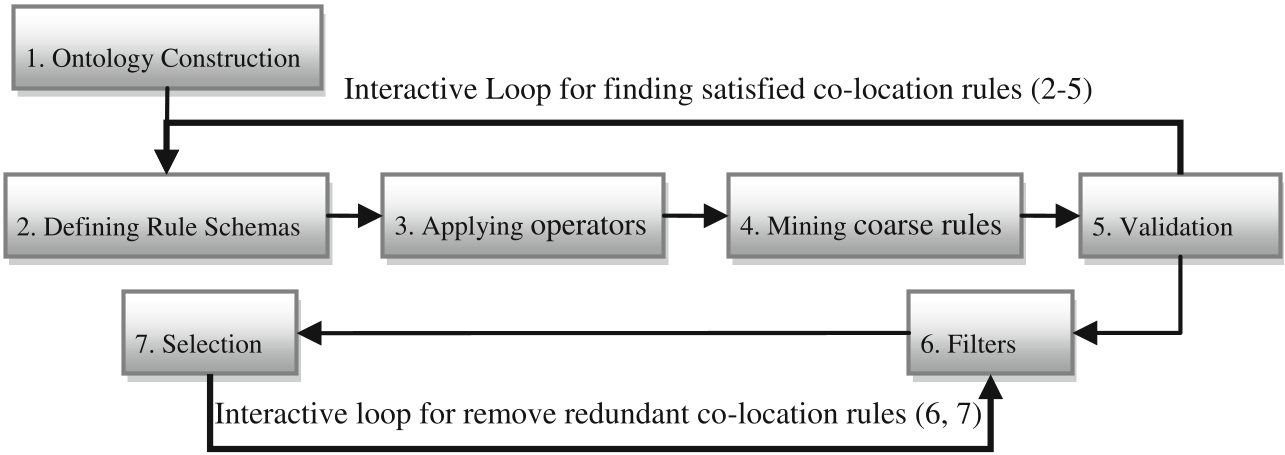 Figure 2: The GUI provides (a) main functions, (b) ontology tree visualization, (c) formula input, (d) runtime logs, and (e) interactive filter results.
Key Result: In the Beijing POI scenario, the interactive filtering reduced the output to only 11 refined rules, a manageable amount for a human expert to evaluate, compared to the thousands of rules generated by traditional non-semantic algorithms.
Critical Analysis & Conclusion
Why it Works
OICRM’s strength is its Inductive Bias management. By allowing the user to encode "what they already know" via the ontology, the algorithm can focus its computational power on "what the user needs to know." This semantic layer acts as a high-pass filter for knowledge discovery.
Limitations & Future Work
- Ontology Bottleneck: The effectiveness of OICRM is highly dependent on the quality of the initial ontology construction. If the ontology is poorly defined, the "interestingness" of the rules suffers.
- Scalability of Interaction: While effective for dozens of features, very high-dimensional spatial data might require more automated ontology induction techniques.
Summary takeaway
OICRM represents a shift from "Passive Data Mining" to "Active Knowledge Inquiry," proving that in the age of Big Data, the most efficient filter is often the human expert's own conceptual framework.