
OMT: Decoding the Cross-Impact of Multiple Topics in Social Influence
OMT: An Operate-Based Approach for Modelling Multi-topic Influence Diffusion in Online Social Networks
This paper introduces the Operator-based Multi-Topic (OMT) model to simulate influence diffusion in online social networks. By integrating user topic interest, dynamic topic penetration, and cross-topic correlation, OMT achieves state-of-the-art performance in predicting information spreading and solving influence maximization problems.
TL;DR
The Operator-based Multi-Topic (OMT) model bridges the gap between mathematical diffusion dynamics and the messy reality of multi-topic social interactions. By treating influence as a "heat" that flows through interconnected topic layers, this research provides a high-fidelity simulation tool and a superior seed selection algorithm (MGTS-greedy) for maximizing influence in real-world networks.
The Multi-Topic Blind Spot
Most influence models assume a "one size fits all" propagation probability. However, in reality:
- Context Matters: A user might be an authority in "Jazz" but ignored in "Electronic Music."
- Topics Collide: A viral post about "Politics" might inadvertently boost a related "Economics" discussion.
- Dynamic Status: Hot topics (High Penetration) spread faster than niche ones.
Existing SOTA models often ignore these interdependencies, leading to poor simulation quality when applied to datasets with diverse content.
Methodology: The Synthetic Operator
The core innovation of OMT is the formulation of a Topic-Aware Operator (). This operator defines how influence flows between users ( and ) while being moderated by their interests () and the correlation between topics ().
1. Topic Correlation ()
Instead of assuming topics are independent, the authors use KL-divergence to measure how the distribution of one topic relates to another. If two topics are highly correlated, message exchanges in topic can trigger influence adoption in topic .
2. The Diffusion Equation
The model uses a differential equation to describe the evolution of the network's influence state.
 Figure 1: Conceptual framework of topic effects on influence propagation.
The operator accounts for:
- User Trust (): The baseline influence between two individuals.
- Topic Penetration (): The current "heat" or momentum of a topic in the network.
Experimental Validation
The authors tested OMT using a massive dataset of musical influence (20 genres/topics).
High-Fidelity Simulation
When compared against the actual Real Diffusion (RD) recorded in the dataset, the OMT model's curves were significantly more accurate than the single-topic OBM model.
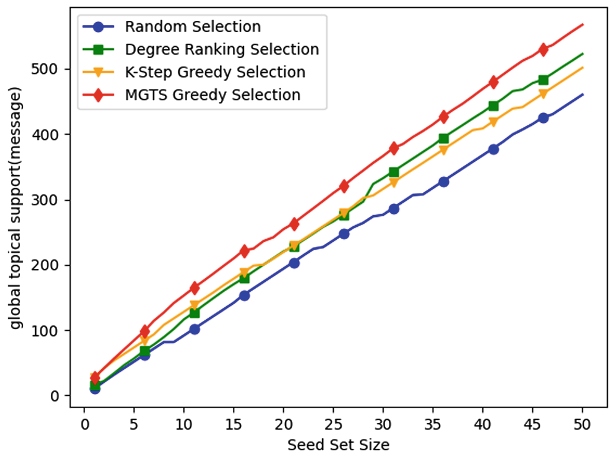 Figure 2: Simulation results comparing OMT and OBM against real-world data (RD).
Influence Maximization
The MGTS-greedy algorithm uses the OMT operator to find the most influential "seed" users. By accounting for cross-topic support, it outperformed traditional degree-ranking and random selection methods in both 8-topic and 6-topic network samples.
Critical Insights & Conclusion
- Direct vs. Indirect Influence: OMT effectively captures how a user can be influenced by a topic they aren't even discussing, purely through its correlation with their active interests.
- Memory and Context: By inheriting from Agent-Based Modeling, the model respects user capacity and "memory" (context), making the simulation more human-centric.
Limitations: The model currently assumes topic correlations are non-directional (), which may not hold true in cases where one topic is a subset of another (e.g., "Machine Learning" vs "AI").
Future Work: Enhancing the efficiency of the MGTS-greedy algorithm for massive-scale networks and exploring asymmetric topic correlations will be the next frontier for OMT.