
From Customers to Citizens: Redesigning Crowdsourcing for the Public Sector
Online Crowdsourcing in the Public Sector: How to Design Open Government Platforms
This paper explores the adaptation of corporate "Open Innovation" and "Crowdsourcing" models to the public sector, specifically through the "Aufbruch Bayern" case study. It proposes a refined set of design principles for Open Government platforms that emphasize community management and hybrid online-offline interactions.
TL;DR
Open Innovation isn't just for Silicon Valley anymore. This paper argues that while "crowdsourcing" can revitalize government-citizen relations, simply "copy-pasting" corporate platform designs (like Starbucks' or Dell's) often fails. By analyzing a massive German political initiative, the authors reveal that true "Open Government" requires a shift toward deep deliberation, hybrid offline events, and aggressive community management to turn passive taxpayers into active problem solvers.
Background: The Gap Between Industry and State
In the corporate world, open innovation is a race for ROI. Platforms like My Starbucks Idea treat users as "value generators" to optimize products. However, the public sector is different. Citizens aren't just looking for better "service delivery"—they are looking for democratic agency. The authors identify a critical research gap: we know how to crowdsource a new sneaker design, but we are still learning how to crowdsource urban planning or educational reform.
Motivation: The "Stuttgart 21" Lesson
The paper cites the "Stuttgart 21" project as a cautionary tale of "closed" problem-solving. When government decisions are made behind closed doors, they face massive public resistance. The motivation here is legitimacy. By opening the doors via digital platforms, governments can reduce political disenchantment and tap into the "latent expertise" of the common citizen.
Methodology: The "Aufbruch Bayern" Experiment
The researchers didn't just observe; they acted. Using Participatory Action Research (PAR), they spent eight weeks running a state-wide contest in Bavaria focusing on family, education, and innovation.
The Baseline Architecture
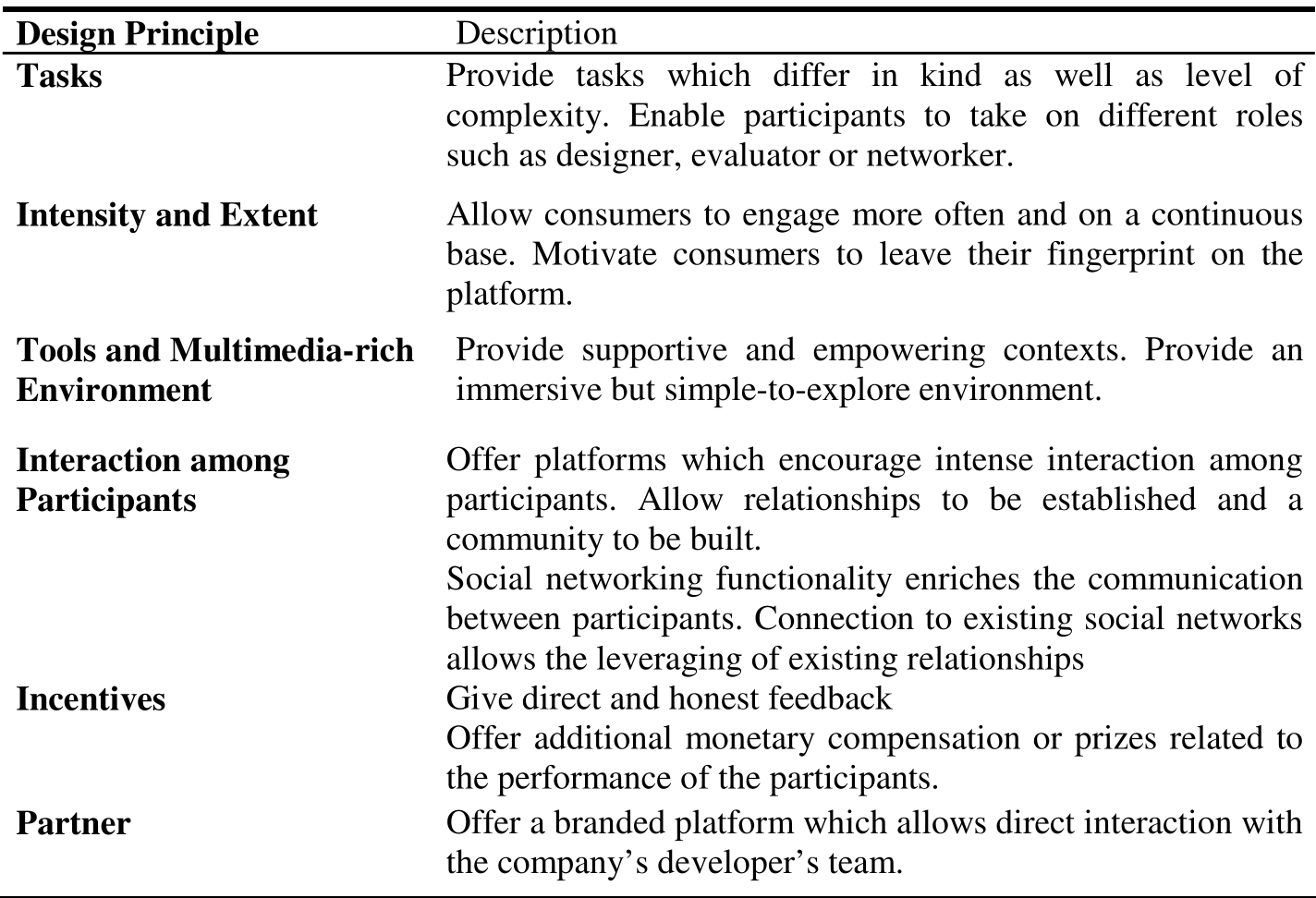
The platform was initially built on Füller’s (2010) five-dimensional framework:
- Tasks: Different roles for designers vs. evaluators.
- Networking: Tools for building a community inside the platform.
- Incentives: Non-monetary rewards (e.g., meeting a politician).
Core Insight: Public vs. Private Design Divergence
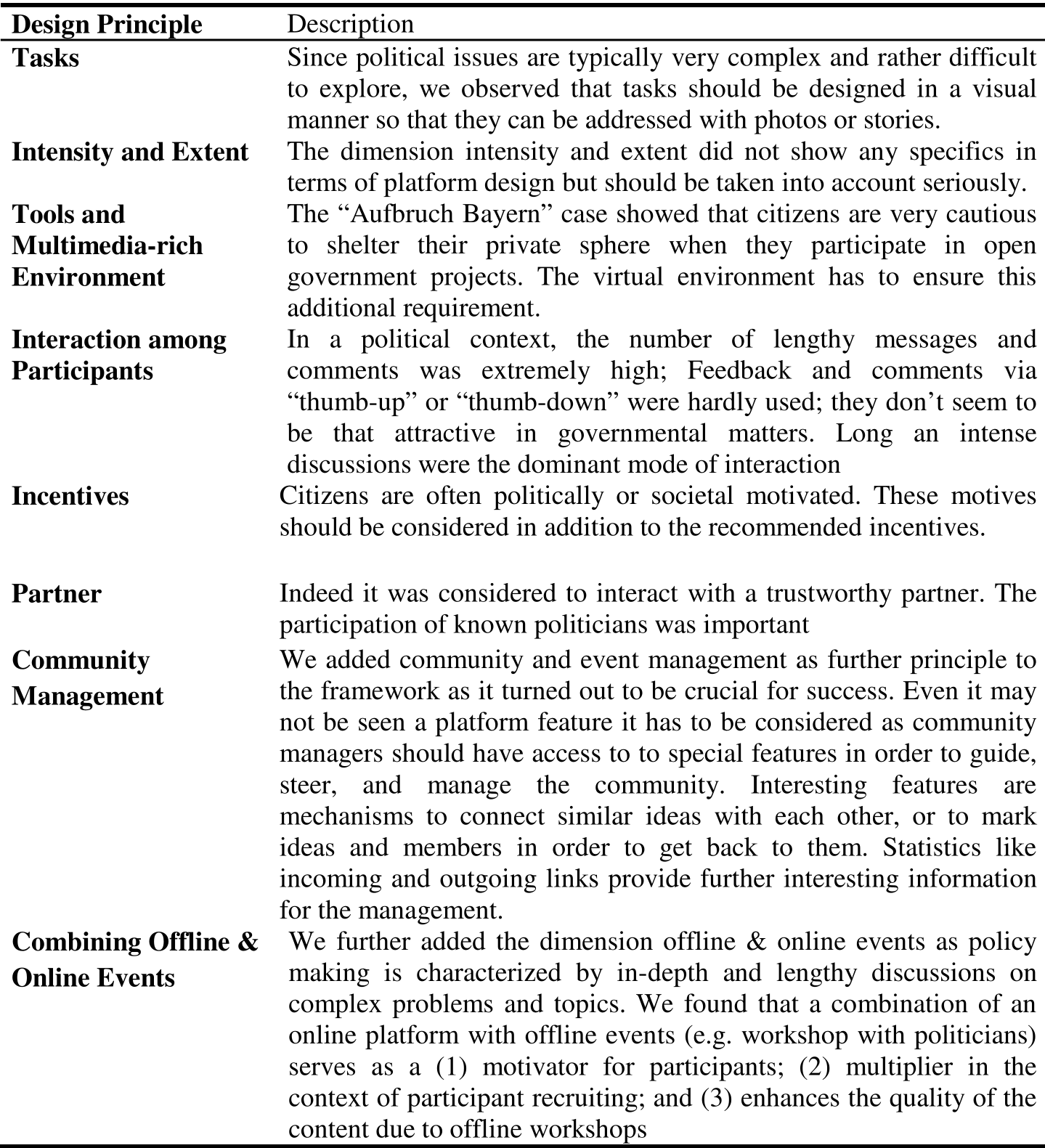
The results from 400,000 page visits and 1,500+ pages of user-generated content revealed three "shocks" to corporate logic:
- Deliberation > Voting: Unlike Facebook or Amazon, "thumb-up/down" mechanisms were ignored. Citizens preferred long, intense written discussions. Political complexity requires nuance, not binary popularity scores.
- The Privacy Paradox: While social media integration is standard in business, citizens were "very cautious" about their private sphere when dealing with the state. "Open Government" must paradoxically offer "Protected Participation."
- The Hybrid Necessity: The most successful ideas came from users who participated in Offline Workshops. Connecting the digital platform to "Real Life" events validated the citizens' efforts and prevented the platform from feeling like a "black hole" where ideas go to die.
Experimental Results & Performance
The quality of input was surprisingly high. Bavarian state officials noted that the "output" wasn't just noise; it contained genuine innovation potential.
- User Commitment: Over 364,800 minutes of residence time.
- Engagement: 6,342 discussion contributions vs. only 750 initial ideas—proving the platform functioned as a dialogue space, not just a suggestion box.
Critical Analysis & Takeaways
The paper’s greatest contribution is the addition of two new dimensions to the crowdsourcing canon: Community Management and Offline-Online Integration.
- Why it works: By treating the platform as a managed community rather than a static website, the government provides "Respect and Recognition," which are the primary currencies of civic engagement—far more potent than monetary prizes.
- Limitations: The study is a single-case outlier. Bavaria is a specific cultural context with high digital literacy. Whether this scales to less-resourced regions or more contentious political climates (e.g., national security) remains to be seen.
Final Thought: In an era of political polarization, "Open Government" platforms offer a digital toolkit for rebuilding trust—provided we stop designing them like e-commerce sites and start designing them like modern town squares.