
Beyond Traditional Management: Decoding Online Labor Effects via Linear Discriminant Regression
Online labor service crowdsourcing analysis based on linear discriminant regression
This paper introduces a novel analysis framework for online labor crowdsourcing effects using a Linear Discriminant Regression (LDR) approach. It combines service coordination models with a "Nearest-Farthest Subspace" (NFS) classifier to evaluate and predict the effectiveness of value-creation in the sharing economy.
TL;DR
The rise of the sharing economy has birthed a new organizational species: Online Labor Crowdsourcing. This paper moves beyond qualitative descriptions to propose a rigorous mathematical framework—Linear Discriminant Regression (LDR)—and a unique Nearest-Farthest Subspace (NFS) classifier to measure and predict the success of crowdsourced value creation.
The "Intermediate" Organization Dilemma
Crowdsourcing sits in the "goldilocks zone" of economics: more stable than a pure market but more flexible than a rigid bureaucracy. However, analyzing its effectiveness is notoriously difficult. Why?
- High Asset Specificity: Collaborative labor depends on trust and intangible "digital capital."
- The SSS Problem: In crowdsourcing research, we often face the Small Sample Size (SSS) problem, where available data points (prototypes) are insufficient to represent the entire "ideal" subspace of potential outcomes.
The authors argue that existing methods like Nearest Subspace (NS) classifiers are too one-dimensional, often ignoring the relationship between a sample and the classes it doesn't belong to.
Methodology: The Nearest-Farthest Dualism
The core innovation lies in the Nearest-Farthest Subspace (NFS) algorithm. Instead of just asking "Is this sample close to Class A?", it simultaneously asks "Is this sample significantly far from everything that isn't Class A?"
1. The Mathematical Intuition
The paper defines a class-reliance subspace for each object. If a test sample belongs to class , it is represented as: Where is the regression parameter and is the error.
2. The NFS Algorithm
The algorithm follows a two-step distance measurement:
- Step A (The "Nearest" Side): Calculate distance to the reliance subspace.
- Step B (The "Farthest" Side): Calculate distance to the "Leave-one-class-out" subspace (essentially the rest of the world).
- Decision: The final classification follows a decision vector . Minimizing this ratio ensures high intra-class similarity and high inter-class distinction.
(Note: This logic bridges the gap between traditional Nearest Neighbor and Farthest Subspace methods)
Experimental Insights: Predicting Management Effects
To validate the theory, the authors applied the model to a financial stock/management effect prediction task.
Key Findings:
- Autocorrelation Validation: Using R-based simulations, the jump-point covariance estimation showed a lower residual sum (48.9) compared to continuous models (63.4), indicating the model handles "shocks" in the labor market more effectively.
- Confidence Intervals: As seen in the figure below, the NFS-driven model provides a much wider, more realistic prediction interval for future performance, capturing the inherent volatility of human-centric labor platforms.
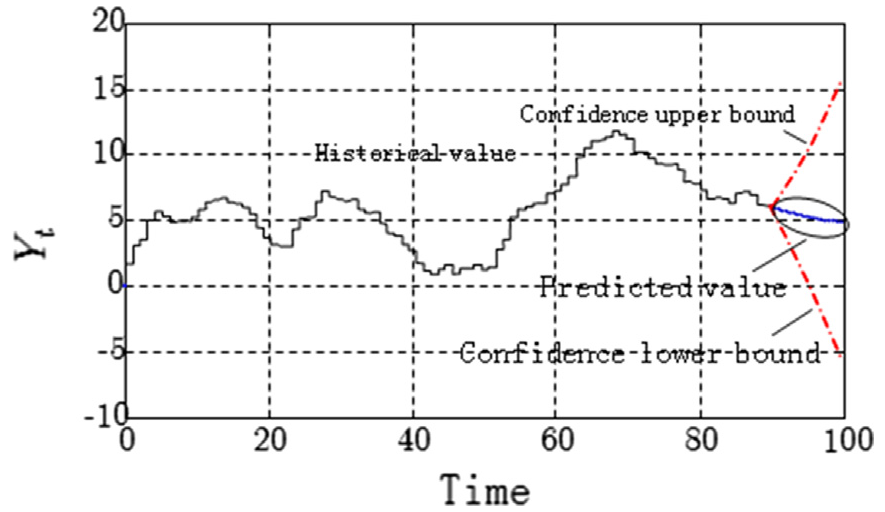 Fig: 90-day management effect prediction with 95% confidence intervals.
Critical Analysis & Future Outlook
Takeaway: This work transitions crowdsourcing from a "management buzzword" to a "measurable labor unit." By treating participation as a vector in a high-dimensional space, platforms can filter "micro-innovations" more scientifically.
Limitations:
- The model assumes a degree of linearity in labor value that may not hold in highly creative or non-linear tasks (e.g., artistic industrial design).
- The computational cost of "leave-one-class-out" subspaces increases significantly as the number of platform participants grows.
Future Work: The logical next step is integrating State Space Models (SSM) or Manifold Learning to account for the temporal evolution of "digital capital" as users gain reputation on the platform.
Conclusion
By leveraging Linear Discriminant Regression, Xiao et al. provide a blueprint for how platforms can balance openness with quality control. In the era of the "Mesh Economy," the ability to mathematically distinguish between low-effort noise and high-value innovation is the ultimate competitive advantage.