
Being Online, Living Offline: How Niche Social Networks Drive Real-World Performance
Being online, living offline: the influence of social ties over the appropriation of social network sites
The paper investigates how "passion-centric" social network sites (SNS) like BodySpace facilitate a deep integration of offline and online lives. Focusing on the bodybuilding community, the study reveals that strong online ties can exist and support intense physical activities even in the total absence of pre-existing offline friendships.
TL;DR
Most people assume social media is just a digital mirror of our existing friend groups. However, this classic CSCW paper (2008) reveals that for high-intensity niches like bodybuilding, social network sites (SNS) function as a critical "performance-enhancing" bridge between digital interaction and grueling offline work. By studying BodySpace, researchers found that online strangers can provide better motivational support than offline acquaintances, provided the platform is designed correctly.
The Problem: The Loneliness of the "Hardcore"
Competitive bodybuilding is a minority sport characterized by extreme isolation. "Normal" gym-goers cannot relate to 20-week diets or three-hour training blocks. Traditionally, research (like that on early Facebook) suggested that SNS are for people who already know each other.
The Insight: What happens when you have a 10/10 passion but 0/10 offline support? The authors discovered that "passion-centric" SNS solve this by substituting Social Ties with Shared Activities.
Methodology: Entering the Iron Paradise
The researchers didn't just stay behind screens. They combined:
- Offline Ethnography: Visiting 7 gyms (from "fitness spas" to "hardcore dungeons") and 2 competitions.
- Online Lurking & Participation: Creating profiles to observe interactions on BodySpace.
- Deep Interviews: Engaging with beginners and professionals to understand how they "appropriate" (repurpose) the technology.
The Three Pillars of Digital Appropriation
1. The SNS as a Tool (Optimization)
Bodybuilders use the SNS as a technical extension of their training log.
- Knowledge Trust: Unlike anonymous forums, BodySpace profiles provide "proof" (photos/stats). If a user with a 100kg bench press gives advice, it carries weight.
- Progress-Monitoring: The "Progress Picture" section acts as a visual diary, providing a sense of achievement that daily mirror-checks fail to capture.
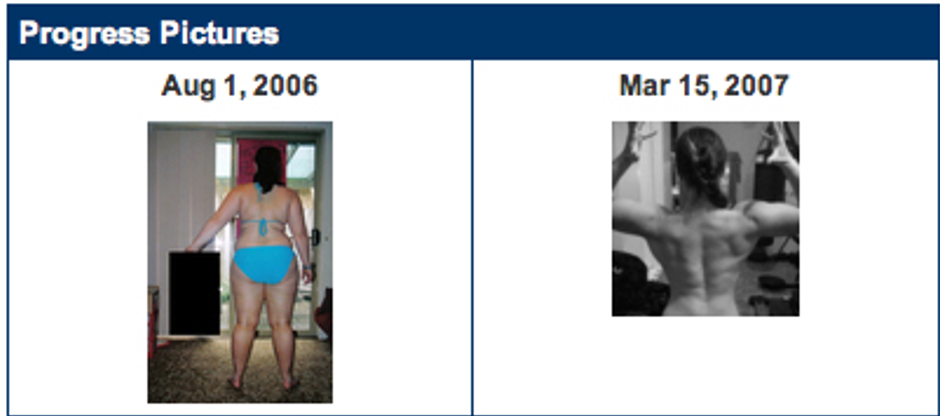 Figure 1: Visual evidence allows for self-monitoring and communal validation.
2. The SNS as a Theatre (Self-Presentation)
Bodybuilding is an aesthetic art form. The SNS provides a "stage" that the local gym often lacks.
- Self-Promotion: Users post "flexing" photos to feed their "muscle ego." This isn't just vanity; it's a motivational mechanism.
- Appraisal: Getting "liked" or commented on by total strangers online often provides more objective feedback than asking a friend in the gym.
 Figure 2: The appropriation of the profile as a "theatrical stage" for body aesthetics.
3. The SNS as a Community (Values)
The platform reinforces the "3 D's": Dedication, Determination, and Discipline.
- Identity Building: Slogans and forum signatures create a shared linguistic culture.
- The Taboo of Steroids: Interestingly, the study found that because BodySpace is "public" and "transparent," controversial topics like PEDS (Performance Enhancing Drugs) are self-censored, keeping the community focused on "healthy" role models.
Why This Matters for Modern Tech Design
The success of BodySpace offers a blueprint for Persuasive Technology:
- Low Anonymity = High Trust: Showing login dates and real progress photos forces accountability.
- Tool-Theatre Integration: Don't just give users a "log"; give them a "stage" to show off that log.
- The "Stranger" Advantage: For niche hobbies (coding, ultra-running, diet), a curated network of elite strangers is often more valuable than a network of lukewarm friends.
The Critical Analysis
While the paper paints a positive picture of community support, it acknowledges the "Dark Side"—bodybuilding can lead to pathological behaviors like exercise dependence. However, the study’s core value lies in proving that online/offline are not separate worlds; they are a continuous loop where digital "applause" fuels physical "rep."
Conclusion: Whether you are building an app for fitness, learning, or health, the lesson is clear: If the passion is strong enough, the "life offline" will always find its "home online."