
Beyond the LMS: Leveraging the Social Semantic Web for Truly Adaptive Learning
Online Presence in Adaptive Learning on the Social Semantic Web
This paper introduces a systematic approach for integrating "Online Presence" data into adaptive learning environments using the Online Presence Ontology (OPO). By linking OPO with the Learning Object Context Ontology (LOCO) framework, the authors enable cross-platform tracking of student availability, location, and social status to enhance collaborative project-based learning.
TL;DR
This research tackles the "isolation" of modern e-learning by integrating real-world social data into educational platforms. By using the Online Presence Ontology (OPO) and LOCO framework, the authors demonstrate how knowing if a student is "available on Facebook" or "nearby via Twitter GPS" can fundamentally improve peer recommendations and collaborative success in environments like DEPTHS.
The "Invisible" Student: The Problem of Siloed Social Data
In traditional online learning, the system only knows what you do inside the portal. However, students live their social lives on external platforms.
- The Gap: A student might appear "offline" in an LMS but be "active and available" on Twitter or Discord.
- The Motivation: Existing Social Presence theories suggest that interpersonal connection is a primary driver of learning success. If the system doesn't know who is actually ready to talk, it makes poor recommendations, leading to learner frustration.
Methodology: Bridging Ontologies
The core innovation lies in the semantic mapping between two distinct ontological worlds:
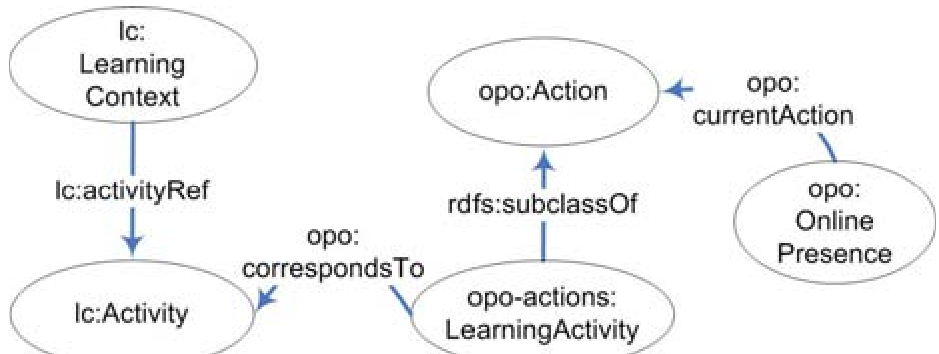
- OPO (Online Presence Ontology): Captures the "Right Now" — status messages, GPS location, and "notifiability" (whether the user wants to be disturbed).
- LOCO (Learning Object Context Ontologies): Captures the "Educational What" — the learning activity, the user profile, and the domain knowledge.
By relating um:User (from LOCO) to foaf:Agent (from OPO), the system creates a unified digital twin of the student that spans both their academic and social worlds.
Real-World Scenarios in DEPTHS
The authors implemented these concepts in DEPTHS, a system for learning software design patterns. They highlight four transformative scenarios:
- Ubiquitous Awareness: Seeing that a peer is active on MSN/Facebook even if they logged off the LMS.
- Intelligent Filtering: Skipping a "knowledgeable" peer for a recommendation because their status says "Work Overload."
- Channel Optimization: Suggesting email instead of IM because a student’s status is set to "Do Not Disturb."
- Geo-Social Learning: Detecting that an expert peer is in the same building via Twitter location data to suggest a face-to-face meeting.
Experimental Results & Prototype
The prototype utilized a Data Mapping Module that transformed Twitter XML feeds into RDF triples.
- Technological Stack: XSLT for data transformation, GeoNames API for location processing, and a Semantic Repository for interaction data.
- Feedback: Initial surveys showed that 84.61% of students found the semantically-enabled peer discovery service extremely beneficial.
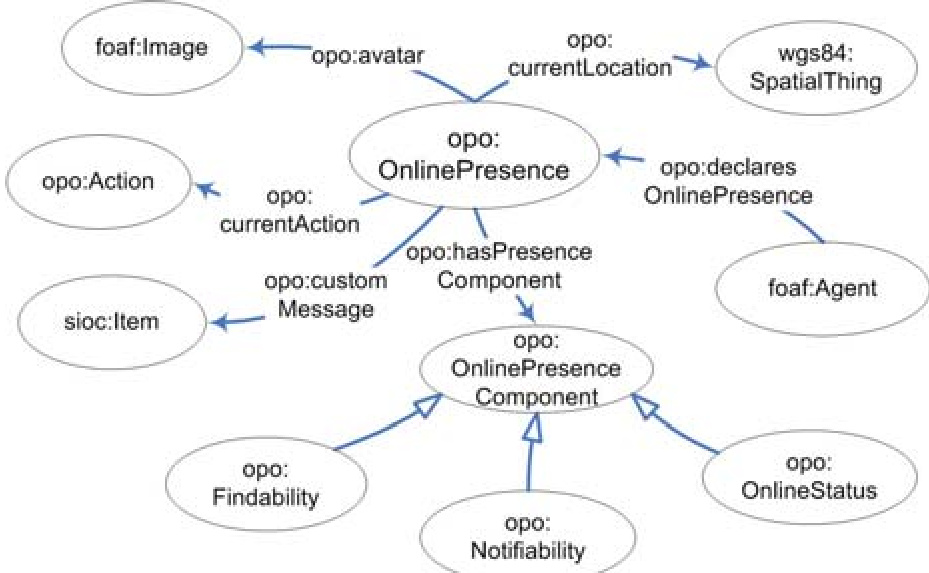 Note: The metadata structure allows for rich interaction tracking, such as identifying if a tweet was a reply to a specific peer's question.
Critical Insight & Future Outlook
While this work provides a robust framework for Social Semantic Web integration, two challenges remain:
- Privacy: As we move toward 2026, the ethical implications of tracking "Earnest" social data on platforms like Facebook require much more rigorous consent and anonymization frameworks than discussed in the original paper.
- Platform Volatility: The reliance on public APIs (like the Twitter XML used in the prototype) is historically risky, as platform providers often restrict data access.
Conclusion: This paper serves as a vital reference for building "Transparent" learning systems that don't just wait for student input, but actively sense the social context to drive collaboration.