
Identifying Emergency Experts: Turning Social Networks into Knowledge Repositories
Online Social Network as a Powerful Tool to Identify Experts for Emergency Management
The paper proposes an integrated method to identify domain experts for emergency management by leveraging Online Social Networks (OSNs) like Sina Weibo. It combines Social Position Analysis with Expertise Level Analysis to rank individuals based on their influence and technical relevance to specific disasters, demonstrated through a case study on the MH370 disappearance.
TL;DR
In the wake of disasters like the MH370 disappearance, traditional expert databases often fall short. This paper introduces a robust framework to identify "hidden" experts on Online Social Networks (OSNs) by combining Social Position Analysis (who is influential?) with Expertise Level Profiling (who actually knows the science?). By quantifying social interactions and textual relevance, the authors transform the chaotic flow of Sina Weibo into a structured tool for emergency response.
The Motivation: Why Local Databases Fail
Emergency Management Information Systems (EMIS) are typically designed for preparedness, yet they face a fundamental paradox: emergency disasters are "small probability events." Maintaining a diverse, high-cost database of medical, nuclear, or aviation experts is often inefficient for local agencies.
The authors' core insight is that OSNs like Sina Weibo act as a "live" crowdsourced platform. Experts are already there, discussing solutions in real-time. The challenge isn't their existence; it's the identification and validation of these individuals amidst millions of casual users.
Methodology: The Dual-Track Profiling
The proposed method moves beyond simple keyword searching by creating a multi-dimensional score for every candidate.
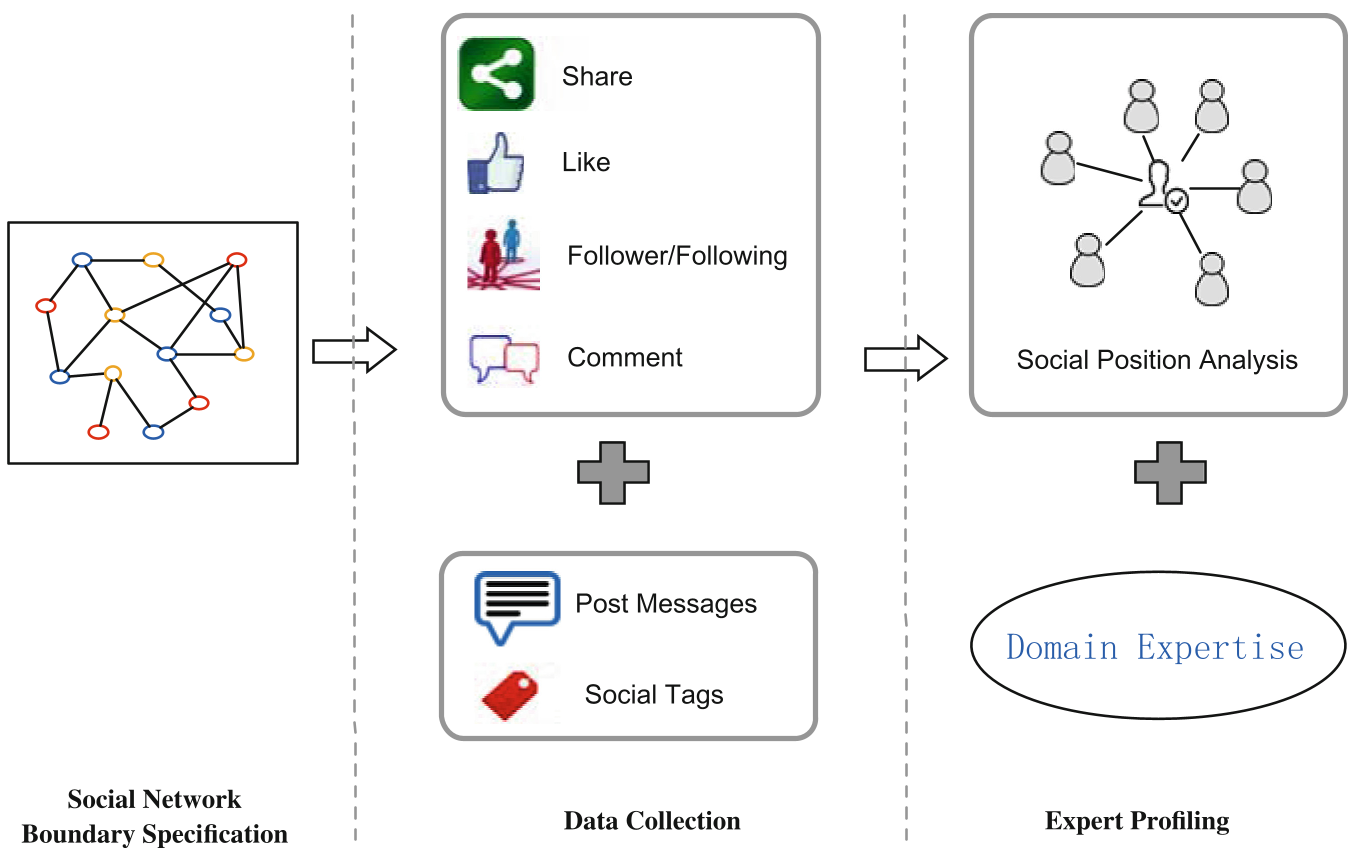
1. Boundary Specification
To handle data overload, the system first filters the network using two sets of keywords:
- Key-occurrence set: To identify the event (e.g., "MH370", "Malaysia Airlines").
- Key-solve set: To identify technical solutions (e.g., "trajectory prediction", "black box detection").
2. Social Position Analysis (The "Who")
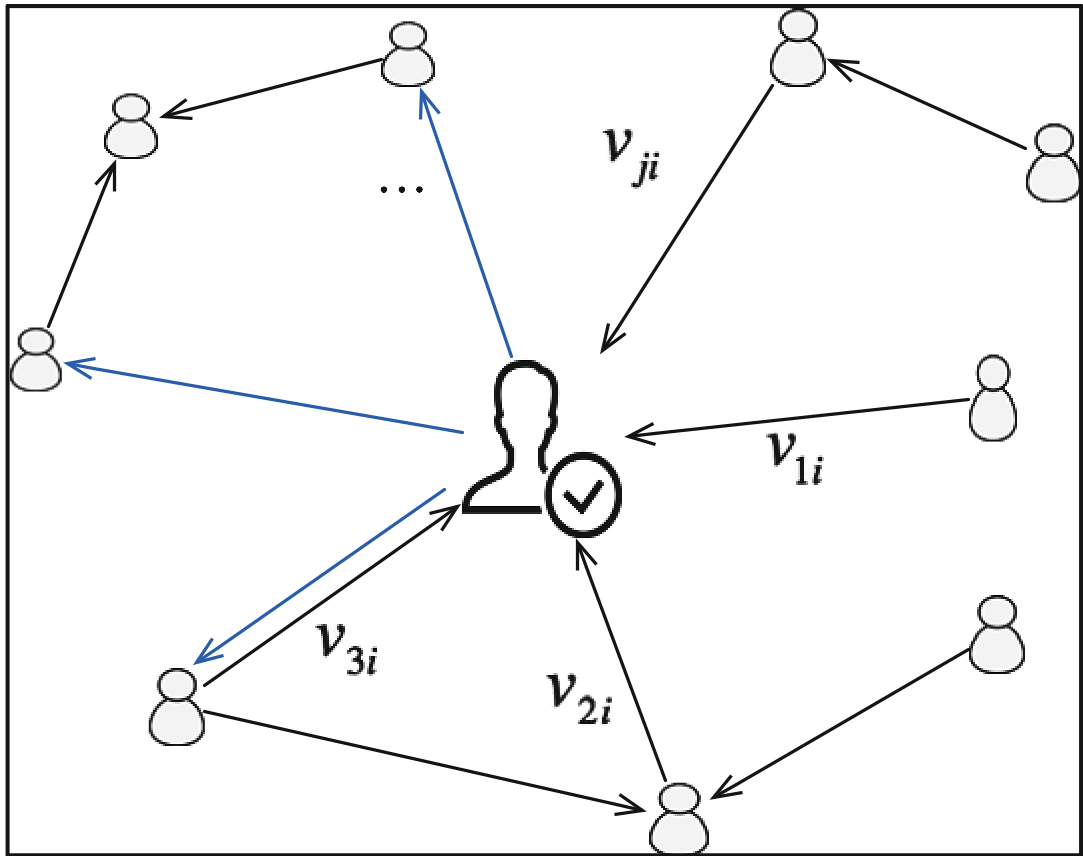
The model treats the social network as a valued directed graph. It doesn't just count followers; it calculates Degree Prestige ().
The weight of a connection () is determined by:
- Interaction Type: Shares, likes, and comments on technical "problem-solving" posts are weighted higher than general event discussion.
- Follower Status: Direct following indicates a long-term acknowledgement of authority.
3. Expertise Level Analysis (The "What")
The algorithm balances two data sources:
- Post Content: Frequency of technical terms in original posts (excluding retweets to avoid echo-chamber effects).
- Social Tags: A weighted distinction between self-filled tags and "Authorized Tags" (e.g., "Certified Academician").
The final Expert Performance () is the product of Social Prestige and Expertise Level, ensuring that an "expert" must be both knowledgeable and recognized by the community.
Empirical Results: The MH370 Case Study
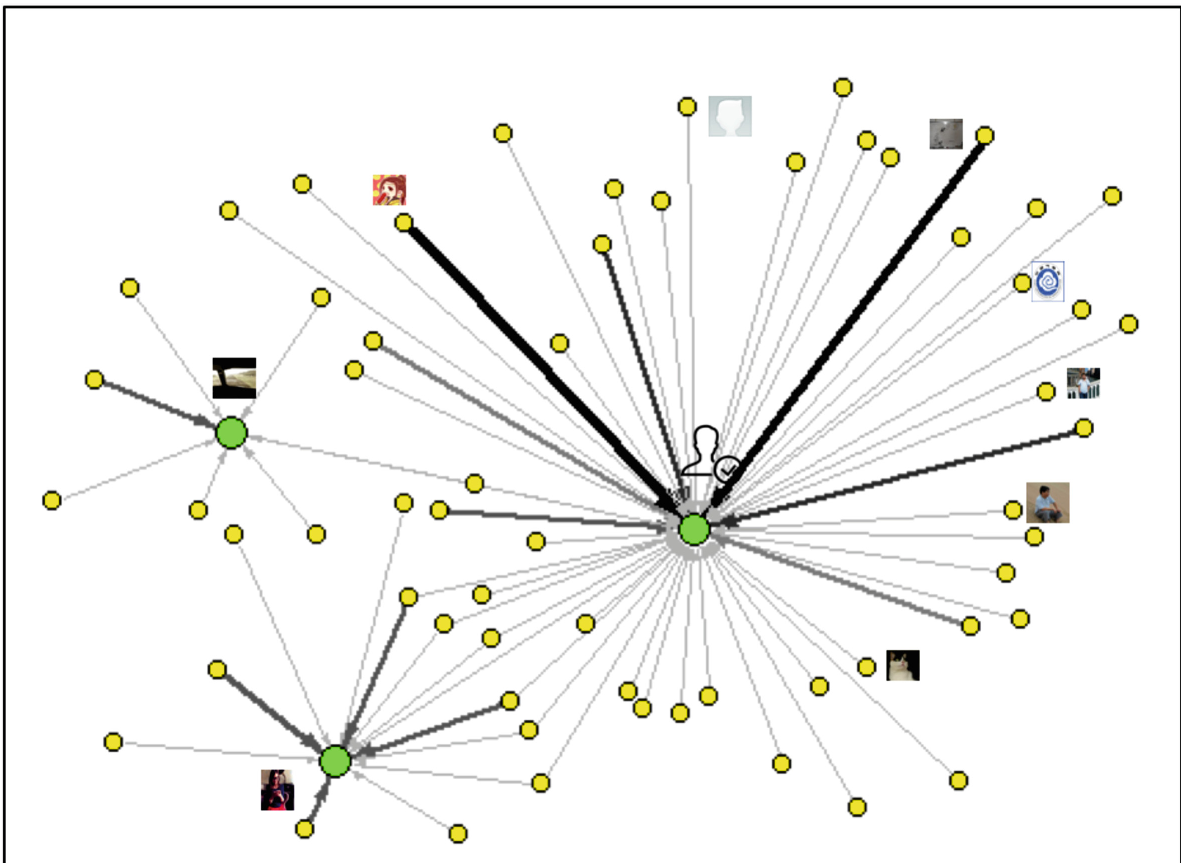
The authors applied this method to a segment of Sina Weibo following the disappearance of MH370.
- Findings: The system successfully filtered out news aggregators (high influence, low technical content) and identified specific individuals who posted frequently about "Big Data," "remote sensing," and "wreckage salvage."
- Visualization: The interaction graph revealed a clear "center" where high-prestige nodes acted as information hubs for technical discourse.
Critical Insight & Conclusion
This work shifts the paradigm of emergency management from resource ownership to resource orchestration. By using "Crowd Supervision," the model provides a layer of trustworthiness—if the crowd (including other experts) interacts technically with a user, their expertise is socially validated.
Limitations: The current model relies heavily on a pre-defined "Key-solve" keyword set provided by humans. In a rapidly evolving crisis, these keywords might change. Furthermore, "Prestige" can sometimes be skewed by "noisy" popular accounts if the weights are not perfectly tuned.
Future Outlook: Integrating this with Group Decision Analysis and State Space Models could allow for the identification of entire expert teams rather than just individuals, facilitating better collaboration in the chaotic "Response" phase of emergency management.