
Digital Lockdown: How COVID-19 Reshaped the Italian Social Media Landscape
Online social networks and media
This paper presents a large-scale Italian case study on social network dynamics during the COVID-19 pandemic, focusing on Facebook and Instagram interactions with 639 influencers. Utilizing a dataset of 54 million comments, the study reveals significant shifts in engagement patterns, psycholinguistic sentiment, and topic prevalence during Italy's total lockdown in early 2020.
TL;DR
When the physical world stopped in early 2020, the digital world didn't just speed up—it transformed. Analyzing 54 million comments across Facebook and Instagram, researchers from Politecnico di Torino found that while Facebook became a hotbed for intense debate (+125% comments), Instagram for lifestyle and sports effectively "hibernated."
The Great Divergence: Facebook vs. Instagram
The paper reveals a fascinating divergence in how we use different platforms during a crisis.
- Facebook (The "Public Square"): Saw a 47% increase in posts and a staggering 125% rise in comments. It became the primary venue for discussing government decrees, unemployment benefits (Dole), and conspiracies.
- Instagram (The "Gallery"): Despite the lockdown forcing more screen time, Instagram likes actually dropped by 39%. This suggests that when the "social" aspect of social life disappears (no parties, no travel, no sports), the incentive to engage with lifestyle content vanishes.
Methodology: Peering into the Collective Consciousness
The authors didn't just count likes; they used LIWC (Linguistic Inquiry and Word Count) to analyze the emotional state of Italy.
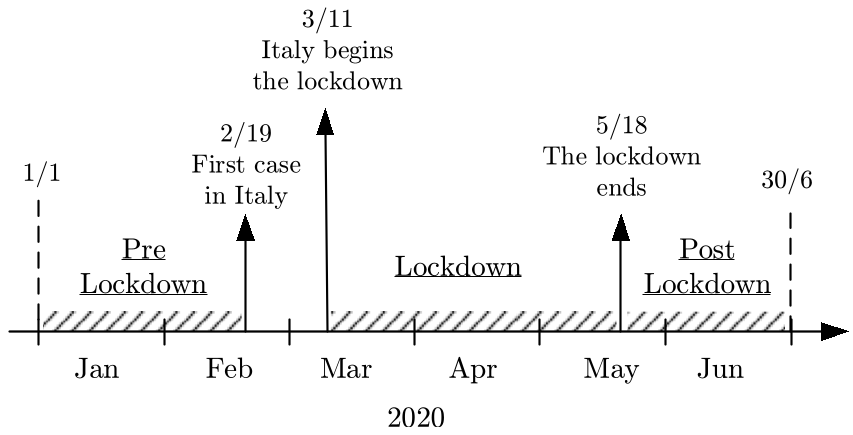
By categorizing 83 psycholinguistic attributes, they tracked the "rapid boom and disappearance" of pandemic topics. Attributes like Anxiety, Death, and Inhibition surged by 30-50% during the peak lockdown weeks.
The Rise of the Political Influencer
Perhaps the most striking finding is the shift in power. Before the pandemic, athletes and entertainers ruled social media. During the lockdown, Politicians took center stage.
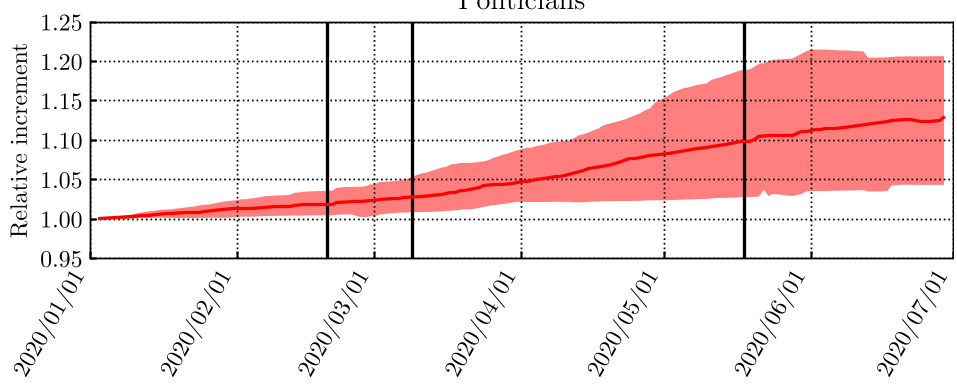
Political profiles on Instagram grew their follower bases 4 times faster than any other category. The authors argue that this was driven by the life-altering nature of political decisions during the crisis. People weren't looking for entertainment; they were looking for survival information and a place to debate their future.
Tracking the "Infodemic" and Conversation Topics
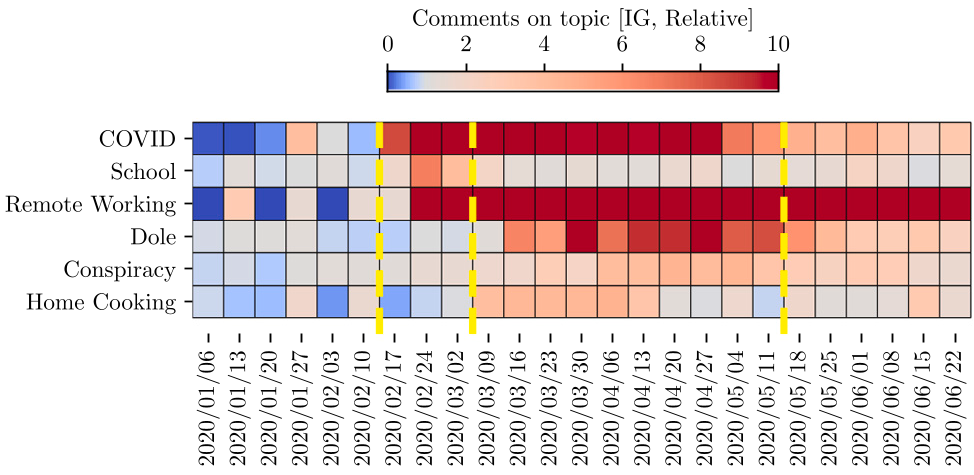
The research tracked specific topics using term-based classification. While COVID was the most discussed, other topics like Conspiracy showed unique behavior:
- Conspiracy comments were the most likely to be "replies" rather than original posts (49% on Instagram).
- They were longer and more likely to contain external links (8%+), suggesting that these theories spark intense, defensive, and argumentative debates.
A Permanent Shift in Habits?
The study also looked at when we browse. Lockdown introduced a 36% increase in morning activity (7 AM to 12 PM). Interestingly, even after the lockdown ended, this morning surge persisted, suggesting that the "new normal" had fundamentally rewired our daily digital schedules.
Critical Insight & Conclusion
This paper provides a quantified look at how digital platforms serve different psychological needs. Instagram is a mirror of our "physical social life," and when that life pauses, so does the platform. Facebook serves as a more resilient "information and debate" infrastructure.
Takeaway: For researchers and brands, this work highlights that during a crisis, "influence" shifts rapidly from aesthetics to utility. To understand a society in shock, look at its politicians on Facebook, not its models on Instagram.
For further research, the authors have released the anonymized dataset.