
ONTOSS N: Bridging the Gap Between Social Connectivity and Academic Impact
ONTOSSN: Scientific social network ontology
The paper introduces ONTOSS N, an ontology-based framework dedicated to Scientific Social Networks (SSN). It specifically integrates researcher rankings and academic impact metrics into a standardized semantic structure to better analyze scholarly career paths.
TL;DR
ONTOSS N is a new Scientific Social Network (SSN) ontology designed to solve a significant void in academic modeling: the lack of standardized metrics for researcher reputation. By integrating a "Score" class alongside traditional "Researcher" and "Publication" entities, it provides a semantic blueprint for analyzing career trajectories and improving scholarly recommendations.
Background & Motivation
Over the last decade, social networks have become the backbone of scientific communication. However, the academic world operates on Reputation, not just connectivity.
Existing ontologies like FOAF (Friend of a Friend) or Flink are excellent at describing who knows whom, but they fail to capture how influential a researcher is. The authors argue that a researcher's standing is a compulsory data point; without it, recommending a journal paper or a collaborator lacks the necessary context of quality and authority.
Methodology: The ONTOSS N Architecture
The researchers utilized the specialized Noy and McGuinness 7-step method to build a robust, formal specification from scratch. Instead of relying on existing loose schemas, they focused on a top-down development process to ensure rigorous classification.
1. The Core Pillars
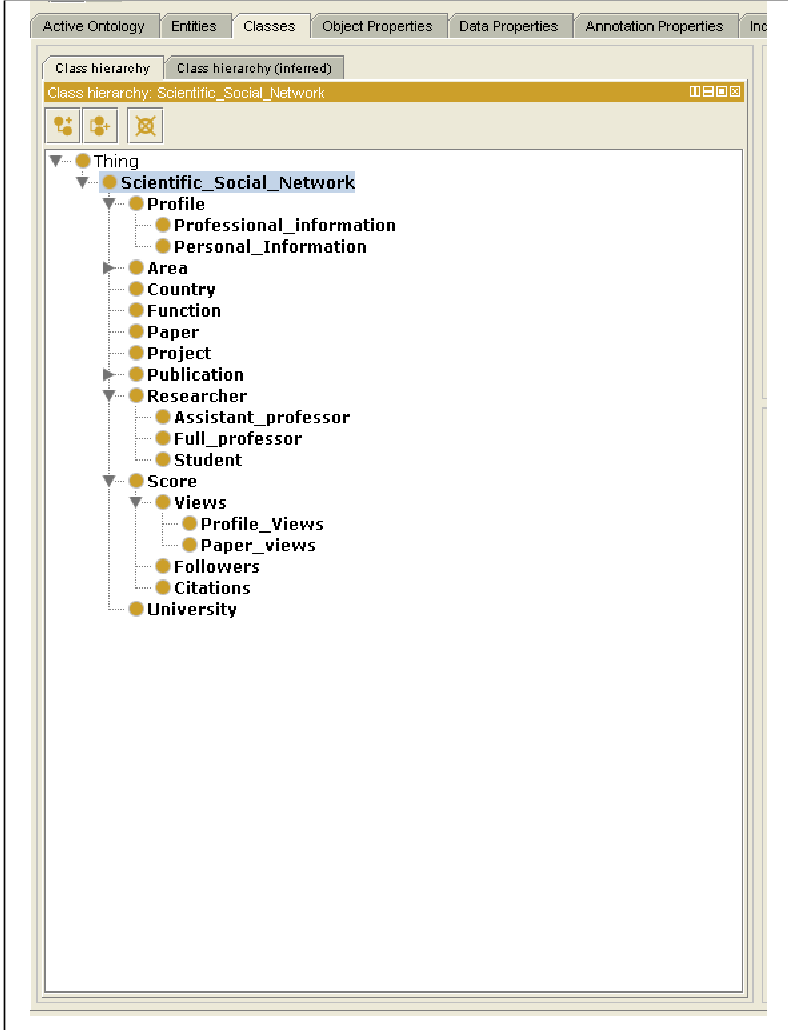
The ontology is organized into three primary hierarchies:
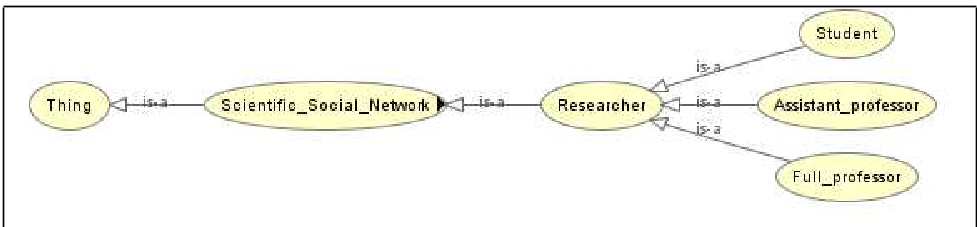
- Researcher: Categorized by career stage (Student, Assistant Professor, Full Professor).
- Publication: Covering diverse outputs including Conference Papers, Journals, and Book Chapters.
- Score: The unique contribution of this paper, providing the attributes needed to quantify academic impact.
2. Internal Structure and Facets
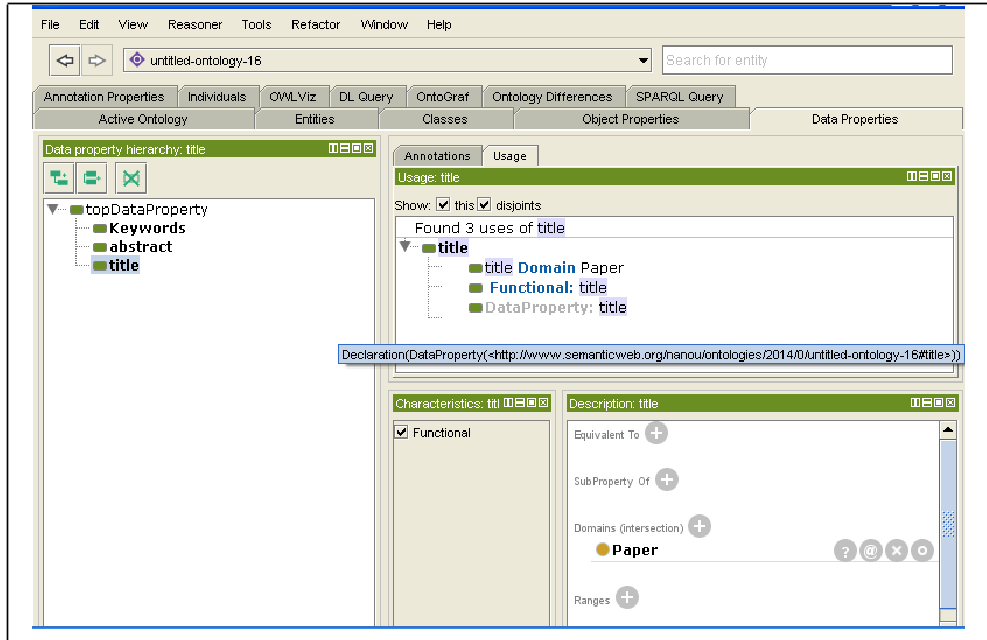
Beyond simple naming, the ontology defines the facets and cardinality of academic interactions. For instance, the "Paper" class isn't just a node; it carries mandatory properties like title, abstract, and keywords, ensuring that any system implementing ONTOSS N can perform deep semantic indexing.
Experiments and Validation
To ensure the ontology wasn't just a conceptual exercise, the authors used the Fact++ reasoner to test for logical consistency. This "stress test" verified three critical attributes:
- Clarity: Definitions were unambiguous for both machines and humans.
- Zero Redundancy: Relationships did not overlap, ensuring efficient database queries.
- Scalability: The model can support the vast, growing volume of scientific data found on platforms like ResearchGate.
Critical Insight & Future Outlook
The true value of ONTOSS N lies in its Inductive Bias toward academic meritocracy. By baking "Score" into the ontology's DNA, it allows developers to build search engines and recommendation tools that naturally favor high-impact research.
Limitations: Currently, the model is relatively static. In the high-velocity world of academia, reputation changes (e.g., a sudden surge in citations). The authors acknowledge that their next challenge is handling uncertainty and the dynamic evolution of these social links over time.
The Takeaway: ONTOSS N provides the "missing link" in academic modeling—turning a scientific social network from a simple contact list into a powerful knowledge graph capable of evaluating the true standing of researchers in the global community.