
Bridging Knowledge Silos: An Ontology-Driven Framework for Manufacturing and E-Learning
A framework for ontology based decision support system for e-learning modules, business modeling and manufacturing systems
The paper proposes an integrated framework for an Ontology-based Decision Support System (DSS) that bridges E-learning, business modeling, and manufacturing systems. By combining semantic hierarchical models with data mining algorithms like CHAID and K-means, the system facilitates cross-platform knowledge sharing and automated manufacturing process selection.
TL;DR
In the modern industrial landscape, the sheer volume of digital documentation—scaling into petabytes at companies like Boeing—creates a "knowledge graveyard." This paper introduces a sophisticated framework that uses Ontology Modeling and Data Mining to link manufacturing details, business strategies, and E-learning modules, turning stagnant data into an active, intelligent Decision Support System (DSS).
The "Redundant Work" Crisis
The central motivation of this research is the staggering cost of inefficiency. When engineers spend time reinventing existing solutions, or when manufacturing anomalies are solved in isolation, profitability drops. The authors identify that while XML and UML protocols exist, they lack the semantic relationships necessary for a machine to "understand" how a product feature relates to a manufacturing resource or a market strategy.
Methodology: The Quad-Ontology Architecture
The researchers didn't just build a database; they built a "world model" of the manufacturing lifecycle using four distinct ontologies:
- Manufacturing Ontology: Represents the Product, Process, Enterprise Unit, and Resources.
- Learning Ontology: Distills queries into "Knowledge Clusters" and maps them to instructional lessons.
- Context Ontology: The "Who, Where, and Why"—crucial for tailoring information to a user's specific environment.
- Business Model Ontology: Connects core capabilities to value propositions and revenue streams.
System Architecture & Logic
The framework uses the is_a relationship to maintain a strict hierarchy, while attributes allow for cross-class data inheritance.
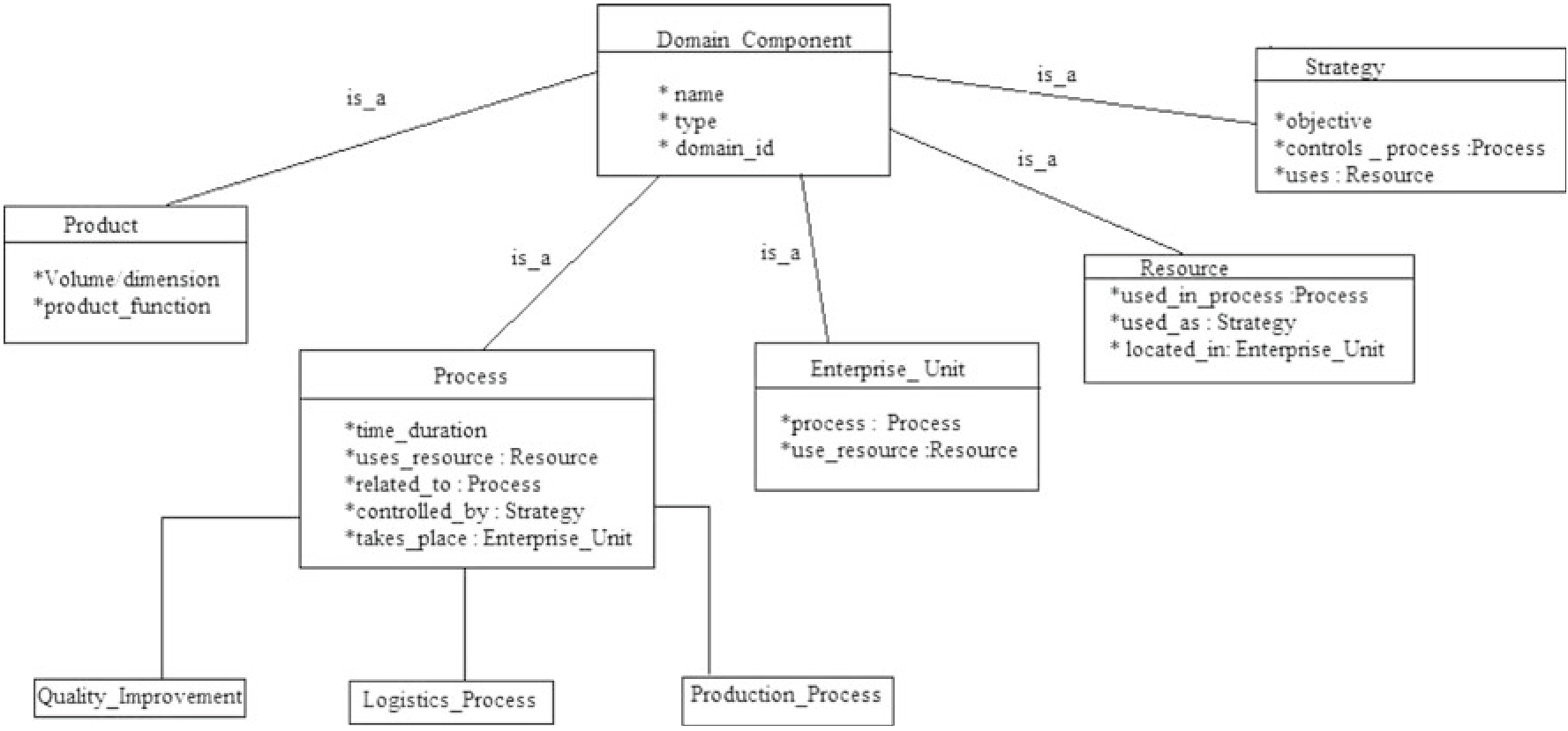 Fig 1: Semantic hierarchy of the Manufacturing Ontology, defining the DNA of the production process.
Intelligent Decision Support via Data Mining
The framework transitions from static knowledge to active prediction through two primary algorithmic approaches:
1. K-Means Clustering for Process Selection
By analyzing "Similarity Indexes," the system groups parts and processes. When a "New Part" enters the system, it is automatically assigned to a cluster, inheriting a mature manufacturing plan (BOM, NC programs, etc.), effectively eliminating the startup lag for new product variants.
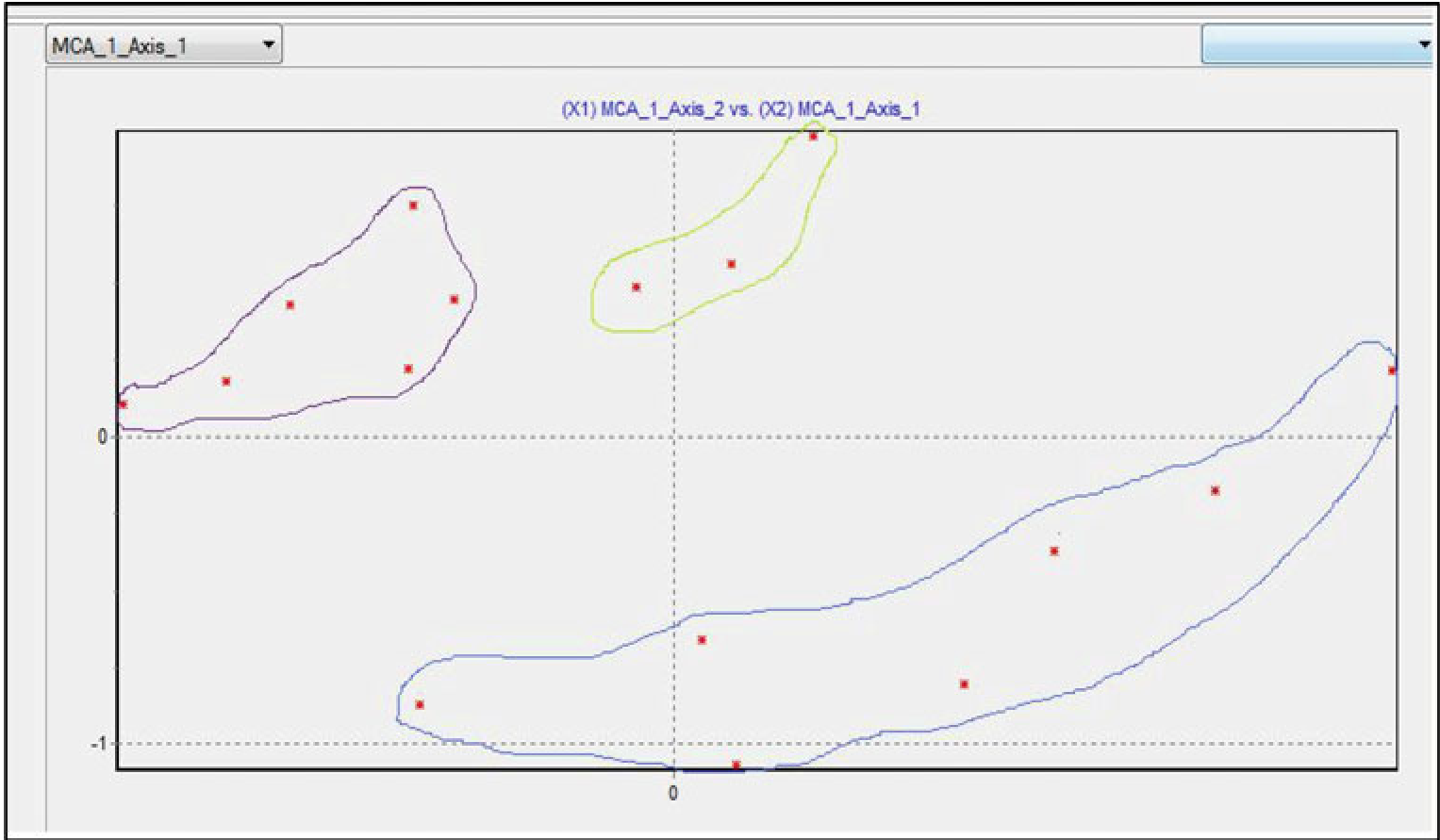 Fig 2: Visual clusters formed using Tanagra 1.4, optimizing the grouping of parts with similar manufacturing requirements.
2. Decision Trees for Quality Diagnosis
Using the CHAID (Chi-square Automatic Interaction Detector) algorithm, the system predicts the "Defect Index." It analyzes parameters like molding temperature and screw pressure to identify "assignable variations"—flaws in the setup that can be corrected—versus "random variations."
Experimental Results: The LED Packaging Case
The authors validated their framework using a dataset of 400 LED packaging records.
- Predictive Accuracy: The Decision Tree identified that when "Warm up temp ≥ 2.5," the defect index is consistently high (Confidence: 71%).
- NBF Analysis: The "Number Between Failures" was found to follow an Exponential Distribution. This allows managers to mathematically predict when the next failure is likely to occur in a shift.
 Fig 3: Decision Rules inferred from the training set, providing actionable "If-Then" logic for shop-floor managers.
Critical Insight & Conclusion
The true value of this work lies in its Cross-Platform Compatibility. By linking the "Business Model" to "E-learning," a company can ensure that when a manufacturing process changes, the training materials for workers and the cost-analysis for managers update automatically.
Limitations: The system's effectiveness is highly dependent on the quality of the initial metadata. If the "Context" isn't accurately defined by the user, the decision support results may suffer from "Garbage In, Garbage Out."
Future Outlook: As we move toward globalized, virtual manufacturing circles, this ontological framework provides the "common language" necessary for transnational collaboration and 100% automated decision systems.