
DAKS: Bridging Semantic Gaps in Distributed Knowledge Systems via Rough Sets
Ontology-based distributed autonomous knowledge systems
The paper introduces a framework for Ontology-based Distributed Autonomous Knowledge Systems (DAKS) designed to handle "global queries" where requested attributes are missing from a local database. It utilizes task ontologies and distributed data mining (specifically association rules and rough sets) to extract and share attribute definitions across remote sites to approximate query answers.
TL;DR
When querying distributed databases, what happens if your local site doesn't even have the columns you're looking for? This paper proposes DAKS (Distributed Autonomous Knowledge Systems), a framework that uses Ontologies and Rough Set Theory to "borrow" attribute definitions from remote sites. By treating semantic inconsistencies as a range of possible interpretations, it enables a Rough Query Answering System (QRAS) to provide intelligent, albeit approximate, answers to otherwise unanswerable "global queries."
The "Missing Attribute" Crisis
In massive distributed environments—like banking or healthcare—data is rarely uniform. A researcher might query "Aircraft Type" at a flight database only to find that specific attribute doesn't exist locally, though it exists in a remote partner database.
The core challenges are:
- Structural Incompleteness: The attribute simply isn't there.
- Semantic Inconsistency: Site A measures Temperature in Celsius (coarse), Site B in Fahrenheit (fine), and Site C has its own "Standardized Temperature" logic.
- The Null Value Dilemma: Even if the attribute exists, null values make traditional Boolean "True/False" query processing fail.
Methodology: The Logic of Approximation
The authors move away from the binary requirement of exact matches. Instead, they propose a system driven by definitions rather than just data.
1. Global to Local Transformation
When a user issues a "Global Query" containing a missing attribute , the system searches remote knowledge bases for association rules that define using attributes that do exist locally.
2. Rough Query Answering (QRAS)
Instead of one answer, the system provides two:
- Upper Approximation (): Objects that possibly satisfy the query.
- Lower Approximation (): Objects that certainly satisfy the query.
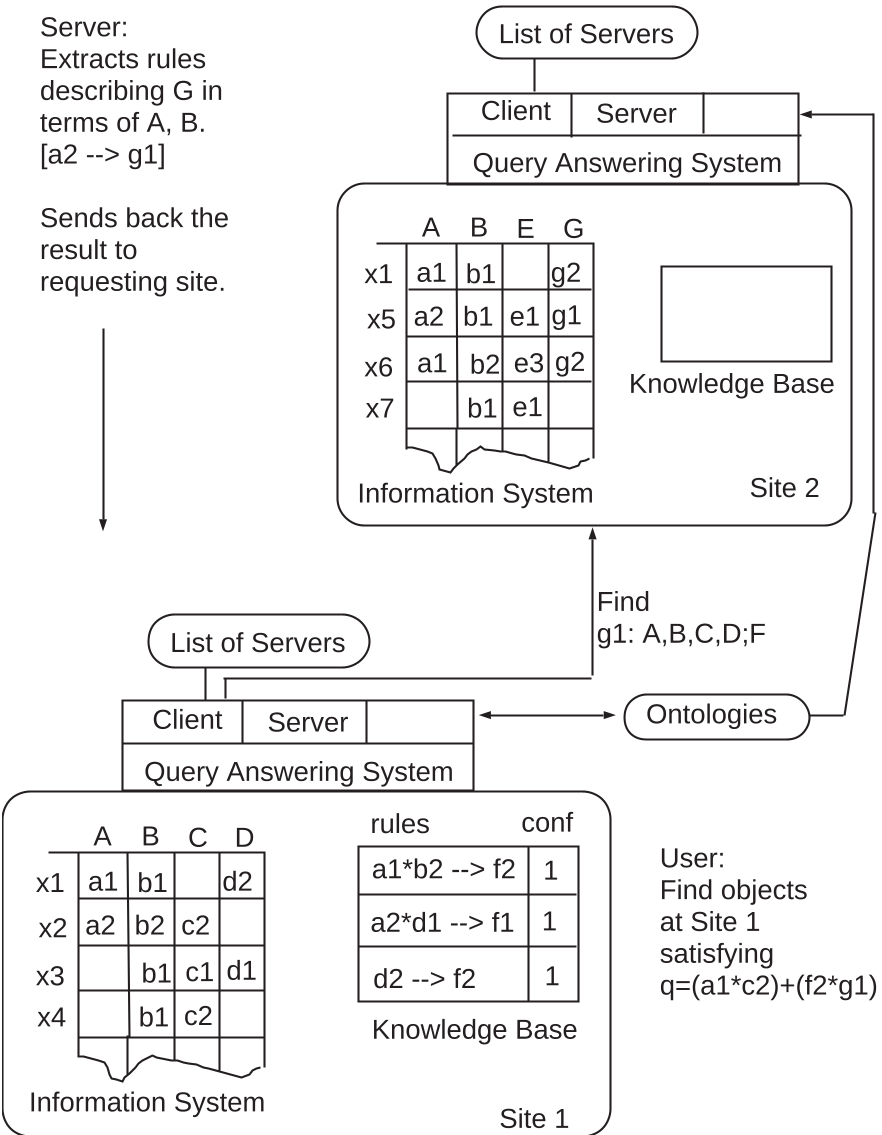 Fig 1: The architecture of a DAKS where a local site transforms a query by contacting remote knowledge bases.
3. The Semantic Lattice
The most striking insight is the treatment of Semantics as a Partially Ordered Set . If different sites use different interpretation rules (), the system maps them onto a lattice. It then identifies a common semantics for the query by finding the Greatest Lower Bound (infimum) and Least Upper Bound (supremum) within the ontology.
Advanced Querying via Reducts
How do we know which remote site to ask? The authors employ Reducts from Rough Set Theory. A reduct is the minimal set of attributes that preserves the classification power of the whole.
If Site 1 needs to define attribute , and Site 2 has three different ways (reducts) to define , the system chooses the reduct that has the highest overlap with Site 1's existing attributes. This minimizes "recursive calls" to other databases.
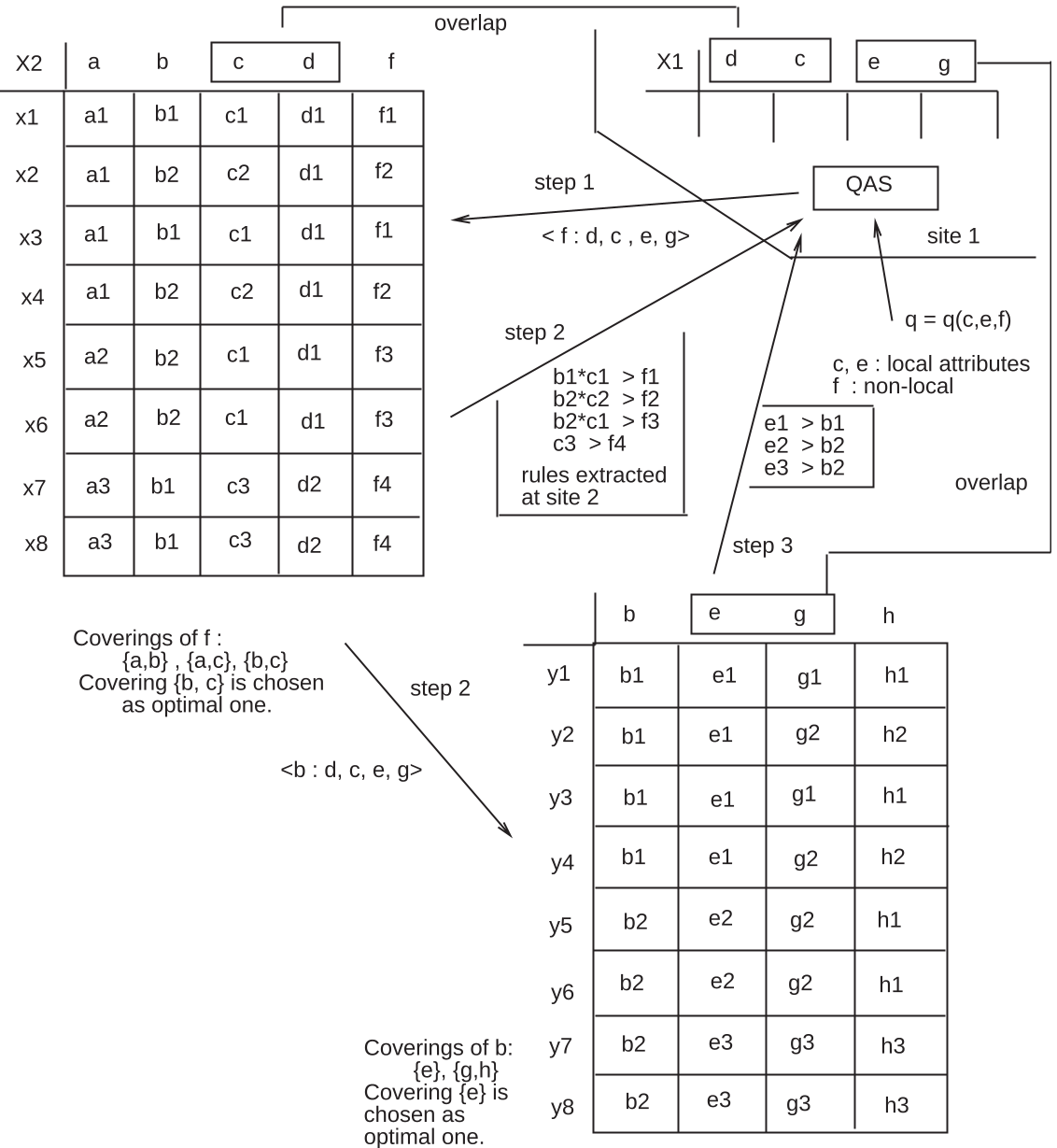 Fig 2: The recursive tree generated when one site contacts others to resolve nested missing definitions.
Critical Insight: Why This Works
Most distributed systems try to enforce a Global Schema (making everyone use the same names and formats). This paper argues that such an approach is unrealistic for autonomous sites. By embracing "Roughness," DAKS allows sites to remain independent while still being intellectually interoperable.
The Task Ontology acts as the "communication bridge," storing the relationships between different granularity levels (e.g., "Morning" vs. specific hour timestamps).
Conclusion & Future Directions
The DAKS framework successfully shifts query processing from a data-retrieval task to a knowledge-discovery task.
Takeaways:
- Semantic Monotonicity: As long as the chosen functors (+, *) preserve order in the semantic lattice, we can guarantee that our approximations are sound.
- Efficiency: Using attribute reducts prevents the "explosion" of distributed queries by picking the most locally-compatible definitions.
Limitations: The paper assumes a consistent relationship between sites (consistency). In the wild, "conflicting" data (Site A says Temperature is High, Site B says Low for the same object) remains a hurdle that requires a consensus algorithm beyond simple rough sets.