
OEWE: Bridging the Gap Between Expert Ontology and Word Embeddings in Geoscience
Ontology-Based Enhanced Word Embedding for Automated Information Extraction from Geoscience Reports
The paper introduces OEWE (Ontology-Based Enhanced Word Embedding), an Information Extraction (IE) framework specifically designed for Chinese geoscience reports. By integrating domain-specific ontologies with a PMI-optimized Skip-Gram model, it achieves SOTA performance in extracting geological terminologies from unstructured data.
TL;DR
Geoscience reports are a goldmine of data, yet they remain largely "buried" in unstructured PDF and text formats. This paper introduces an Ontology-based Enhanced Word Embedding (OEWE) methodology. By combining the formal rigor of a domain ontology with the statistical power of an improved Skip-Gram model, the authors provide an automated way to extract high-value geological information with an F1-score improvement of nearly 9% over standard baselines.
Problem & Motivation: The "Black Box" of Geological Reports
Geological data is traditionally split into two worlds:
- Structured Data: Relational databases for spatial coordinates.
- Unstructured Data: Narratives about lithology, tectonism, and mineral analysis found in reports.
The unstructured data is more abundant and valuable, but it is notoriously difficult to parse, especially in Chinese. Unlike English, Chinese has no spaces between words (tokenization difficulty), and geoscience terms are highly specialized. Traditional word embeddings like Word2vec often fail here because they lack the "domain common sense" required to interpret rare geological terms or their specific semantic contexts.
Methodology: The Fusion of Knowledge and Statistics
The OEWE framework operates in three distinct phases:
1. Geoscience Ontology (GO) Generation
Instead of letting the model learn from scratch, the authors use Protégé to build a geoscience ontology. This acts as a "controlled vocabulary" that provides the seed words and hierarchical relationships necessary to guide the learning process.
2. Enhanced Word Embedding with PMI
The core innovation lies in the improvement of the Skip-Gram model. Traditional Skip-Gram uses a softmax-based conditional probability , which has two major flaws:
- Asymmetry: The relationship between word A and word B is not necessarily the same as B and A in the vector space.
- Normalization Overheads: Softmax is computationally expensive and difficult to optimize for niche vocabularies.
The authors replace the standard objective with a logic based on Point-wise Mutual Information (PMI): This allows the model to measure if two geological terms appear together more often than by chance, effectively "tightening" the vector space for related domain concepts.
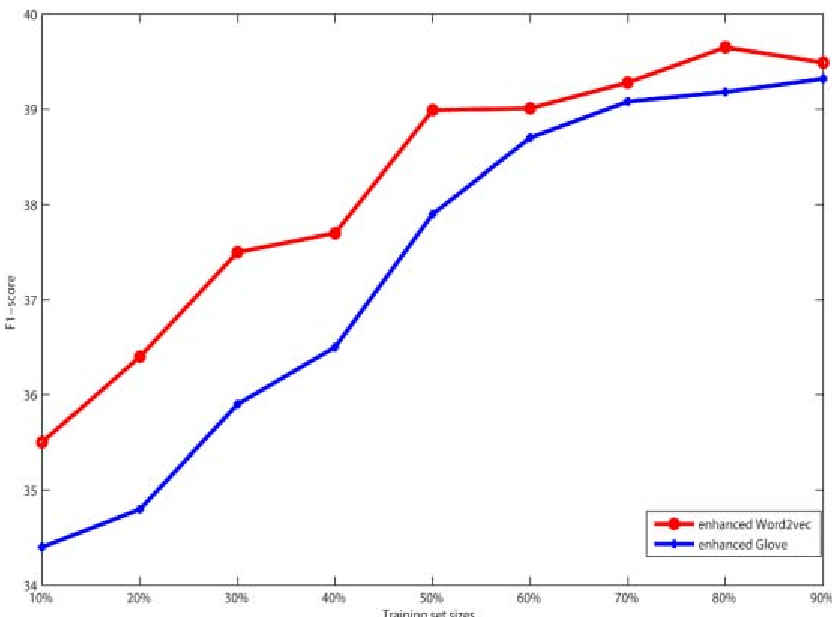 Figure 1: The OEWE pipeline from report processing to information visualization.
Experiments & Results: Does It Actually Work?
The authors tested their approach on 11 regional geoscience reports (RGR) from the National Geological Archives of China.
Performance Gains
The results confirm that adding ontology "guidance" provides a significant boost:
- Baseline Word2vec: F1 of 26.3%
- OEWE (Ontology + Enhanced Word2vec): F1 of 35.0%
- Net Improvement: +13.6% Precision and +8.7% F1-measure.
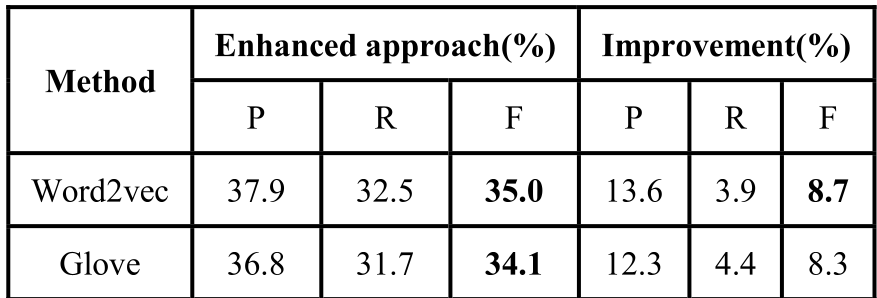 Table II: Comparative results showing the impact of the Ontology-based enhancement.
The "Data Hunger" Factor
The study also explored how the amount of labeled data affects the model. As expected, the enhanced model shows a steeper learning curve, meaning it is more efficient at absorbing domain knowledge as more training samples are provided compared to general GloVe embeddings.
Critical Insight: Why This Matters
The "OEWE" approach represents a pragmatic middle ground in the "Neural vs. Symbolic" AI debate. In specialized fields like geophysics or lithology:
- Pure Statistical Models (like vanilla BERT or Word2vec) lack the precision for rare, technical terms.
- Pure Symbolic Models (Ontologies) are too rigid to handle the linguistic variance in human-written reports.
By using the Ontology to seed the Word Embedding, the authors create a model that has the "flexibility" of deep learning but the "guardrails" of expert knowledge.
Limitations and Future Work
While successful at entity extraction, the current model focuses on "keywords." The next frontier, as the authors suggest, is Automated Relation Extraction—understanding not just that "Gold" and "Quartz" are mentioned, but how they are geologically related in a specific strata.
Conclusion
OEWE is a significant step toward making the "dark data" of geological archives searchable and analyzable. For practitioners in specialized NLP, it serves as a reminder that Domain Knowledge is actually the best "Feature Engineering."