
FML Robot Agents: Bridging the Learning Gap Through Human-Robot Co-Learning
Ontology-based Fuzzy Markup Language Agent for Student and Robot Co-Learning
This paper introduces an intelligent robot agent framework for student-robot co-learning, utilizing domain ontology, Fuzzy Markup Language (FML), and machine learning (GA/PSO). The system, deployed on robots like Palro and Zenbo, successfully predicts student learning performance and recommends personalized mathematical content, achieving an 87% recommendation accuracy.
TL;DR
Researchers from the National University of Tainan and Tokyo Metropolitan University have developed an intelligent robot agent that doesn't just teach—it co-learns with students. By leveraging Fuzzy Markup Language (FML) and Domain Ontologies, the system predicts student performance based on concentration and ability, providing personalized math tutoring via social robots like Palro and Zenbo. The result? A significant boost in accuracy (up to 87%) and a tangible impact on disadvantaged learners.
The Challenge: Why One-Size-Fits-All Fails in Math
Every classroom is a spectrum of learning speeds. For "below-basic" students, falling behind in foundational concepts like number lines can lead to long-term academic struggles. While educational software exists, it often lacks the social presence and semantic reasoning required to adapt to a child's frustration levels or teamwork spirit. The challenge lies in creating a system that can understand "fuzzy" human concepts—like "concentration" or "difficulty"—and translate them into actionable teaching strategies across different robot hardware.
Methodology: The "Fuzzy" Brain of the Robot
The researchers solved this using a multi-agent architecture grounded in the IEEE 1855 standard for Fuzzy Markup Language.
1. The Dual-Ontology Layer
The system uses two specific ontologies:
- Student Learning Performance Ontology: Models variables like Student Ability (SA), Learning Content Difficulty (LCD), and Concentration Level (SCL).
- Co-Learning Ontology: Maps out the mathematical domain (e.g., how "Positive Integers" lead to "Number Lines") to suggest the next logical step in a student's journey.
2. Genetic and Swarm Optimization
To make the robot's reasoning as accurate as a human teacher's, the authors optimized the fuzzy rule bases using two powerful machine learning mechanisms:
- GFML (Genetic FML): Uses evolutionary algorithms to find the best fuzzy membership functions.
- PFML (Particle Swarm FML): Mimics social behavior (like bird flocking) to fine-tune 84 parameters across 5 dimensions, ensuring the robot's "gut feeling" about student performance matches reality.
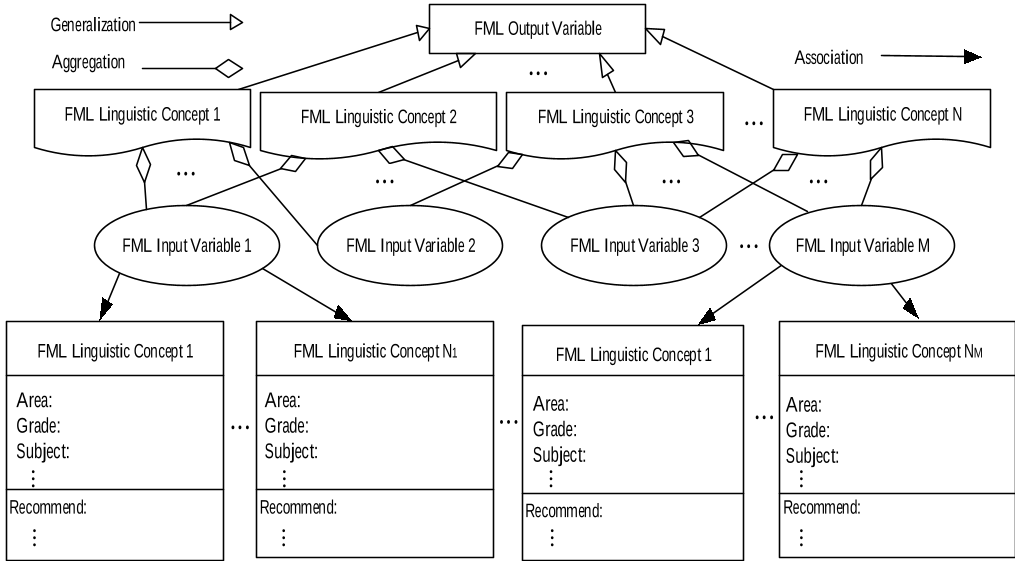 Fig 1: The FML-based student learning performance ontology structure.
Real-World Classroom Deployment
The team took their "Teaching Assistant" agents into a 4th-grade classroom in Taiwan. Students were paired with robots (Zenbo or Palro) and tablets to solve math missions.
- The Number Line Task: Students guided robots to "shoot" targets on a number line. The robot (Palro) acted as a mentor, providing detailed hints if a student failed repeatedly and cheering when they succeeded.
- The Monster Challenge: A game involving addition and subtraction where students "hit" monsters with different point values to reach a target sum.
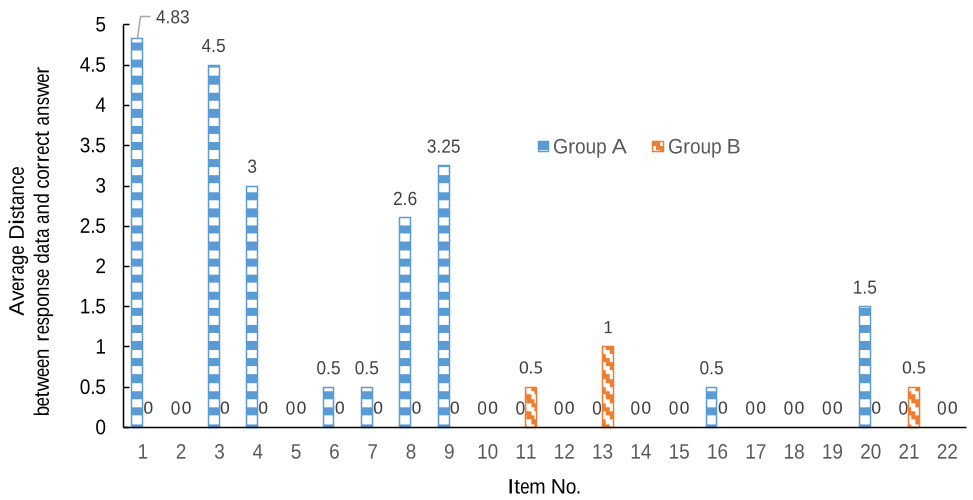 Fig 2: Performance metrics showing how groups adapted to the mathematical challenges over time.
Experimental Insights
The machine learning refinement proved critical. By applying PSO optimization, the accuracy of the robot's content recommendation jumped from 78.75% to 87%.
More importantly, the qualitative results showed that the robot’s presence served as a social catalyst. For disadvantaged children, the robot provided a non-judgmental environment where "failure" was simply met with a helpful hint rather than a grade, effectively fostering a "co-learning" spirit.
Critical Analysis & Conclusion
Takeaways
The strength of this work lies in its standardization. By using FML, the researchers have created a knowledge base that is "hardware-agnostic"—it can run on a high-end Palro robot or a consumer-grade Zenbo without rewriting the core logic.
Limitations & Future Work
While the results are promising, the sample size was limited to specific groups in Taiwan. Future research needs to explore:
- Scalability: How the agent performs in larger, noisier classrooms.
- Long-term Retention: Whether the performance gains persist after the "novelty effect" of the robot wears off.
- Multimodal Fusion: Integrating computer vision to track concentration (SCL) automatically rather than relying on manual input.
This paper paves the way for a future where robots are not just tools, but active participants in the social fabric of education.