
Harmonizing Knowledge and Data: A Hybrid Approach to Context Reasoning
An ontology-based hybrid approach for accurate context reasoning
The paper proposes a hybrid context-reasoning architecture for the Mining Minds health platform, combining OWL-based ontology reasoning with machine learning (ML) classification. By utilizing ML to predict "Unidentified High-Level Contexts" (HLCs) caused by missing sensor data, the system achieves a significant precision jump from 91.5% to 99.99%.
TL;DR
In the world of smart health, situational awareness is localized in "High-Level Contexts" (HLC). However, traditional logic-based reasoning breaks down when sensors fail or data is missing. This paper introduces a hybrid framework that bridges Ontological Reasoning with Machine Learning, pushing context prediction precision from a respectable 91.5% to a near-perfect 99.99%.
The "Missing Link" in Context Awareness
Context-aware systems aim to understand a user's situation—such as "Office Work" or "Exercising"—by analyzing Low-Level Contexts (LLC) like location, movement, and heart rate. Historically, this has been the domain of Ontologies: rigid, rule-based structures that offer excellent semantic clarity but suffer from a "brittleness" problem. If one sensor fails to report an activity, the logic gate remains closed, and the system results in an Unidentified High-Level Context.
The authors recognize that real-time deployment cannot afford "I don't know" as an answer. They propose that while Ontologies provide the ground truth and structure, Machine Learning can act as the "inference gap filler."
Methodology: From Semantic Rules to Data-Driven Decisions
The proposed architecture (implemented within the Mining Minds framework) operates via two major components:
1. The Mining Minds Context Ontology (M2CO)
The system utilizes an extended OWL2 ontology to model human behavior. It defines 17 disjoint subclasses of activities, 9 locations, and 9 emotions. High-Level Contexts (HLC) are inferred using a Pellet reasoner that checks for consistency and logical subsumption.
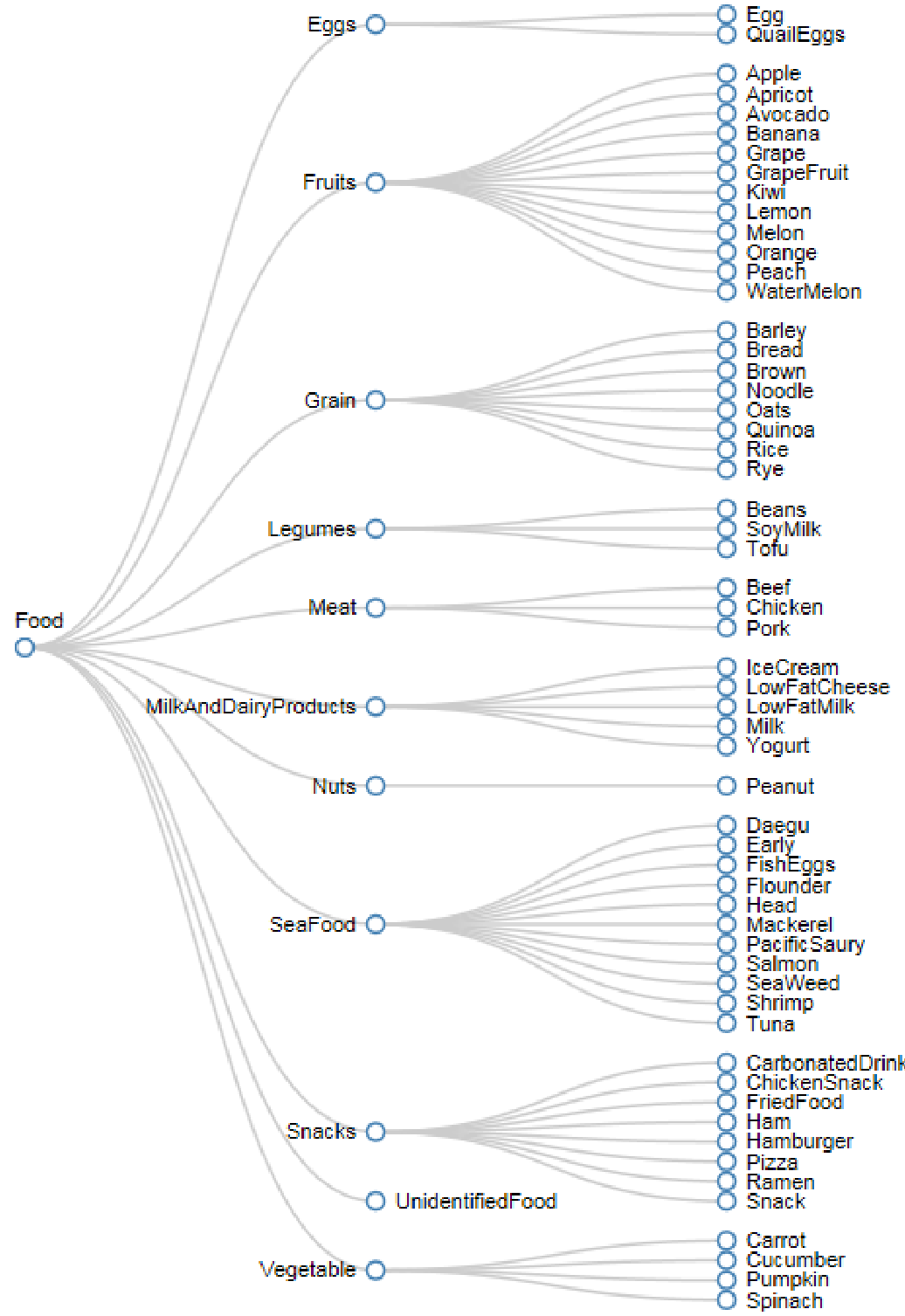 Fig 1: A partial view of the Mining Minds Context Ontology showing the relationship between LLCs and HLCs.
2. The Machine Learning Safety Net
When the ontological reasoner fails to classify a context because of missing ABox assertions (data instances), the system pivots. The authors developed a pipeline to transform RDF/XML data (from a Jena triple store) into feature vectors for ML training.
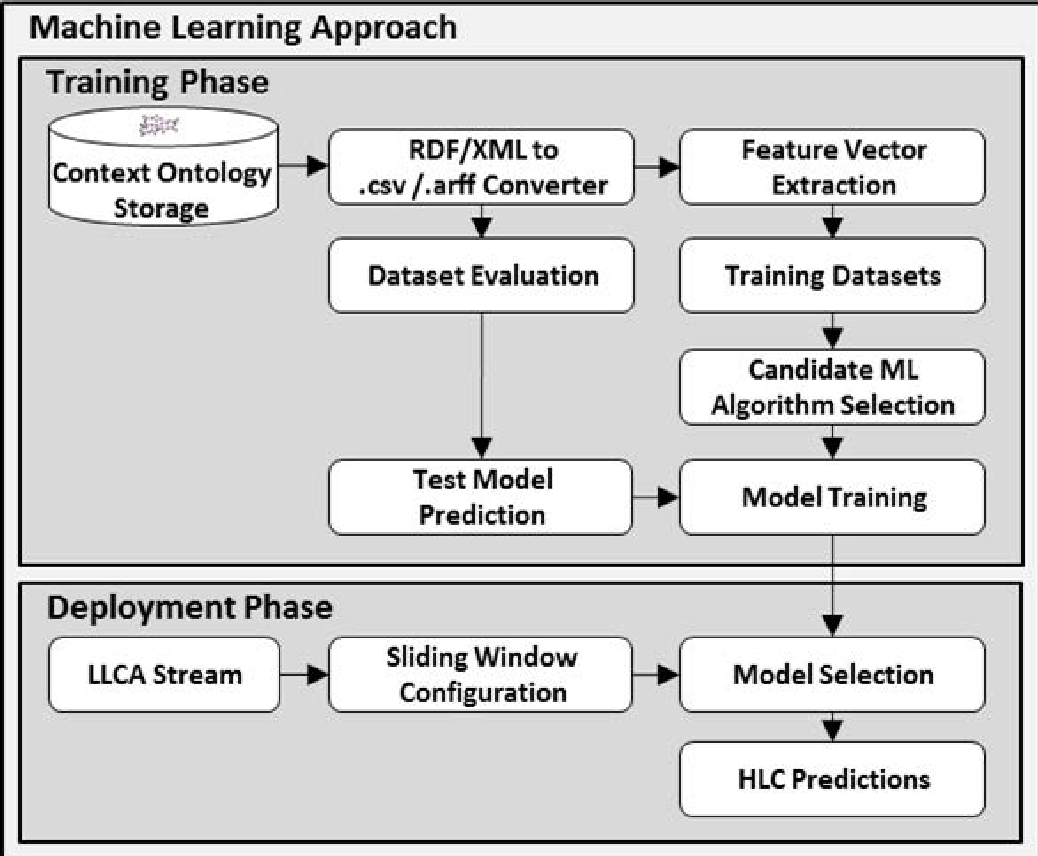 Fig 2: The dual-phase ML approach—Training on existing ontological assertions and Deploying to predict unidentified contexts.
Experimental Results: Closing the Precision Gap
The researchers tested six algorithms: Naive Bayes, KStar, IBK, J48, Random Forest, and Random Tree.
- Ontology Performance: Initially, reasoning achieved a precision of 91.5%. The remaining 8.5% constituted the "Unidentified HLCs" that the rules couldn't catch.
- Hybrid Boost: By using a trained Random Forest model to handle these unidentified cases, the overall system precision skyrocketed to 99.99%.
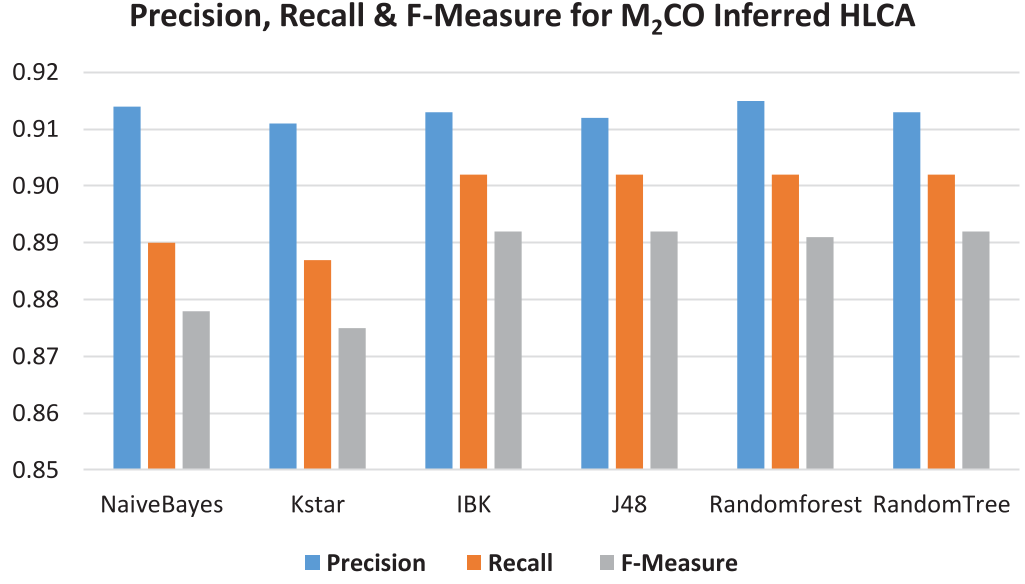 Fig 3: Precision, Recall, and F-Measure metrics for the inferred HLCs across different ML algorithms.
As seen in the results, Random Forest consistently outperformed others, proving its robustness in handling the relational nature of context data. Furthermore, the probability scores for predicted classes were overwhelmingly higher than the 0.50 threshold, signifying high confidence in the ML "corrections."
Critical Insight & Conclusion
The true value of this paper lies in its Neuro-Symbolic intuition. It doesn't replace the expert-driven ontology with a "black box" ML model; instead, it uses the ontology to generate high-quality, structured training data for the ML model.
Takeaway: Future context-aware systems should not choose between rules and data. By using ontologies for structure and machine learning for resilience, we can build healthcare platforms that are both semantically rich and practically indestructible in the face of sensor noise.
Limitations: While the precision is impressive, the study was conducted on a relatively small group (20 users). Scalability to thousands of users with increasingly complex, overlapping contexts remains the next frontier for this hybrid approach.