
SWH-FRBS: Bridging the Gap Between Semantic Intelligence and Interpretable Diabetes Diagnosis
An Ontology-Based Interpretable Fuzzy Decision Support System for Diabetes Diagnosis
The paper introduces a semantically intelligent hierarchical Fuzzy Rule-Based System (FRBS) for diabetes diagnosis. It combines fuzzy inference with SNOMED CT-based ontology reasoning and Fuzzy Analytical Hierarchy Process (FAHP) to achieve high diagnostic accuracy (95%) while maintaining medical interpretability.
TL;DR
Researchers have developed a novel Clinical Decision Support System (CDSS) that combines Fuzzy Logic and Medical Ontologies to diagnose diabetes with 95% accuracy. Unlike "black box" AI, this system uses a hierarchical structure that mimics a physician's reasoning and speaks the language of medicine via the SNOMED CT standard, ensuring both high performance and human-readable explanations.
Background: The Trust Deficit in Medical AI
Diabetes mellitus is a global health crisis, yet early diagnosis remains difficult due to the "silent" and asymptomatic nature of its progression. While modern Machine Learning (ML) models offer high predictive power, they often suffer from two fatal flaws in a clinical setting:
- Opaqueness: Doctors cannot "see" the reasoning behind an ML prediction.
- Semantic Rigidity: Most systems treat "lethargy" and "fatigue" as different data points unless manually mapped, ignoring the inherent semantic relationships in medical terminology.
Methodology: Hierarchical Logic Meets Semantic Similarity
The proposed framework, SWH-FRBS (Semantically intelligent Weighted Hierarchical Fuzzy Rule-Based System), operates through a two-layer architecture designed to handle 39 separate clinical features.
1. The Hierarchical Structure
Instead of one massive rule-base (which would lead to the "curse of dimensionality"), the authors split the problem into six sub-FRBS categories:
- Glucose Lab Tests (The highest medical weight)
- Kidney Function
- Liver Function
- Lipid Profile
- Physical Symptoms
- Clinical Complications
2. Integration of FAHP
Not all medical tests are equal. By using the Fuzzy Analytical Hierarchy Process (FAHP), the system incorporates expert opinions to weight the importance of each subsystem. For instance, Glucose levels are assigned a weight of 0.2253, while the Lipid profile receives 0.0972.
3. The Semantic Layer (The "Secret Sauce")
This is where the system evolves beyond traditional fuzzy models. By utilizing a Diabetes Mellitus Diagnosis Ontology (DDO) based on SNOMED CT, the system calculates clinical similarity. If a patient presents with a symptom not explicitly in the rules, the ontology reasoner determines its proximity to known diabetes indicators.
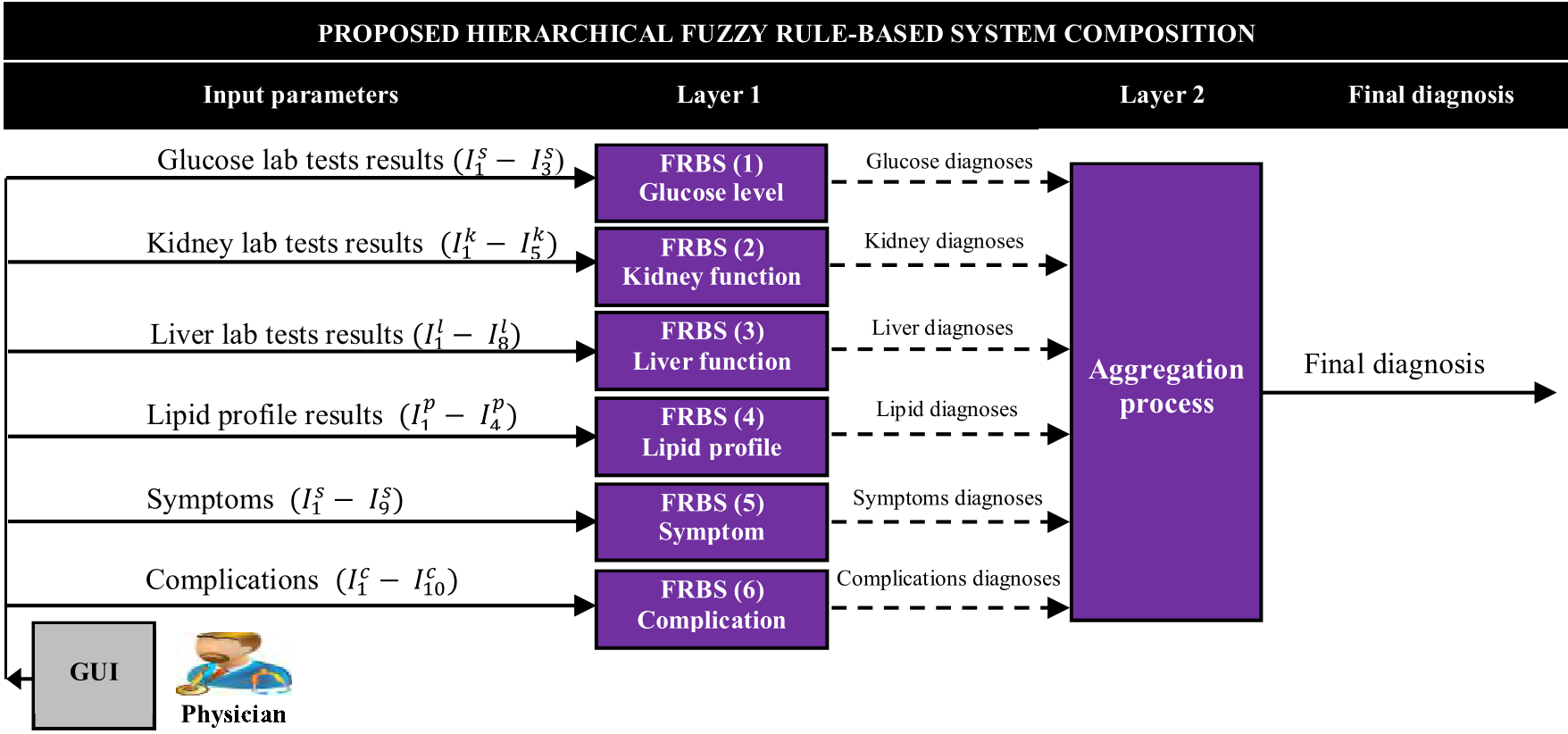 Figure 1: The hierarchical structure of the proposed FRBS system.
Experimental Results: High Stakes Performance
The system was tested against a real-world dataset from Mansoura University Hospitals. Key findings include:
- Accuracy: Reached 95% when all data was available.
- Robustness: Even when critical data like Glucose tests were missing, the system maintained a 71.6% accuracy, providing a "confidence level" to inform the physician of the missing data's impact.
- Interpretability: Through a simplification process (reducing the number of rules while keeping accuracy), the system generates clear IF-THEN rules that clinicians can validate.
SOTA Comparison
In head-to-head tests, the sub-FRBS modules frequently outperformed standard ML algorithms such as SVM, Random Forest, and ANN, particularly in handling the "gray areas" of lab results.
 Figure 2: Comparison of the specialized FRBS subsystems against traditional ML classifiers.
Deep Insight: Why This Matters for the Future
The real breakthrough here isn't just the 95% accuracy—it's the interoperability. By using the Java Fuzzy Markup Language (JFML) and the IEEE 1855 standard, this system is ready-made for integration into modern EHR ecosystems.
It transforms the diagnostic process from a static data-entry task into a dynamic, semantic search. A doctor can input a specific complication, and the system—assisted by its ontology—understands the broader clinical context. This represents a significant step toward Explainable AI (XAI), where the machine doesn't just provide an answer but acts as a transparent assistant to human expertise.
Conclusion
The SWH-FRBS framework successfully demonstrates that we do not have to sacrifice interpretability for accuracy. By grounding fuzzy reasoning in structured medical knowledge (ontologies), we can build systems that are clinically trustworthy, semantically aware, and highly resilient to the complexities of real-world patient data.
Limitations to Watch: Current implementation requires further testing on social media data extraction (sentiment analysis) and real-time cloud-based mobile integration.