
Who is Talking? Decoding Influence through the BARR Framework
Who is talking? An ontology-based opinion leader identification framework for word-of-mouth marketing in online social blogs
The paper introduces the BARR framework (Blog, Author, Reader, Relationship), an ontology-based approach to identify opinion leaders on online social blogs for Word-of-Mouth (WoM) marketing. It utilizes Topic Detection and Tracking (TDT) and TOPSIS to pinpoint influential authors and "hot topics" within specific product domains like the Apple iPhone.
TL;DR
Influence in the digital age is often mistaken for mere popularity. This paper introduces BARR, a sophisticated framework that combines Ontology-based semantic analysis with Multi-Attribute Decision Making (TOPSIS) to find true opinion leaders. By analyzing Blog content, Author expertise, Reader profiles, and Social Relationships, it provides marketers with a surgical tool to identify who actually moves the needle in Word-of-Mouth (WoM) marketing.
The Motivation: Why Link Analysis Isn't Enough
In the early days of social network analysis, we focused heavily on topology—who follows whom. However, in the context of Word-of-Mouth marketing, a "celebrity" might have thousands of comments but zero influence on a consumer's technical purchase decision.
The authors argue that true influence is a high-dimensional construct. To find an opinion leader, you must understand what they are saying (semantic content) and who is listening (reader quality). The gap in existing research was the lack of a bridge between semantic understanding and social tie strength.
Methodology: The BARR Architecture
The BARR framework operates on a five-stage pipeline:
- Keyword Search: Locating the relevant blog universe.
- Ontology Extraction: Using information entropy to build a "knowledge map" of the product (e.g., iPhone features like 'Dock', 'Camera', 'Video').
- Ontology-Assisted Extraction: Mapping bloggers and readers to these knowledge nodes.
- Hot Blog Identification: Ranking posts based on 11 parameters (Visits, Reviews, Expertise, Homophily, etc.).
- Opinion Leader Identification: A final score that balances the Quality and Quantity of an author's output.
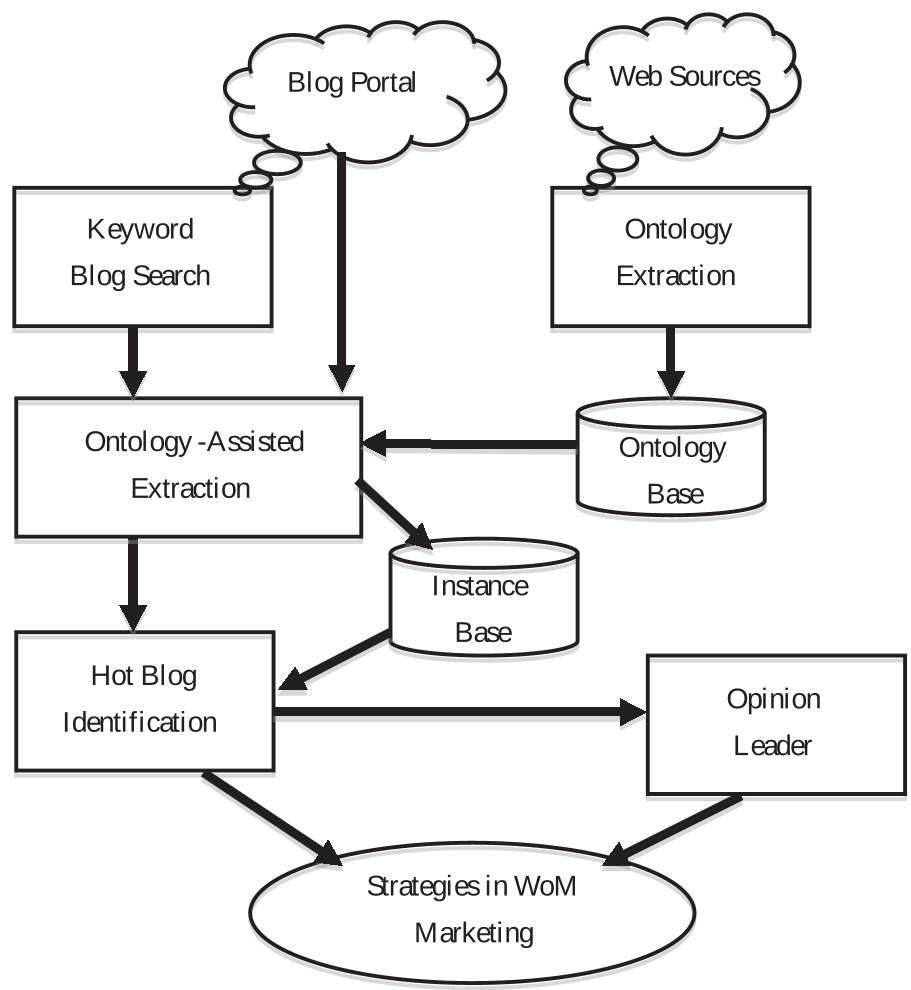 Fig 1: The systematic flow from raw web data to identified influencers.
The "Secret Sauce": Modified TOPSIS
Simple averaging of scores fails because one outlier attribute (like a massive comment count) can skew the result. The authors used TOPSIS (Technique for Order Preference by Similarity to Ideal Solution) but added a Coefficient of Dispersion. This ensures that an opinion leader must be well-rounded—possessing both expertise and engagement—rather than just being a "one-hit wonder."
Experiments: iPhone Case Study
The researchers tested BARR against 311 iPhone-related blogs from MySpace. They compared their results against Google Search rankings and simple "Most Commented" lists.
Key Findings:
- CEOs vs. Celebrities: A blog post by a celebrity (BC) had the most comments, but BARR's top-ranked blog (BT) was a deep dive into iPhone pricing and quality. BT had higher "Expertise" (F4) and "Homophily" (F10) scores.
- The Power of Ties: Relationship metrics (Tie Strength) proved vital. An author influential with a small, highly expert group (strong ties) often provides more value to a brand than one with many "weak tie" strangers.
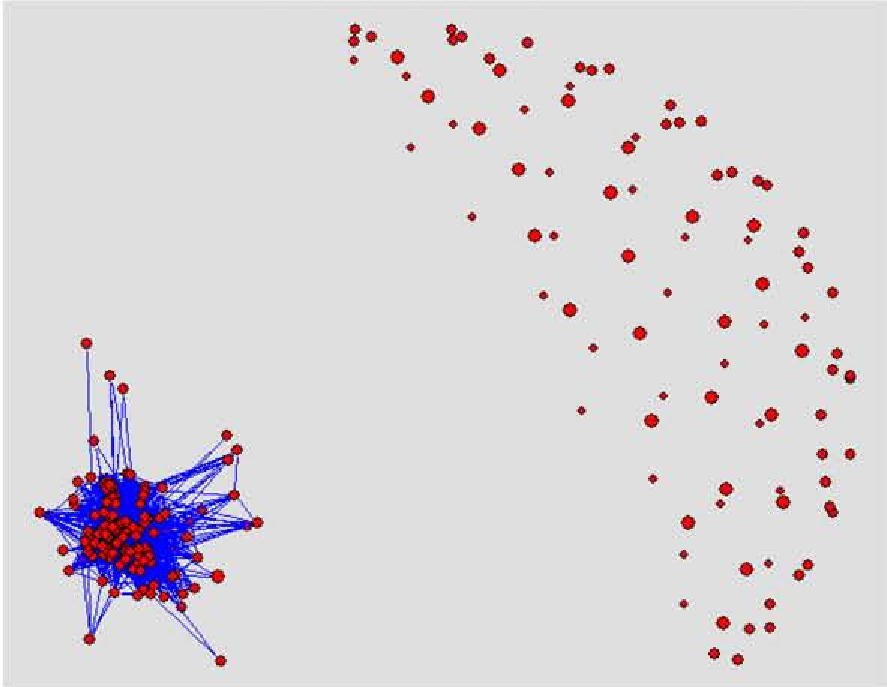 Fig 2: Visualizing the fragmented nature of interest-based clusters.
Critical Insights & Future Outlook
The BARR framework's greatest strength is its ontology-driven expertise scoring. By calculating the cosine similarity between a blogger's vocabulary and the official product ontology, it mathematically identifies "domain experts."
Limitations:
- Data Latency: Building ontologies manually or via entropy calculation is slower than modern Transformers/LLMs.
- Platform Specificity: The study was performed on MySpace; modern platforms like Twitter or TikTok would require different "Tie Strength" definitions (e.g., retweets vs. stitches).
Conclusion: The paper serves as a seminal reminder that in marketing, quality of connection beats quantity of reach. As we move into an AI-driven marketing era, the BARR framework’s focus on structural and semantic multidimensionality remains a bedrock principle for identifying true digital authority.