
Kassist: Bridging Meta-Cognition and Problem-Solving Through Ontological Navigation
An Ontology-Based Planning Navigation in Problem-Solving Oriented Learning Processes
This paper introduces an ontology-based navigation framework for Problem-Solving Oriented Learning (PSOL) and implements the "Kassist" system. By leveraging a structured PSOL task ontology derived from Rasmussen’s cognitive model, the system provides human-centric support to facilitate meta-cognitive activities and strategic problem-solving.
TL;DR
The paper presents a human-centric support framework for Problem-Solving Oriented Learning (PSOL). By utilizing a specialized task ontology rooted in Rasmussen’s cognitive psychology, the authors developed Kassist, a system that helps learners not just "solve problems," but understand how they solve them. It achieves this by externalizing mental images and providing targeted navigation when cognitive impasses occur.
Background: Beyond Content Accumulation
In the landscape of educational technology, there is a critical distinction between learning facts and learning how to solve problems. The latter requires Meta-cognition—the ability to monitor and control one’s own internal mental processes. Most current systems are "ad hoc," meaning they are hard-coded for specific tasks. This research moves toward theory-aware systems that understand the underlying principles of human cognition.
The Core Engine: PSOL Task Ontology
The heart of this work is the PSOL Task Ontology. The researchers didn't invent this from scratch; they mapped it onto Rasmussen’s cognitive model, a well-respected framework in cognitive engineering.
Architectural Breakdown
The ontology organizes cognitive tasks into an "is-a" hierarchy:
- Meta Activities: Monitoring knowledge states and learning plans.
- Object Activities: The actual execution of problem-solving and learning.
This structure allows the system to understand that a learner's failure to "Monitor a learning plan" is a specific meta-cognitive failure, not just a lack of domain knowledge.
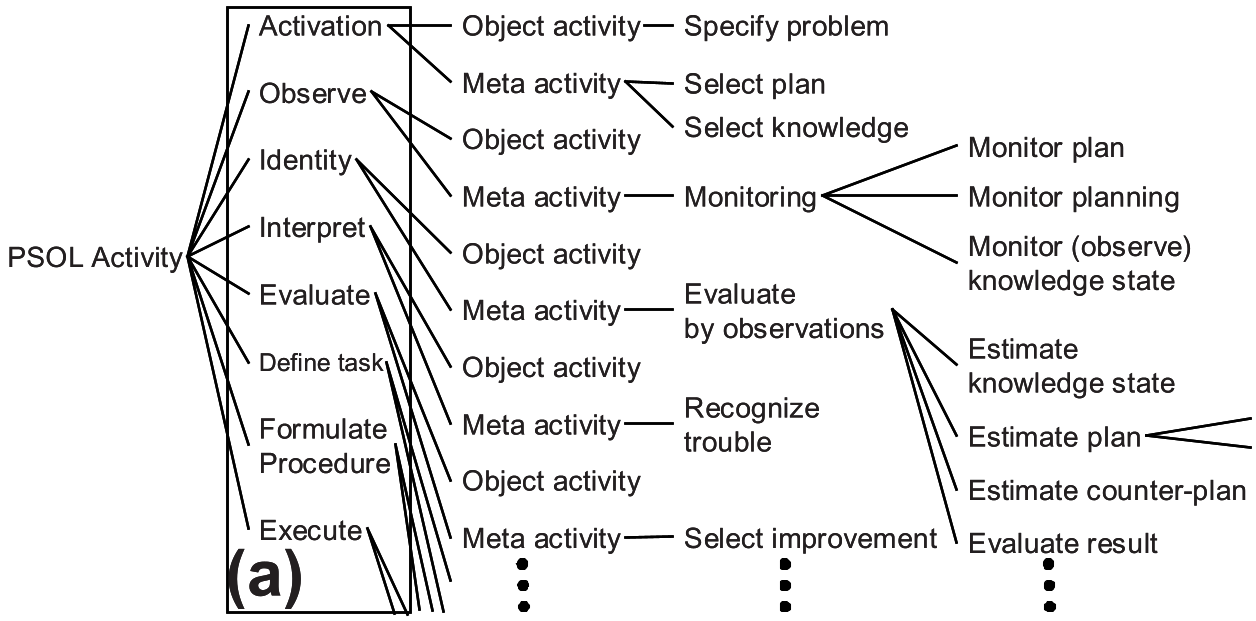
Methodology: The Kassist Interaction Model
Kassist provides an interactive open learner-modeling environment. It allows the learner to externalize three key components:
- Problem-solving plans: The "how-to" of the task.
- Knowledge state: What the learner thinks they know.
- Learning process: The path taken to acquire missing skills.
The system acts as a "mirror" for the mind. When a learner reaches an impasse, Kassist doesn't just give the answer. Instead, it uses its ontological basis to suggest why the impasse exists and how it affects the larger problem-solving goal.
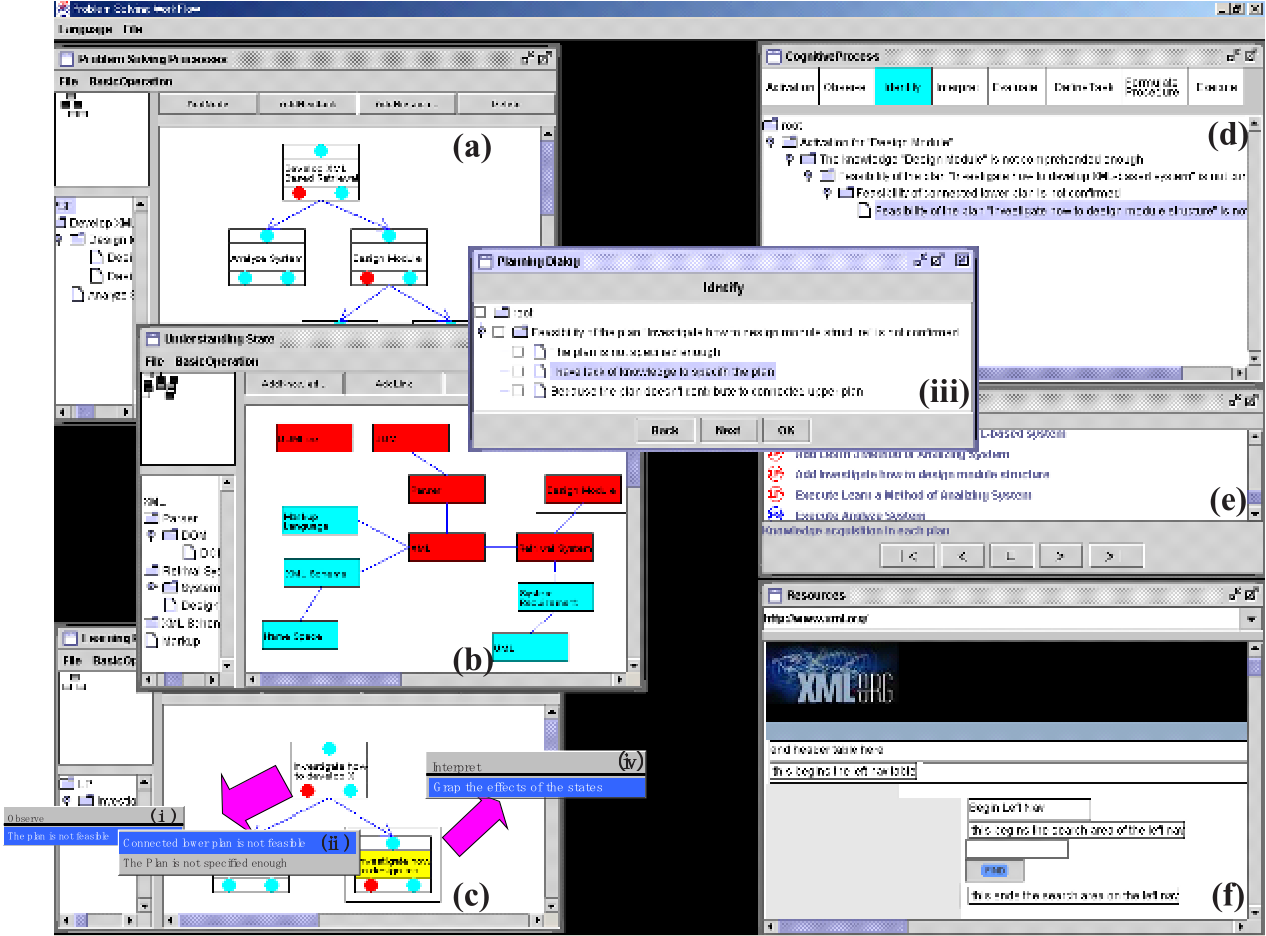
Why Ontology-Based Navigation Works
The advantage of an ontological approach over traditional branching logic is its depth of insight. Because the system understands the "Identity" of a cognitive activity (e.g., that "Reviewing a plan" is a child of "Meta-cognition"), it can:
- Provide Positive Navigation: Suggest the next logical cognitive step (e.g., "You should now verify your knowledge state for Step B").
- Identify Strategic Gaps: Reveal how missing knowledge specifically blocks future problem-solving stages, creating a sense of "need to know" in the learner.
Critical Analysis & Future Outlook
While the paper establishes a robust theoretical framework, it serves as a foundational "schema." The real-world effectiveness of Kassist depends heavily on the accuracy of the learner's self-reporting in the open model.
Future Directions:
- Automation: Integrating AI to automatically detect cognitive states rather than relying solely on learner input.
- Scalability: Applying this task-agnostic ontology to complex fields like medical diagnosis or software engineering.
Conclusion
This research underscores that for a learning system to be truly "intelligent," it must understand the structure of human thought. By grounding navigation in a cognitive ontology, Kassist transforms from a simple tool into a sophisticated coach for the learner's mind.