
Ontology-Based ADAS: Bridging the Gap Between Real-World Accidents and Vehicle Design
An Ontology-Based Recommendation System for ADAS Design
The paper introduces an Ontology-Based Recommendation System designed to assist in the development of Advanced Driver-Assistance Systems (ADAS). By integrating domain ontologies, collaborative filtering, and text mining, the framework transforms raw sensor data from real-world accidents and exceptions into actionable design insights and multimedia summaries to achieve safer vehicle designs.
TL;DR
Modern vehicles are safer than ever, but Advanced Driver-Assistance Systems (ADAS) are often designed in "sterile" laboratory conditions. This paper proposes a recommendation framework that uses Domain Ontologies and Collaborative Filtering to capture real-world sensor data from accidents and exceptions, feeding it directly back to designers to optimize next-generation safety features.
Background & Motivation: Moving Beyond "Imagination"
Currently, ADAS development suffers from a "Feedback Gap." Car designers often rely on their own experience or hypothetical "field models" to set parameters for systems like Lane Departure Warnings or Forward Collision systems.
The Pain Point: A camera-based ADAS might work perfectly in a simulation but fail under specific, rare lighting conditions on a real highway. Without a systematic way to collect this "user experience" (UX) data and turn it into engineering knowledge, manufacturers are often forced into expensive vehicle recalls when real-world failures occur.
Methodology: The Core Engine
The proposed framework shifts the paradigm from "design-and-test" to "data-driven evolution." At its heart, the system uses OWL (Web Ontology Language) to represent the complex relationships between vehicles, road contexts, and sensor events.
1. The Architecture
The system is divided into two synergistic subsystems:
- Exception Solution Subsystem: When a driver triggers a request or a sensor detects an "exception" (e.g., a near-miss), the system retrieves relevant multimedia data, summarizes it using text mining, and recommends solutions based on similar historical cases.
- Knowledge Management Subsystem: Acts as a "digital mentor," taking questions from junior designers and providing stored answers or recommendations verified by veteran engineers.
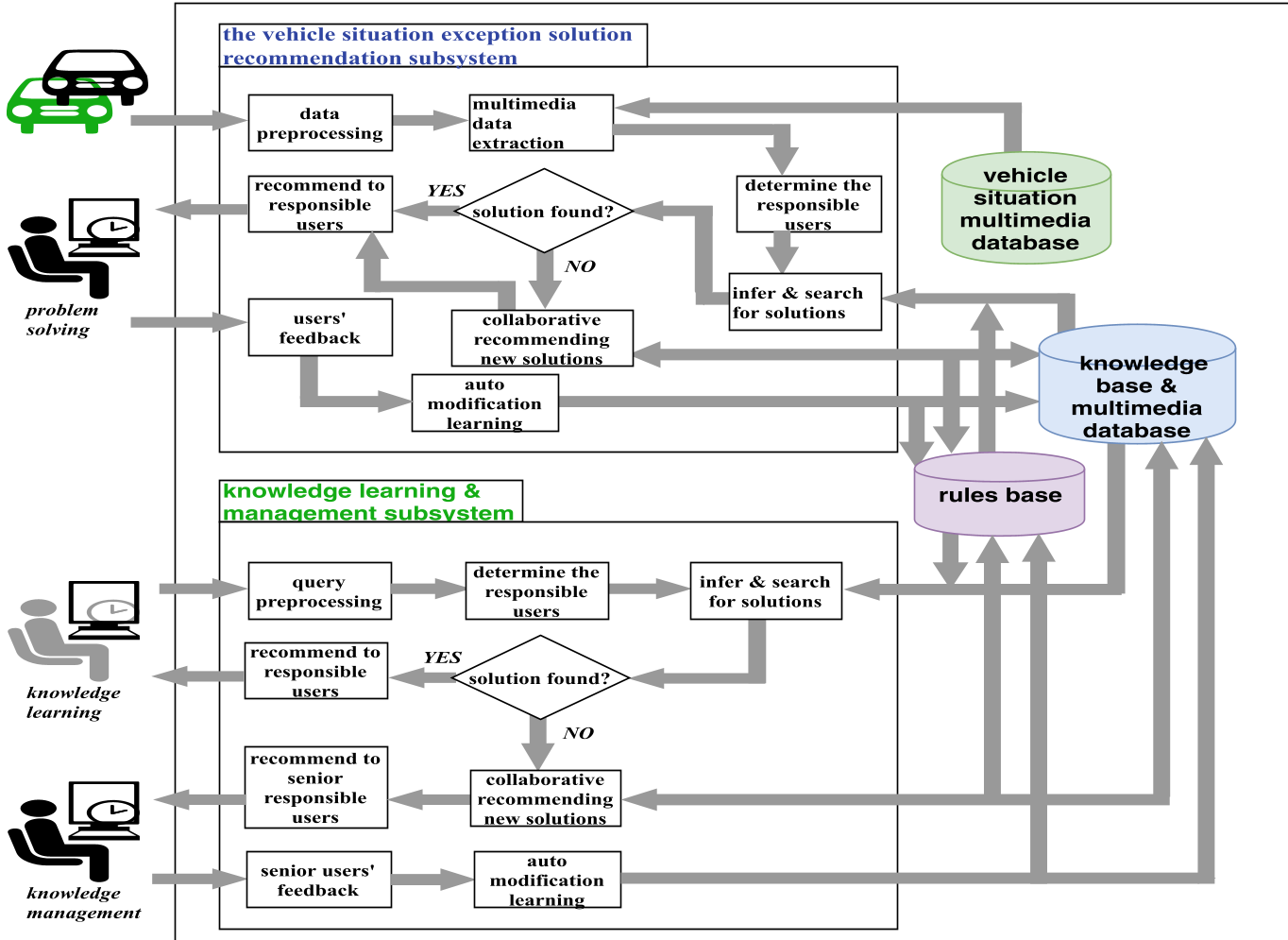 Figure 1: The dual-layered workflow showing the interaction between real-time data and internal knowledge bases.
2. Hybrid Recommendation Logic
The authors emphasize a Collaborative Filtering approach. By using a utility function , the system calculates the similarity between the current "exception context" and historical "solution patterns." This ensures that when a new designer faces a lighting-related sensor fail, they are immediately presented with how similar issues were resolved in the past.
Critical Insights: Why Ontologies?
Why not just use a simple database? The authors argue that Ontologies are crucial because ADAS data is inherently heterogeneous. You have camera feeds, radar signals, V2X (Vehicle-to-Everything) communications, and human-written accident reports. An ontology provides the "semantic glue" that allows a machine to understand that a "Low Sun Angle" (Context) affects a "CMOS Sensor" (Component) in a specific "Warning Logic" (System).
Experiments & Results
The implementation was built on the Protégé platform using JESS (Java Expert System Shell).
- Efficiency: The system successfully shortened design cycles by providing searchable, summarized multimedia reports of complex accidents, rather than forcing designers to sift through raw log files.
- Knowledge Transfer: It proved highly effective as a tutorial program, significantly reducing the "onboarding" time for new entrants in the automotive engineering field.
- The Sparsity Challenge: The authors honestly note that like all recommendation systems, this framework faces "data sparsity" in its early stages—it needs a threshold of accident data before the collaborative filtering becomes hyper-accurate.
Conclusion & Future Outlook
This paper serves as a blueprint for Cognitive ADAS Design. By treating every road exception as a learning opportunity for the model, car makers can move towards a "self-healing" design process.
The Takeaway for the Industry: The next frontier of ADAS isn't just better sensors—it's better Knowledge Representation. As we move towards Level 4 and Level 5 autonomy, the ability to semantically link "what the car saw" to "what the designer intended" will be the difference between a prototype and a product that saves lives.
Limitations to Consider
While the ontology approach is robust, the reliance on manual verification by "veteran designers" may create a bottleneck. Future iterations could explore LLM-based automated verification to further accelerate the design cycle.