
Bridging Clinical Narrative and Structured Data: An Ontology-Driven Approach to Stroke EMRs
An ontology-based approach for text mining of stroke electronic medical records
The paper introduces a specialized ontology-based text mining framework designed to extract structured information from unstructured Chinese Electronic Medical Records (EMRs) for stroke patients. By decomposing medical terms into atomic semantic units and leveraging OWL-based reasoning, the system achieves an 81.4% information retrieval accuracy and successfully uncovers implicit clinical relationships.
TL;DR
Clinical notes are a goldmine of data, yet they remain largely "dark" due to their unstructured nature. This paper presents a specialized pipeline that uses an OWL-based Stroke Ontology to parse Chinese EMRs. By breaking down medical jargon into "atomic units," the system doesn't just match keywords—it understands the hierarchy of symptoms and diseases, achieving an 81.4% retrieval rate and enabling deep statistical correlation analysis.
Context & Motivation: The "Messy" Reality of EMRs
Electronic Medical Records (EMRs) are often written in natural language, filled with domain-specific shorthand, varied synonyms, and implicit logic. For stroke treatment, where timely intervention is critical, identifying risk factors requires structured data that traditional Keyword Matching simply cannot provide.
The authors argue that existing medical ontologies (like UMLS) are often too rigid for the nuanced task of text mining. They advocate for a system that can handle:
- Lexical Variations: Different phrases referring to the same clinical event.
- Implicit Reasoning: Inferring a patient's state even when not explicitly stated.
Methodology: Atomic Units & Semantic Connections
The core innovation lies in the recursive construction of the ontology. Instead of mapping whole phrases, the researchers decompose medical knowledge into seven top-level classes: BodyPart, Symptom, Sign, Disease, State, Modifier, and Position.
1. The Pipeline
The system follows a two-phase approach:
- Training Phase: Recursive refinement of the ontology using 100 sample records.
- Processing Phase: Using Jena API and SPARQL to query new records and Pellet to perform logical consistency checks.
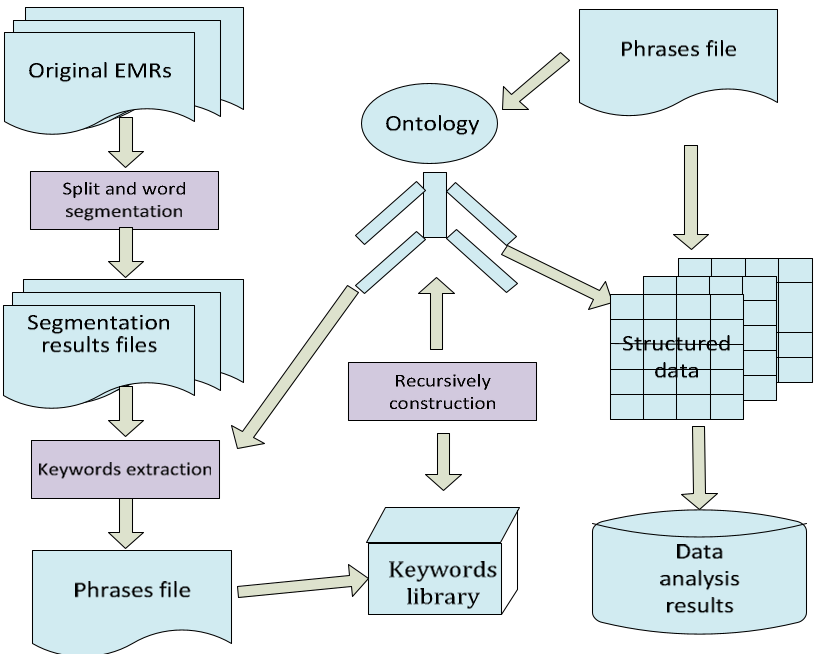 Figure 1: The workflow from raw text preprocessing to structured variable-value pairs.
2. Properties and Reasoning
To connect these atomic units, the authors defined specific properties:
hasSymptom: Links aBodyPartto aSymptom.modify: Links aModifierto aDisease(e.g., describing the severity). This setup allows for the extraction of metadata that is "read between the lines" using SWRL (Semantic Web Rule Language).
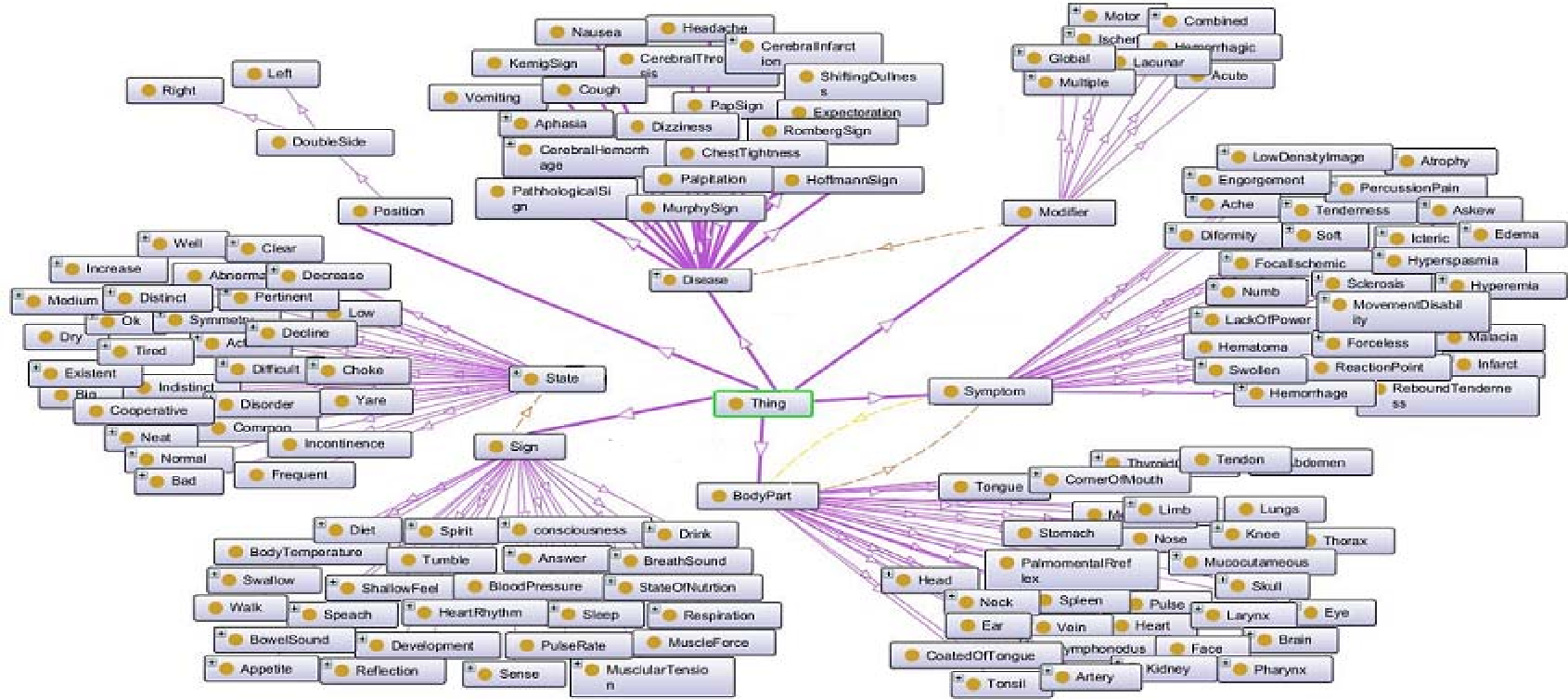 Figure 2: Part of the stroke ontology hierarchy showing conceptual links between class roots.
Experimental Results: Precision and Insight
The pipeline was tested on an independent set of records, manually annotated by experts.
- Accuracy: 81.4% of all target items were correctly identified.
- Error Analysis: Unidentified items (18.6%) were mostly due to messy punctuation separators and word segmentation errors, rather than flaws in the ontology logic itself.
Clinical Discovery: Spearman’s Correlation
Beyond technical metrics, the authors applied their system to 186 real-world patients. By converting the EMRs into a data matrix, they performed a Spearman's correlation analysis. The results mapped the complex web of relationships between subjective symptoms (like "mental fragility") and measurable physiological indicators (like blood glucose or lipid levels).
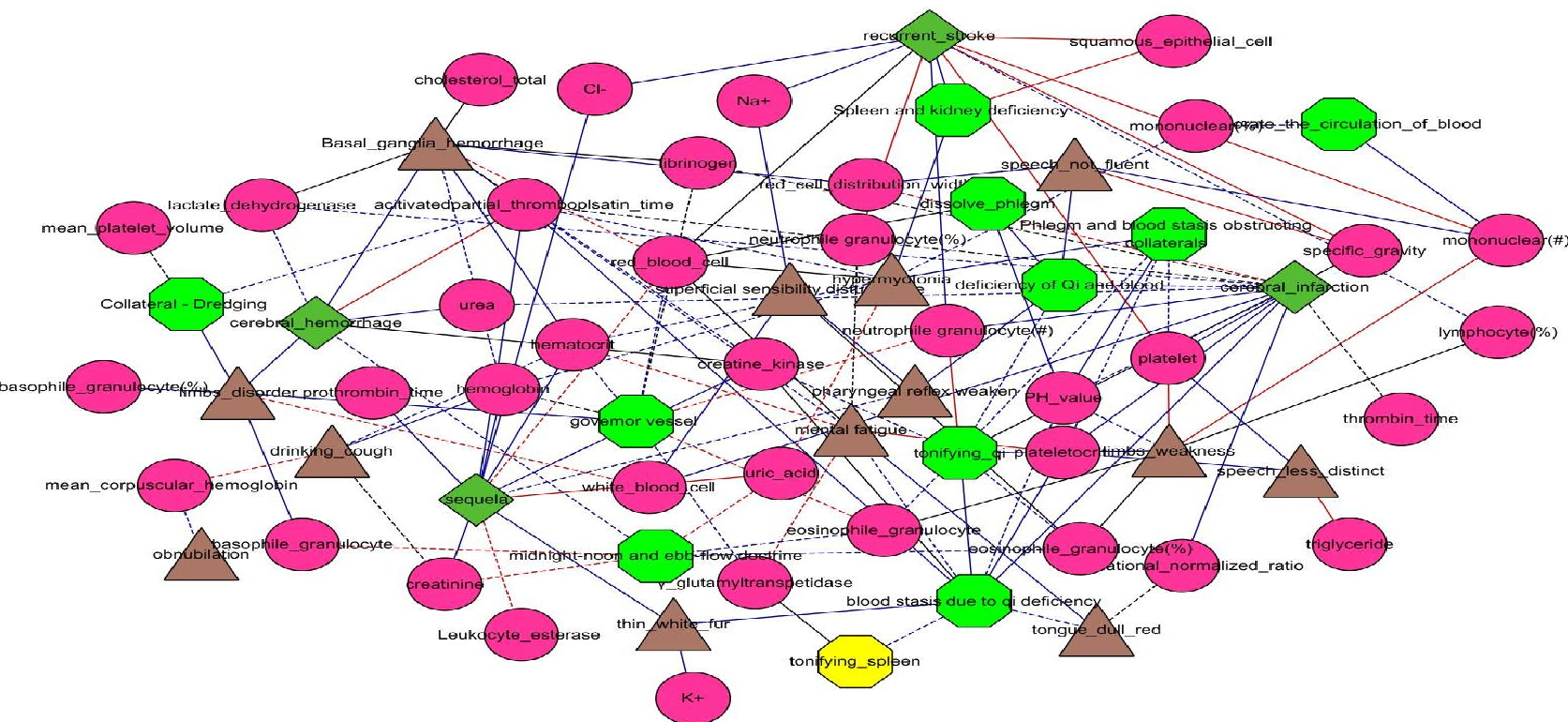 Figure 3: Graphical representation of variable correlations discovered via the text mining pipeline.
Critical Insight & Future Outlook
While this work predates the current LLM (Large Language Model) boom, its reliance on formal logic and ontologies offers something that "black-box" AI often lacks: Interpretabilitiy and Consistency.
Takeaways:
- Modularity works: Breaking medical terms into atomic units makes the system more robust to the "long tail" of natural language variations.
- Hybrid Potential: Future systems could combine this structured ontology approach with LLMs to handle "messy separators" while maintaining the logical rigor of OWL reasoning.
The project highlights a crucial step toward "Medical Big Data," where the nuances of a doctor's handwritten notes can finally be treated as reliable, computable signals.