
From Raw Incidents to Machine Intelligence: An Ontology Approach to Traffic Risk Forecasting
Ontology based collection and analysis of traffic event data for developing intelligent vehicles
This paper introduces an ontology-based annotation format for traffic near-miss incident data to support autonomous vehicle development. By structuring 120,000 human-annotated cases into a conceptual hierarchy, the author enables automated risk forecasting and real-time accident probability estimation.
Executive Summary
TL;DR: This research bridges the gap between massive, human-annotated "near-miss" incident databases and the technical requirements of autonomous vehicle (AV) motion planning. By transforming over 120,000 legacy records into a structured Traffic Ontology Model, the author enables a system that can predict accident probabilities in real-time () based on specific environmental contexts and driving plans.
Academic Positioning: This work serves as a vital "semantic bridge." It moves beyond simple sensor-based data collection into the realm of Knowledge Engineering, providing a formal framework for machine learning systems to reason about the why and how of traffic risks rather than just the what.
Problem & Motivation: The "Natural Language" Bottleneck
For over a decade, traffic safety researchers have collected "near-miss" data—events where an accident almost happened but was avoided. While these datasets are gold mines for safety analysis, they suffer from a major limitation: annotation ambiguity.
Most existing databases use compound, natural-language keywords. For Example, a keyword like IntersectionGoStraightStarting conflates three distinct concepts:
- Location: Intersection
- Action: Go Straight
- Phase: Starting
To a computer, this is just a string of characters. For an autonomous agent to "understand" that it needs to decelerate at an unsignalized intersection, it needs a model that recognizes the exclusive relationships and hierarchical dependencies between these concepts.
Methodology: The Core Traffic Ontology
The author's primary contribution is the reorganization of 650 diverse keywords into a formal hierarchical structure.
1. Hierarchical Architecture
The ontology breaks down an "Event" into several high-level entities:
- TrafficParticipant: Categorized by type (e.g., Vehicle, Pedestrian).
- Behavior: Split into Operational Level (steering, acceleration) and Tactical Level (relative motion, course planning).
- Condition/Environment: Weather, road structure, and traffic laws.
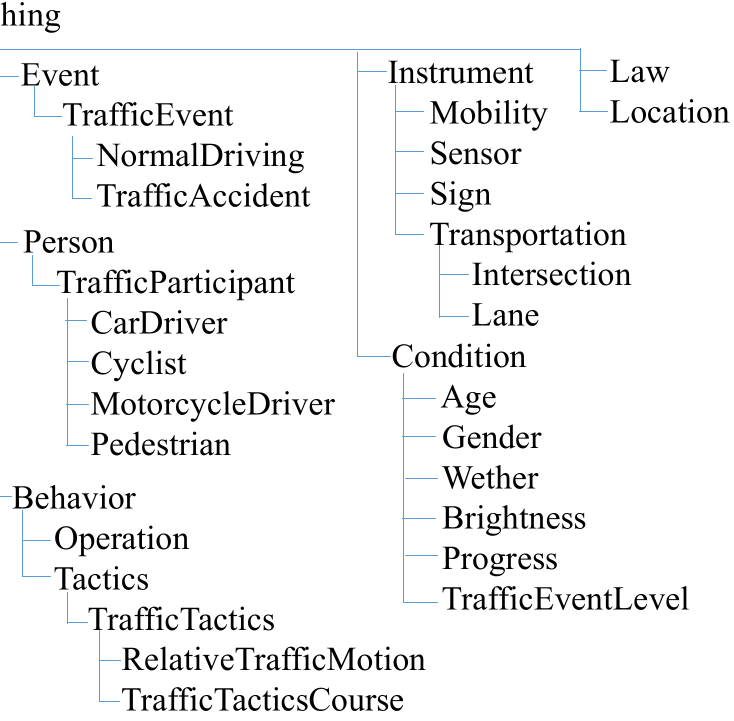 Fig 1: The hierarchical structure separates entities into logical domains for machine processing.
2. Bayesian Risk Estimation
By structuring the data this way, the system can calculate the Accident Occurrence Probability (P) using Bayes' Theorem. Instead of just looking at how often an accident happens, the system calculates: Where C is the driving plan, E is the environment, and F is the targeted participant. This allows the AV to ask: "Given I am turning right and there is a pedestrian, what is the likelihood of a conflict based on 10 years of prior incidents?"
Experimental Results & Insights
Identifying Context-Specific Risks
The research reveals crucial nuances in traffic safety that are often missed by simpler models:
- Traffic Signals Matter: At signalized intersections, the highest risk is the "destination lane" crosswalk. At unsignalized ones, the "current lane" crosswalk is more dangerous.
- Cyclist Vulnerability: The model found that the accident probability of a cyclist is twice that of a pedestrian during overtaking maneuvers, likely due to the higher lateral speed of bicycles.
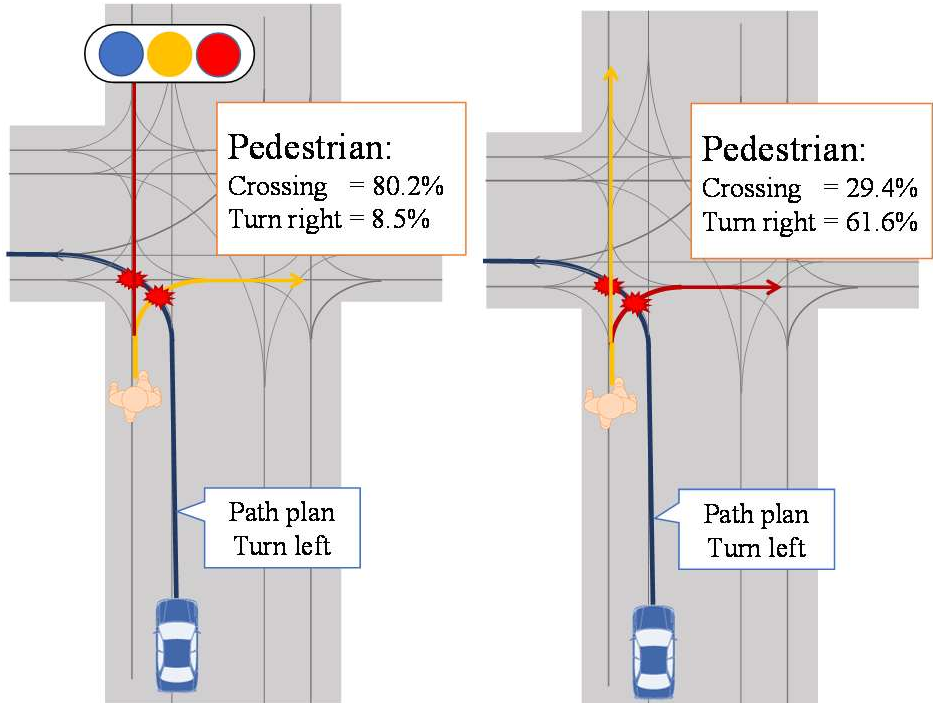 Fig 2: Comparison of risks with and without signals—quantifying the need for context-aware ADAS.
Computational Efficiency
By using a Tree-Structure Based Search (indexing Transportation Tactics Participants), the author reduced search times significantly.
- Performance: Cases are retrieved and processed in approximately 0.32ms to 0.48ms.
- Improvement: This is a 20x to 56x acceleration compared to traditional flat-database queries, making the system viable for real-time edge computing on vehicles.
Critical Analysis & Conclusion
Takeaway
The shift from "data-driven" to "knowledge-driven" is essential for safety-critical AI. This paper proves that ontology-based structures don't just provide clarity—they provide speed and contextual intelligence that raw data lacks.
Limitations & Future Work
While the ontology is robust, the current system relies on human operators for the initial annotation. Future iterations could benefit from Automatic Ontology Population using Large Language Models (LLMs) or Computer Vision to extract these entities directly from video feeds, further scaling the 120,000-case database.
By formalizing what "almost went wrong," this framework provides a roadmap for autonomous systems to ensure things "go right."