
Bridging the Distance: An Intelligent CBR-Ontology System for Distributed Teams
A System Based on Ontology and Case-Based Reasoning to Support Distributed Teams
The paper proposes a specialized AI-driven system to support Distributed Software Development (DSD) teams by combining DKDOnto (a domain-specific ontology) with Case-Based Reasoning (CBR) and Natural Language Processing (NLP). The system acts as a recommendation engine that identifies DSD challenges and suggests best practices, achieving a 91.7% success rate in solution recommendation.
TL;DR
Global software development is notoriously difficult due to "distance" (temporal, cultural, and geographical). This paper presents a hybrid AI system that marries Ontology with Case-Based Reasoning (CBR). By analyzing previous project failures and successes using Natural Language Processing, the system can recommend proven solutions to new project managers with a staggering 91.7% accuracy.
The "Knowledge Silo" Problem in DSD
Distributed Software Development (DSD) is no longer a luxury—it is the industry standard. However, knowledge often stays trapped within local teams. When a team in Brazil faces a communication lag with a team in Japan, they often reinvent the wheel to solve it.
The authors argue that the problem isn't a lack of solutions, but a lack of a shared conceptualization and a mechanism to retrieve relevant experiences. Current tools are either too rigid (databases) or too chaotic (unstructured documentation).
Methodology: The Hybrid Intelligence Architecture
The proposed solution rests on three pillars: DKDOnto, DKDs, and CBR-DKDs.
1. DKDOnto: The Semantic Backbone
Using the OWL (Web Ontology Language), the researchers built an ontology comprising 50 classes (including Member, Skills, Place, Challenges, and Best Practices). This provides the "grammar" for describing a DSD environment.
2. The CBR-NLP Pipeline
This is where the "reasoning" happens. When a user inputs a problem in plain English (e.g., "Our developers are constantly overwriting code due to poor git habits"), the system follows a 4-step workflow:
- Extraction: Uses Stanford Parser to identify syntactic dependencies.
- Case Representation: Converts text into a structured data model.
- Retrieval: Uses a Weighted Nearest Neighbor algorithm to find similar historical cases.
- Retention: After the user solves the problem, the new experience is stored back into the database, allowing the AI to learn.
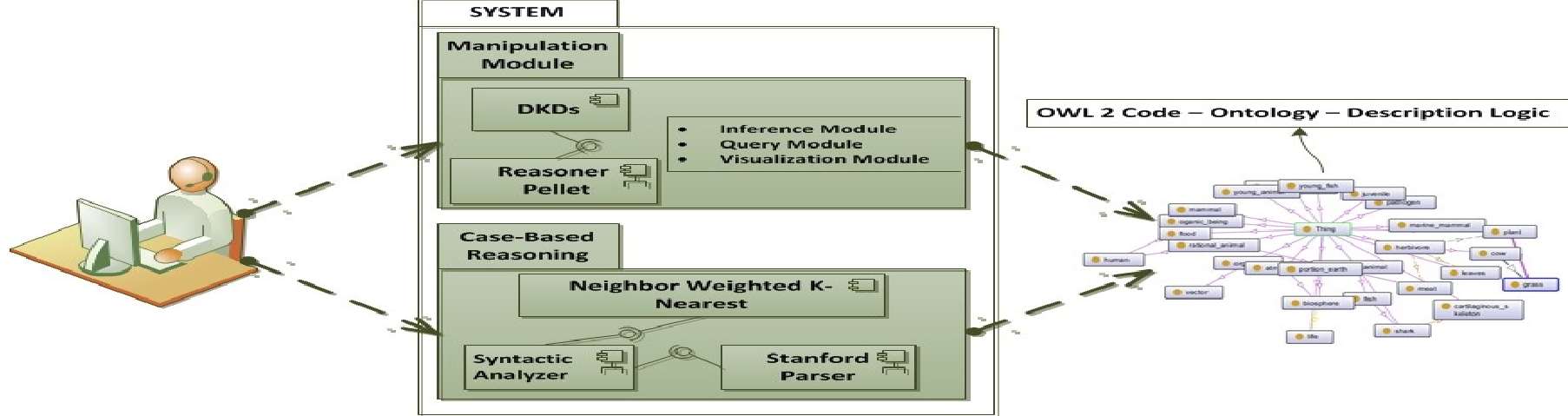 Figure 1: The dual-system architecture combining data manipulation (DKDs) and case reasoning (CBR-DKDs).
Experimental Validation
To test the system, the authors compiled a "Case Base" of 101 real-world scenarios derived from 112 academic papers and a survey of 21 industry professionals.
Key Metrics:
- Identical Cases: 100% similarity (Validation of retrieval integrity).
- Partial Matches: 54% - 87% similarity.
- Completely New Problems: Still achieved significant similarity scores, enough to provide relevant suggestions.
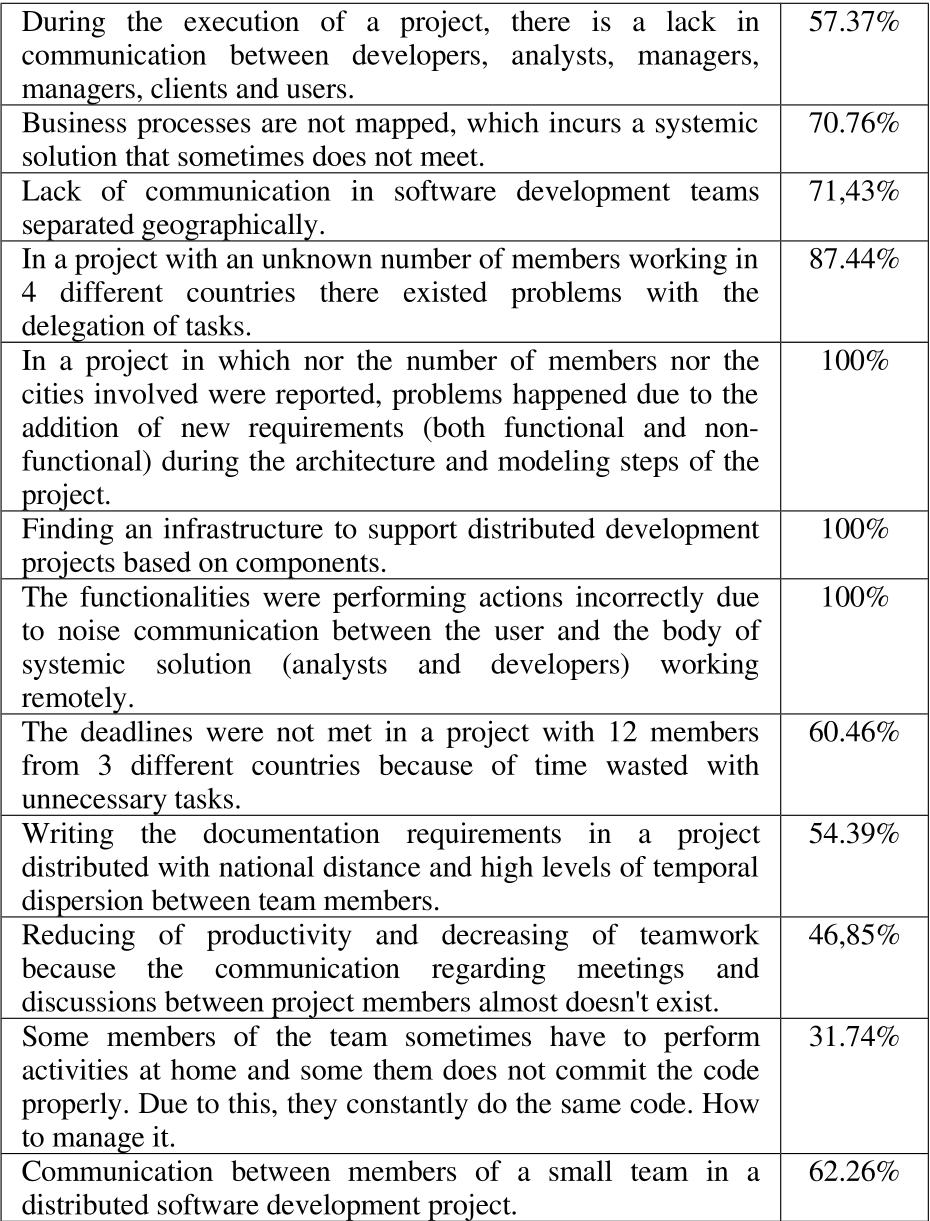 Figure 2: Sample of processed sentences and their similarity scores. Note how semantic nuance changes the "Most Similar Case" percentage.
Critical Insight: Why This Works
Most DSD tools fail because they expect users to speak "database." By utilizing NLP (via PCFG), the authors lower the barrier to entry. The system doesn't just look for keywords; it looks for relational structures between actors, places, and challenges.
Statistical analysis (Right-tailed binomial test) proved that the system's success wasn't a fluke; there is a statistically significant probability (p < 0.05) that the system will consistently outperform traditional knowledge management methods.
Looking Ahead
While the system is robust, it currently relies on a relatively small case base (101 cases). The future of this technology likely lies in Automated Ontology Learning, where the system could browse platforms like StackOverflow or Jira to automatically populate its "Best Practices" library.
Final Takeaway
For organizations managing global teams, this research offers a blueprint: Don't just store data—structure it with an ontology and make it searchable through reasoning.