
Logic Meets Proteomics: Scaling Yeast Interaction Discovery with Ontologies
An ontology-empowered model for annotating protein-protein interaction data: a case study for budding yeast
The paper presents an ontology-empowered framework designed to integrate and annotate protein-protein interaction (PPI) data, focusing on the budding yeast Saccharomyces cerevisiae. By combining an OWL-DL based ontology (FungalWeb) with graph-based data mining algorithms and the RACER reasoner, the authors provide a logically consistent platform for complex biological query answering and knowledge discovery.
Executive Summary
TL;DR: This research tackles the "data silo" problem in bioinformatics by wrapping heterogeneous protein-protein interaction (PPI) data in a rigorous OWL-DL (Web Ontology Language - Description Logic) framework. By integrating graph-based mining with formal reasoning, the authors transform scattered yeast proteomic data into a queryable, semantically consistent knowledge base.
Positioning: This work is an architectural blueprint for Semantic Bioinformatics, moving beyond simple data aggregation toward "Inferred Knowledge" discovery using Description Logics.
Problem & Motivation: The Heterogeneity Headache
Biological data centers worldwide generate massive amounts of PPI data using techniques like Yeast Two-Hybrid (Y2H) screening and Mass Spectrometry. However, these datasets suffer from:
- Inconsistent Nomenclature: Different IDs and synonyms for the same protein across NCBI, EBI, and DDBJ.
- Lack of Context: Raw interaction graphs tell us that two proteins connect, but not necessarily why or under what cellular conditions.
- Semantic Ambiguity: Traditional graphs lack the "rules" to prevent biologically impossible inferences.
The authors’ insight was that while graphs are great for finding patterns, Ontologies are required to define the "truth" of the domain.
Methodology: The Core Framework
The researchers built an integrated pipeline that merges data mining with formal logic.
1. Semantic Integration Layer
They used the FungalWeb Ontology as a backbone. This ontology reuses terms from the Gene Ontology (GO) and TAMBIS, ensuring that the system speaks the same language as the rest of the scientific community.
- Alignment: They employed PROMPT for automated merging but maintained human-in-the-loop supervision to ensure biological accuracy.
- Format: Everything was converted into OWL-DL, allowing for maximum expressivity without losing "computational completeness."
2. Bridging Graphs and Logic
While BIND (Biomolecular Interaction Network Database) uses graph theory to represent interactions, this paper maps those graphs to Description Logic (DL).
- Nodes as Concepts: Proteins and residues are treated as classes/individuals.
- Edges as Roles: Interactions are treated as logical relationships (transitive, symmetric, etc.).
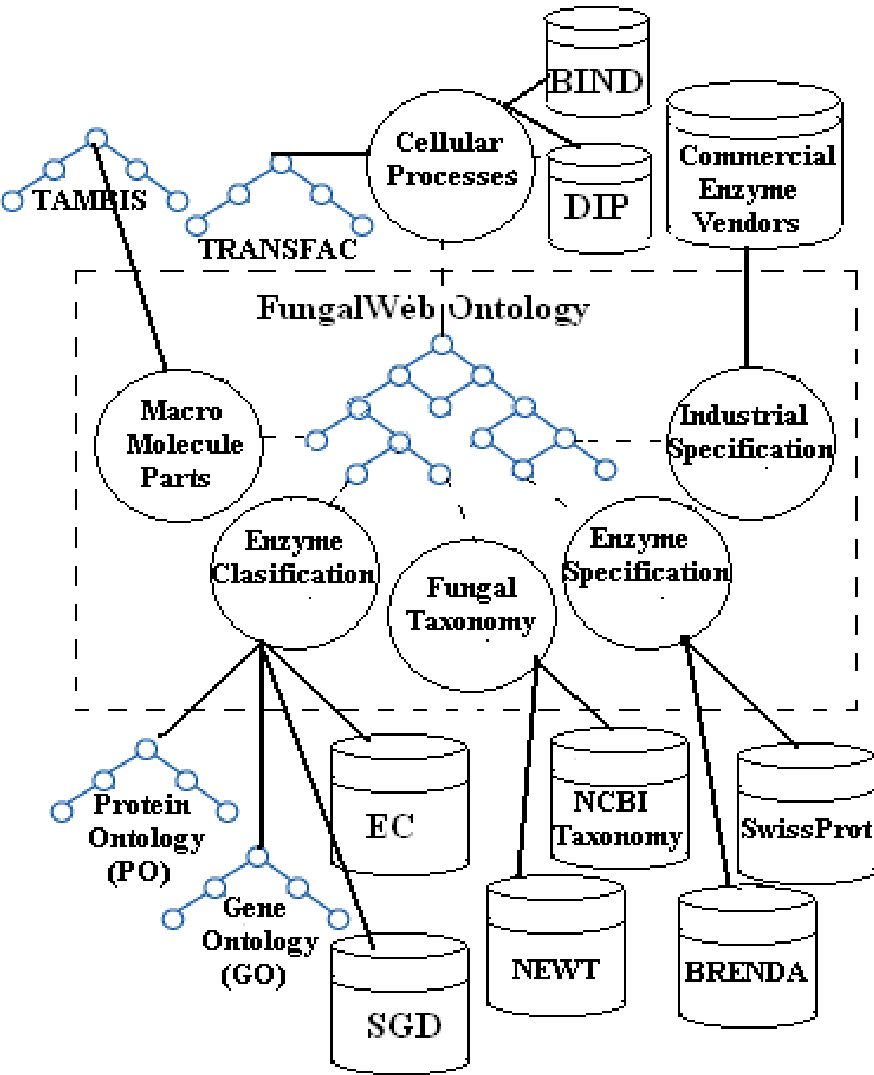 Figure 1: The Integrated Ontology-Driven Data Mining Framework.
Experiments & Results: Answering Complex Questions
The power of this system is demonstrated through its ability to answer "Reasoning-heavy" queries via the nRQL (new RACER Query Language).
Unlike a standard SQL database, the RACER reasoner can infer answers that aren't explicitly stored. For example:
- Homology Inference: "If Protein X interacts with Y, and Z is homologous to X, is there evidence for a Z-W interaction?"
- Subsumption: The reasoner automatically understands that any "Enzyme" found in a search is also a "Protein," reducing the need for manual category tagging.
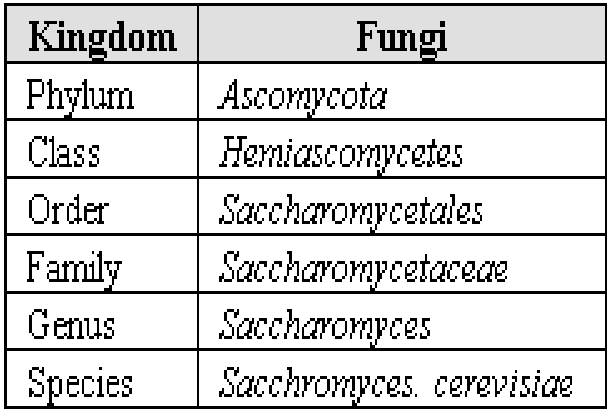 Table 1: Formal taxonomic classification of Saccharomyces cerevisiae within the ontology.
The system was able to process over 30,000 interactions in the yeast interactome, providing a consistent view across conflicting datasets (where Y2H and Mass Spec results might differ).
Critical Analysis & Conclusion
Takeaway
This paper serves as a bridge between the "Graph Mining" world (finding clusters) and the "Semantic Web" world (defining meaning). For modern AI researchers, it highlights why Knowledge Graphs require a formal schema (Ontology) to be truly useful in high-stakes fields like medicine.
Limitations
- Manual Mapping: The conversion from graph representations to logic remains a manual or semi-automated process, which is hard to scale to the entire human proteome.
- Static Focus: The current model focuses on static interactions, ignoring the dynamic, time-dependent nature of cellular responses.
Future Outlook
The authors hint at extending this to Small Molecule-Protein Interactions, which is the "Holy Grail" for drug discovery. By incorporating drug-target data into this ontological framework, researchers could potentially predict side effects by reasoning through protein interaction pathways.