
Harmonizing Signals and Semantics: A SNOMED-CT Based Ontology for Heart Rate Turbulence
Ontology for Heart Rate Turbulence Domain From The Conceptual Model of SNOMED-CT
The paper presents a specialized medical ontology for the Heart Rate Turbulence (HRT) domain, built upon the SNOMED-CT conceptual model to standardize Cardiovascular Risk Stratification (CVRS) within Electronic Health Records (EHR). It introduces 19 new local extensions to bridge the gap between specific signal processing indices and standardized clinical terminology.
TL;DR
Researchers have developed a formal medical ontology that finally bridges the gap between complex ECG signal analysis—specifically Heart Rate Turbulence (HRT)—and standardized Electronic Health Records (EHR). By extending the SNOMED-CT framework with 19 new technical concepts, they have created a pathway for automated cardiovascular risk stratification to move from academic research into real-time hospital decision-support systems.
The Gap Between Measurement and Meaning
While modern cardiology uses sophisticated signal processing to identify risk markers like Heart Rate Turbulence (the short-term fluctuation in heart rhythm after a premature beat), these measurements often exist in "data silos."
The problem is twofold:
- Lack of Standardization: Hospital Information Systems (HIS) speak the language of SNOMED-CT, but SNOMED-CT historically lacks the granularity to describe the mathematical "taxonomies" of signal processing (e.g., a "Ventricular Premature Complex Tachogram").
- Clinical Complexity: HRT values are influenced by many factors—beta-blockers, smoking, or heart failure. Without an ontology to link these variables, a computer cannot accurately interpret whether a "bad" HRT score is a true risk or a drug-induced side effect.
Methodology: Building the HRT Knowledge Graph
The authors adopted a "bottom-up" development process using the Web Ontology Language (OWL). They identified 308 relevant concepts, finding that 289 already existed in SNOMED-CT, while 19 required new "local extensions."
Core Architecture
The ontology classifies concepts into hierarchies (is-a relationships) and defines properties (e.g., "TS is_calculated_in Averaged_Tachogram").
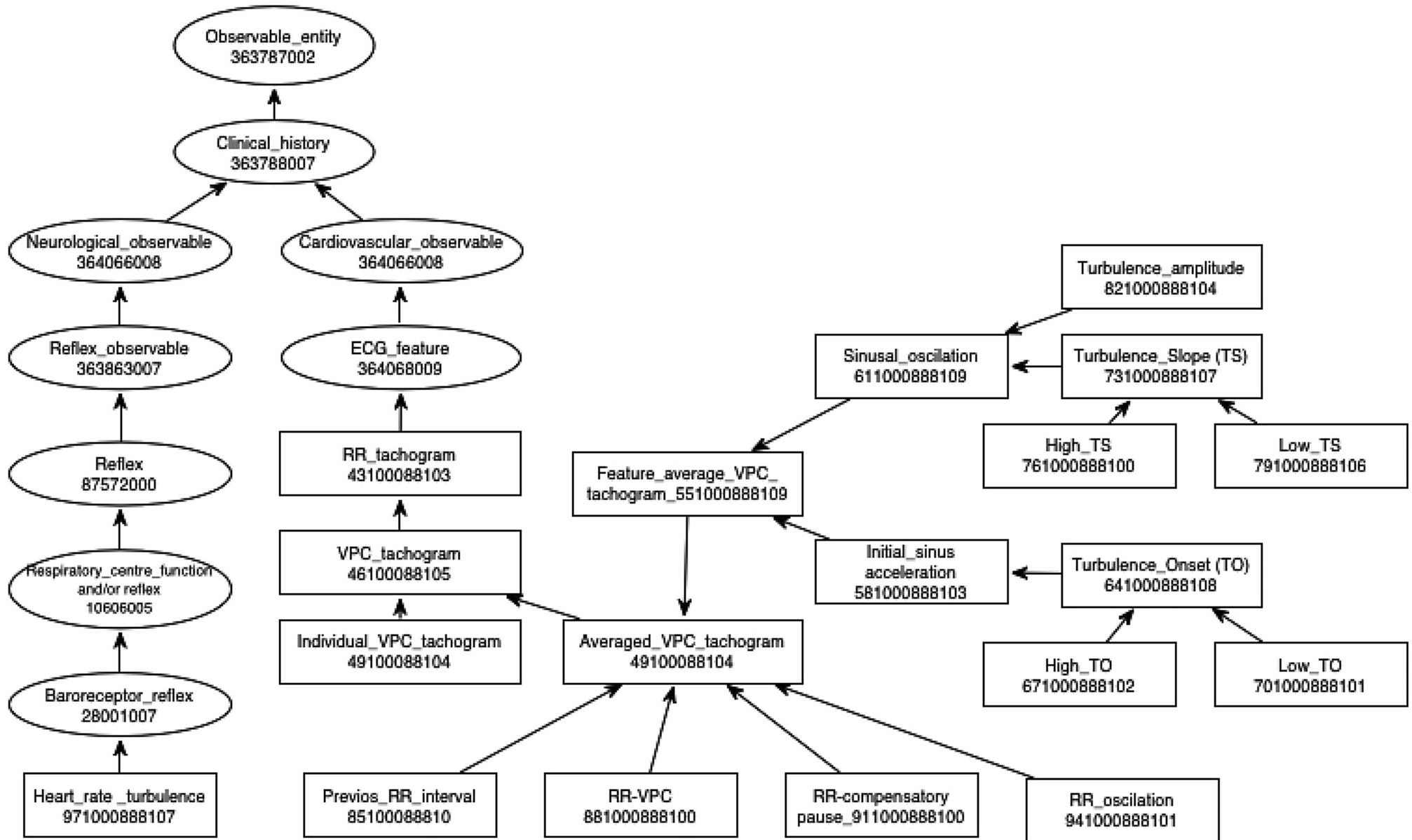 Figure 1: Taxonomy of HRT concepts. Rectangles represent new extensions created to support ECG-derived features.
Key mathematical definitions, such as Turbulence Onset (TO) and Turbulence Slope (TS), were linked to clinical finding sites and anatomical structures. To enable actual reasoning (e.g., "If TO > 0, then risk is High"), the authors employed SWRL (Semantic Web Rule Language), which allows the system to infer patient risk levels automatically from the raw data.
Experimental Validation: From Theory to the Ward
The system was tested in two distinct environments:
-
The Hospital Prototype: Implemented in the University Hospital of Fuenlabrada, this prototype proved that clinicians could use a standardized interface to track HRT records across different medical societies.
-
The Signal Processing Benchmarking: The researchers compared three methods of calculating HRT parameters on 27 patients.
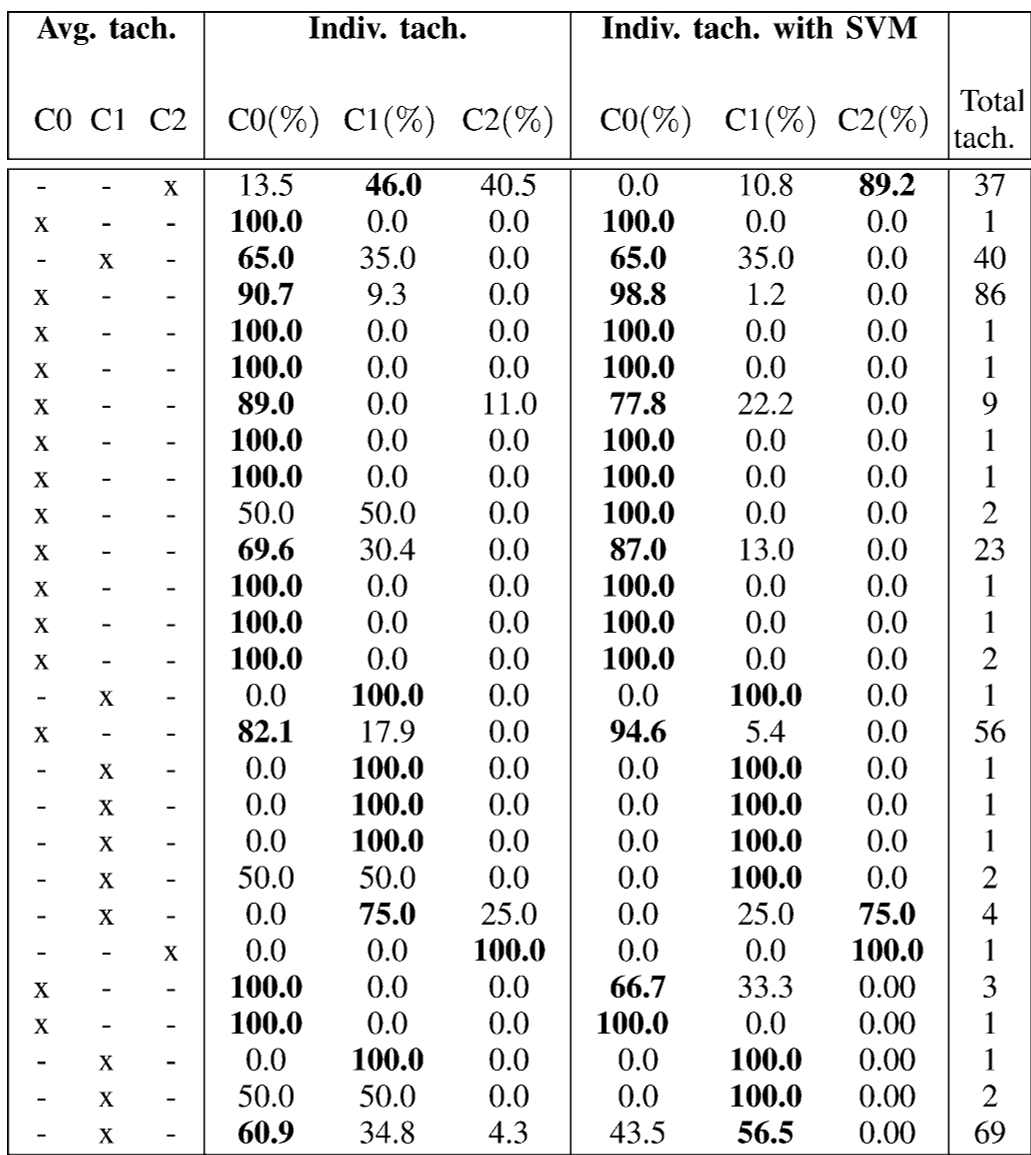 Table 1: Comparison of patient risk classification (C0, C1, C2) across different signal processing methods (Averaged vs. SVM Denoising).
Key Insight: Denoising Matters
The study highlighted that the method used to clean the signal (e.g., Support Vector Machine (SVM) denoising versus simple averaging) can change a patient’s risk classification. The ontology allows the EHR to record which algorithm was used, ensuring that clinical decisions are based on reproducible technical context.
Critical Analysis & Future Outlook
The primary contribution here is not just a new model, but a standardized language. By making the HRT ontology publicly available through a terminology server, the authors have provided a template for other domains (like Heart Rate Variability or T-wave Alternans).
Limitations:
- The sample size for the clinical study (27 patients) is small.
- The ontology currently reflects a "snapshot" of guidelines that may evolve.
Future Prospect: The integration of Machine Learning with such ontologies suggests a future where EHRs don't just store data; they "understand" the physiological implications of every heartbeat, offering real-time, evidence-based warnings for sudden cardiac death.
Conclusion
This paper serves as a vital bridge. By mapping the "black box" of ECG signal processing into the standardized framework of SNOMED-CT, it paves the way for a more interoperable and intelligent healthcare ecosystem.