
KMO: Orchestrating Distributed Knowledge with Semantic Ontologies and Tree P2P
Ontology for knowledge management and improvement of data mining result
The paper introduces Knowledge Map Ontology (KMO), an architecture for managing and representing knowledge extracted from Distributed Data Mining (DDM). By integrating OWL ontologies with a Tree P2P (TreeP) topology, it automates the creation of meta-knowledge repositories to facilitate efficient knowledge discovery across large-scale distributed systems.
Executive Summary
TL;DR: The Knowledge Map Ontology (KMO) architecture addresses the chaos of distributed data mining (DDM) results by automating the creation of meta-knowledge repositories. It leverages the semantic power of OWL Ontologies and the structural efficiency of Tree P2P (TreeP) networks to make decentralized knowledge searchable, consistent, and logically organized.
Background: Positioned as a critical evolution of the ADMIRE framework, this work transitions knowledge management from manual, expert-dependent intuition to an automated, hierarchy-aware semantic system.
The "Knowledge Bottleneck" in Distributed Mining
In the modern data landscape, mining doesn't happen in a single silo. Data is distributed across nodes, organizations, and geographies. While Distributed Data Mining (DDM) can extract patterns locally, we face a secondary crisis: How do we find and merge these results?
Prior work (the original KM architecture) succeeded in creating a "Knowledge Map," but it had a fatal flaw: the meta-knowledge repositories—the "indexes" of what knowledge exists where—had to be built manually. This process was:
- Subjective: Different users categorized the same results differently.
- Inflexible: Hard to update as new data arrived.
- Non-Semantic: Lacked the "is-a" or "equivalent-to" relationships that allow for deep reasoning.
Methodology: The KMO Architecture
The KMO architecture introduces the KO Manager, a bridge between raw mined results (clustering, association rules) and formal domain ontologies.
1. Semantic Mapping (The "Construct" Algorithm)
When a local node generates a result (e.g., a rule about "Swordfish"), the KO Manager doesn't just store the string. It identifies the domain (e.g., Food/Wine), extracts the relevant concept from an OWL ontology (e.g., NonBlandFish), and retrieves the entire hierarchy up to the root.
2. The TreeP Topology
To avoid a central server bottleneck, KMO maps these ontologies onto a Tree P2P structure.
- Physical Nodes (Level 0): Store the actual mined data.
- Virtual Nodes (Upper Levels): Act as aggregators. A node becomes the parent of if 's semantic scope "covers" 's.
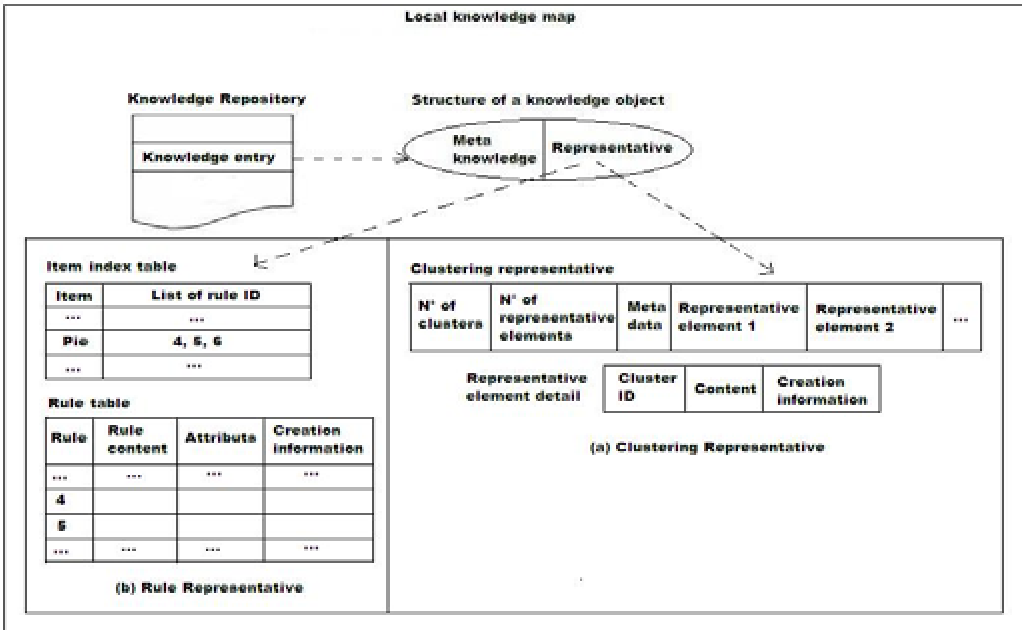 Fig 1: The synergy between Local KM sites and the KM Core.
Experimental Insights: Efficiency Meets Semantics
The authors demonstrate that using TreeP provides a self-reconfiguring environment that is highly resilient to node failures.
Search Efficiency
In a standard 1-n topology, the central server eventually crashes under the weight of meta-knowledge queries. In KMO:
- Search Path: Logic moves up the tree only as far as needed.
- Complexity: In the worst case, a search involves only messages, where is the log-scale height of the tree.
Data Consistency
By using the owl:sameAs property, KMO solves the "synonym problem"—where different nodes use different names for the same concept—ensuring that a search for "Maize" successfully finds results labeled "Corn."
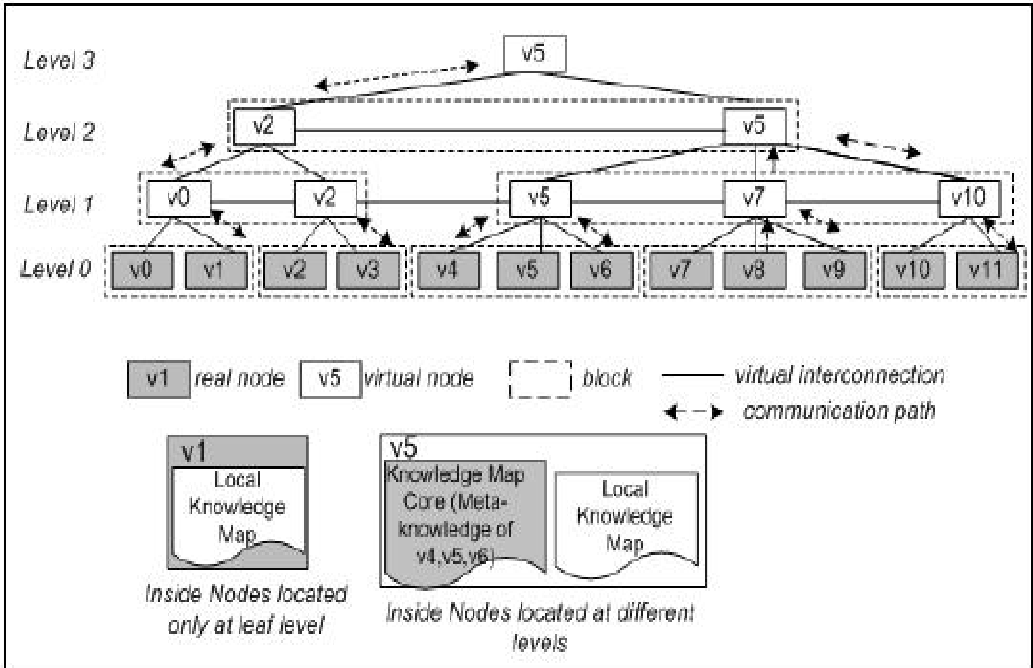 Fig 2: Example of the TreeP topology where parents semantically subsume their children.
Critical Analysis & Conclusion
Takeaway
KMO successfully proves that ontologies are not just for the semantic web—they are practical tools for indexing the outputs of machine learning. The alignment between a concept hierarchy and a network tree is an elegant "inductive bias" that improves DDM performance.
Limitations
- Expert Dependency: While repository construction is automated, the initial selection of the correct domain ontology still requires human expert input.
- Ontology Evolution: The paper assumes static ontologies; however, in dynamic fields, the ontologies themselves might need to evolve or merge (Ontology Alignment).
Future Outlook
The next step for this research is the full integration into the ADMIRE framework, testing with massive, heterogeneous datasets where multiple ontologies must coexist and interact across the P2P network.