
Bridging the Semantic Gap: How Ontology Learning Automates Information System Integration
Use of Ontology Learning in Information System Integration: A Literature Survey
This paper presents a comprehensive literature survey on the role of Ontology Learning (OL) in Information System Integration. It highlights how machine learning and NLP techniques can automate the construction of ontologies from text and relational databases to achieve semantic interoperability.
TL;DR
In the complex landscape of various information systems, achieving true semantic harmony has always been the "Holy Grail." This survey explores how Ontology Learning (OL)—the (semi-)automatic extraction of knowledge using Machine Learning and NLP—is solving the bottlenecks of traditional manual ontology construction, achieving accuracy rates as high as 96% and enabling the integration of massive, heterogeneous datasets.
The Bottleneck: Why Manual Integration Fails
For decades, ontology-based integration was the gold standard for sharing data across different business units. However, it faced a "knowledge acquisition bottleneck."
- Inefficiency: Human experts spend months defining axioms.
- Semantic Loss: Valuable context is often lost when converting database schemas to rigid ontologies.
- Legacy Roadblocks: Many systems are "black boxes," making it hard to extract the underlying logic.
The author argues that we need a shift from manual engineering to machine-driven learning.
Methodology: The Mechanics of Ontology Learning
Ontology Learning extracts knowledge from two primary sources: unstructured text and structured databases.
1. Learning from Text
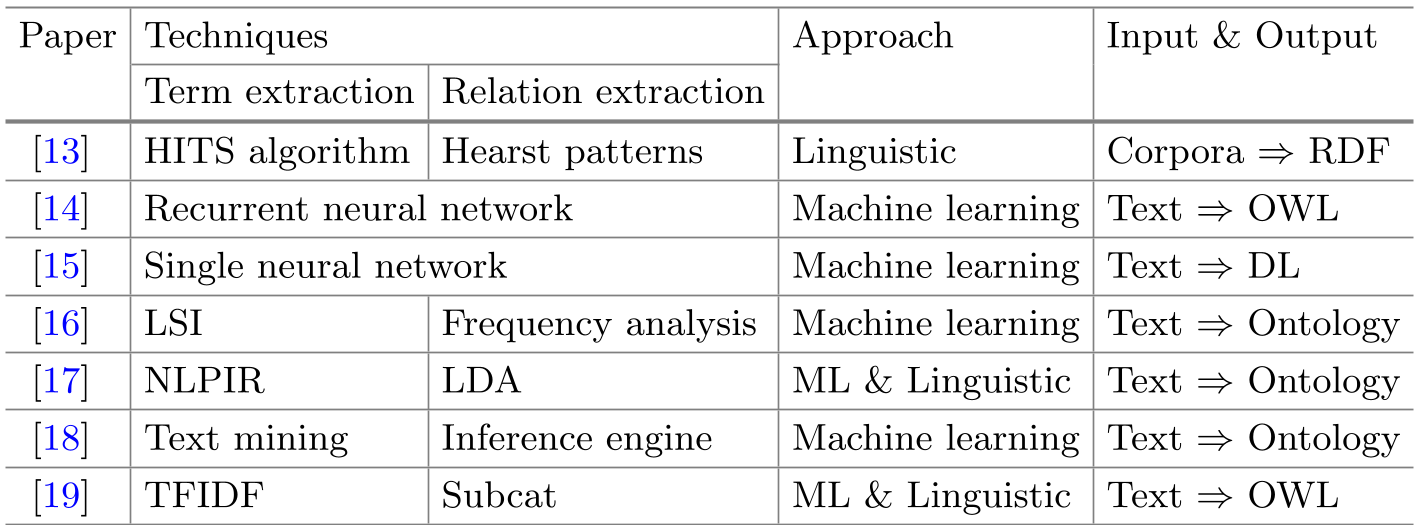
Modern approaches have evolved from simple linguistic rules to deep learning. Techniques include:
- Topic Modeling (LDA/LSI): Extracting domain-specific terms.
- Neural Networks (RNNs): Translating natural language directly into Description Logic (DL).
- HITS & Hearst Patterns: Unsupervised methods to find relationships without human labeling.
2. Learning from Relational Databases (RDB)
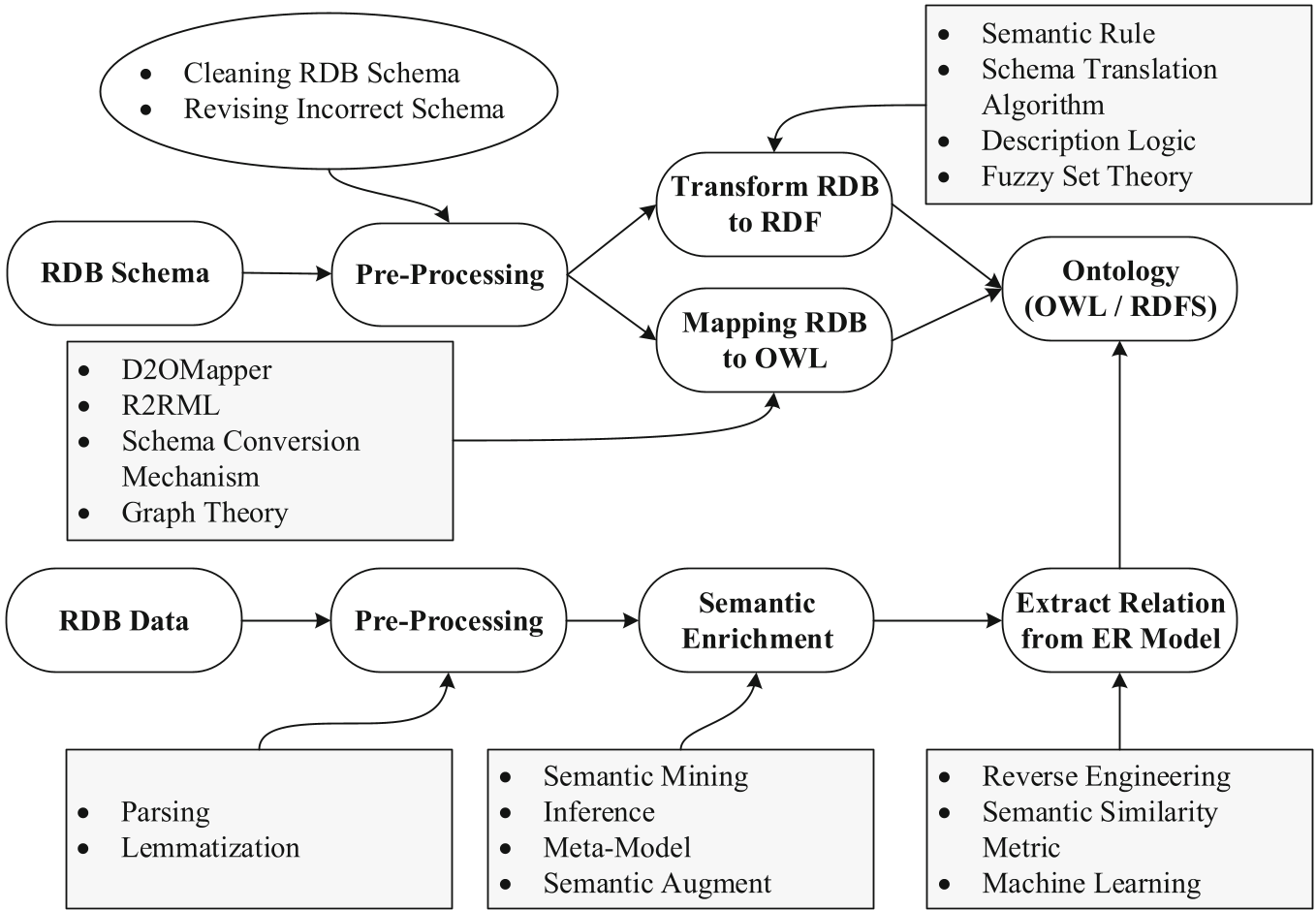
Since RDBs hold the majority of enterprise data, the paper outlines a two-phase transformation:
- Phase I: Mapping the RDB schema to RDF/OWL using reverse engineering.
- Phase II: Semantic enrichment to recover lost relations between entities.
Why Ontology Learning is the "Game Changer"
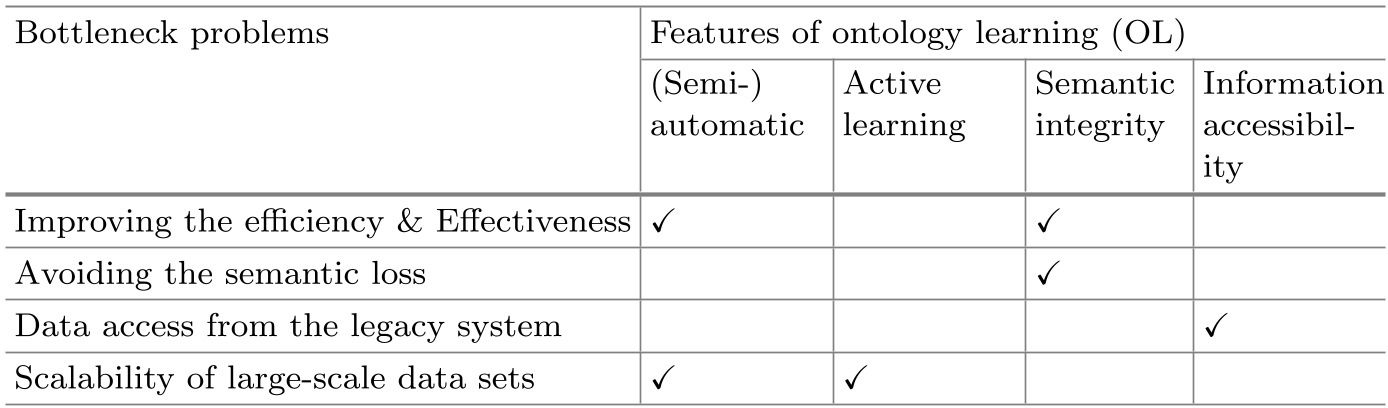
The paper identifies four key "Features" of OL that solve the "Bottleneck Problems" (BP) of information integration:
| Feature | Impact on Integration |
|---|---|
| Active Learning | Enables the system to handle large-scale data sets by only asking for human input on "unlabeled" items. |
| Semantic Integrity | Converts relational models into conceptual models, preserving the "implied" relationships that flat files lose. |
| Information Accessibility | Accesses logic via SQL scripts directly, bypassing the need for complex APIs in legacy systems. |
Critical Analysis & Future Outlook
The survey concludes that while we have made great strides, the field is still in its "Early Exploratory Phase." Most current tools remain semi-automatic, requiring significant human oversight.
The Next Frontier:
- SQL-to-Ontology: Using Graph Neural Networks (GNNs) to treat SQL scripts as a knowledge graph waiting to be decoded.
- NoSQL Integration: As enterprises move toward Document (MongoDB) and Graph (Neo4j) databases, OL must adapt to non-relational, schema-less structures.
Conclusion
Ontology Learning isn't just about building a dictionary for machines; it's about creating an autonomous nervous system for corporate data. For any organization struggling with data silos, the transition from manual mapping to automated learning is no longer a luxury—it is a technical necessity.