
Structuring the Future of Farming: An Ontological Framework for Grain Production Big Data
Ontology for Structuring a Digital Databases for Decision Making in Grain Production
This paper proposes a formal ontology-based architecture for structuring digital databases in the context of grain production. It integrates Big Data from heterogeneous sources using a cloud-based framework and a semantic model at the process level to support agricultural decision-making.
TL;DR
Agriculture 4.0 is drowning in data but starving for actionable knowledge. This paper introduces a sophisticated ontological architecture designed to transform "raw" agricultural Big Data—sourced from satellites, IoT sensors, and weather stations—into a logically structured, semantic database. By utilizing OntoUML and Cloud Computing, the authors provide a blueprint for automated, high-precision decision-making in grain production.
The Integration Bottleneck: Why "More Data" Isn't Enough
In the era of Precision Agriculture, the challenge has shifted from data scarcity to semantic heterogeneity. Data comes in many flavors:
- Unstructured: Satellite imagery (NDVI).
- Semi-structured: Weather XML feeds.
- Structured: Relational soil databases.
Previous works often relied on static ETL (Extract-Transform-Load) processes that fail to capture the complex relationships between biological cycles and environmental risks. Without a shared "vocabulary" (an ontology), software systems cannot autonomously understand that a specific humidity drop and a satellite-detected color shift represent a single, actionable crop disease risk.
Methodology: Bridging the Raw and the Refined
The authors propose a robust three-stage pipeline to bridge this gap:
1. The Cloud-Native Architecture
The system operates across Public and Private Clouds. Public institutions provide climate and imagery data, while private sensor networks on farms feed local ground truths into a Data Lake.
2. Semantic Analysis and Data Lakes
The "magic" happens in the Private Cloud. A Semantic Analyzer interacts with the Data Lake "buckets." Using REST services, it checks data against a predefined agricultural ontology, ensuring that every byte of information is labeled with its corresponding physical world concept.
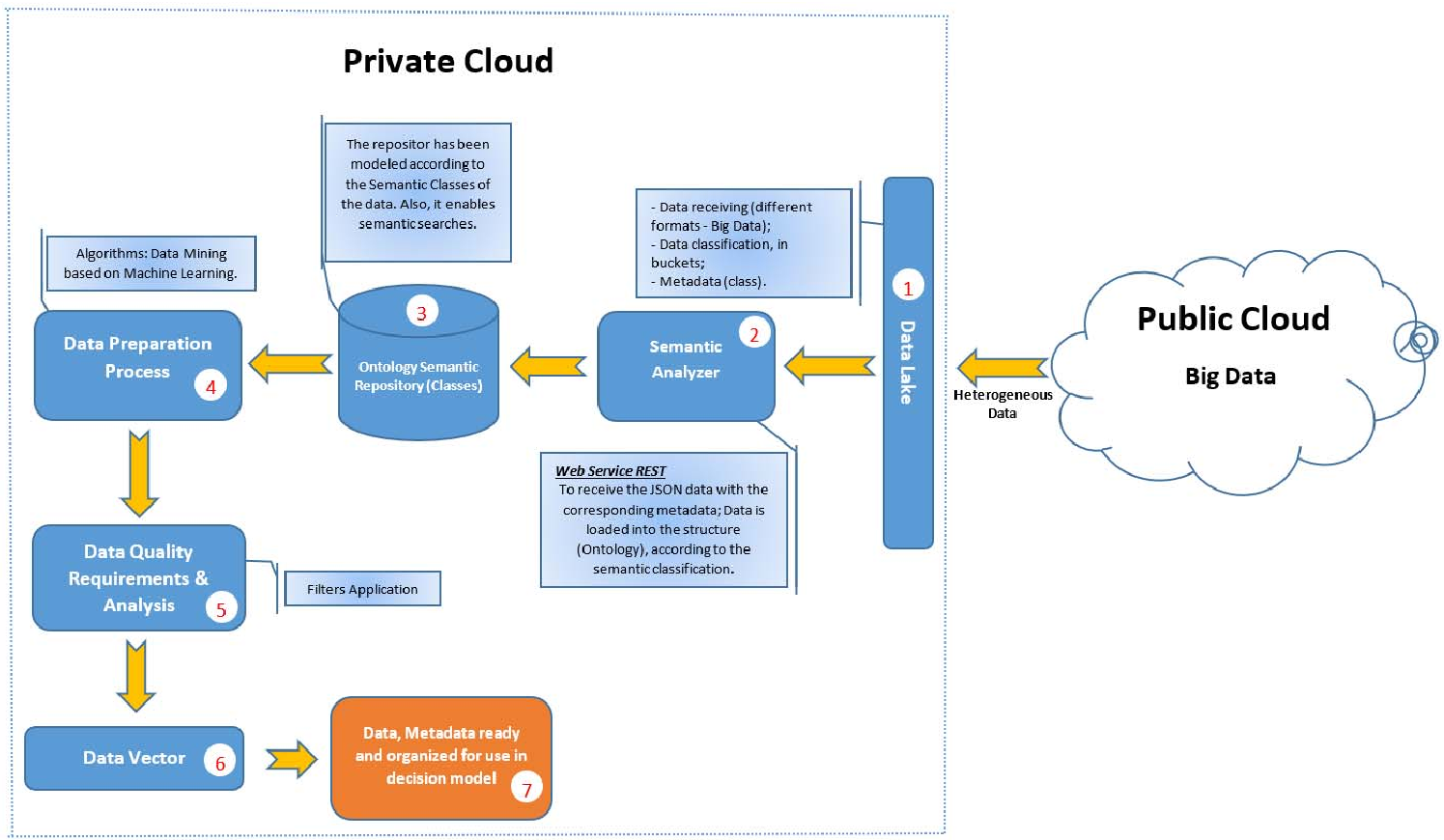 Figure 1: High-level architectural view showing the flow from Big Data sources to organized decision models.
3. Formal Modeling with OntoUML
The researchers used OntoUML (based on the Unified Foundational Ontology) to represent grain production. This isn't just a database schema; it’s a philosophical mapping of terms like "Soil," "Plant," and "Weather Station" and their logical interdependencies.
Results: From Diagrams to Code
The study culminates in a case study for grain production. The logic is grounded in a UML Activity Diagram, which outlines how data is mined through machine learning and eventually fused into a "Data Vector" for decision models.
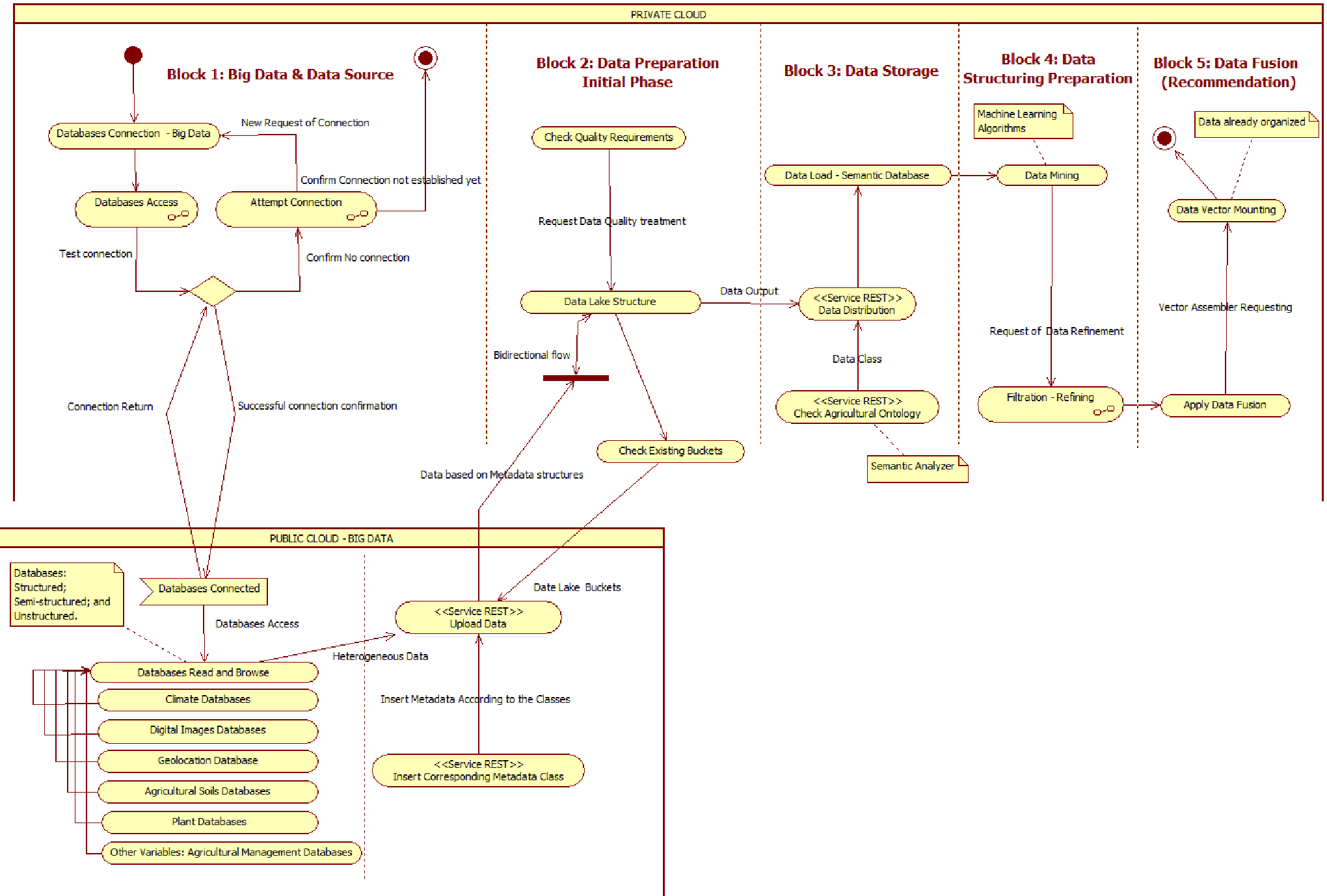 Figure 2: The step-by-step process of refining data from raw storage to a structured decision vector.
The researchers translated this visual logic into N-Triples (RDF), a machine-readable format that allows for sophisticated SPARQL queries. This means a producer can query the system across different databases as if they were a single, coherent brain.
Depth Insight: The Value of Semantic Interoperability
The true breakthrough here is not just the storage of data, but the Inductive Bias built into the system via the ontology. By specifying that a "Weather Station" must relate to "Grain Production" through specific predicates (like accumulated precipitation), the system reduces the search space for Machine Learning algorithms, making "Knowledge Discovery" faster and more accurate.
Conclusion & Future Outlook
The paper effectively demonstrates that a semantic-first approach reduces the friction in Big Data management. However, the current model serves as a backbone for periodic decision-making.
The authors acknowledge that the next frontier is real-time evolution—enabling the ontology to update and trigger alerts synchronously as sensor data streams in. For agricultural stakeholders, this work provides a scalable, cost-effective roadmap to transition from manual data observation to an automated, intelligent farming ecosystem.