
OntoMP: Architecting the Museum of Memories through Semantic Ontologies
OntoMP, An Ontology to Build the Museum of the Person
The paper introduces OntoMP, a specialized ontology developed for the Museum of the Person (MP) to preserve and navigate intangible cultural heritage. By mapping heterogeneous XML life stories to the CIDOC-CRM standard, the authors enable conceptual navigation and cross-story knowledge extraction.
TL;DR
Researchers have developed OntoMP, a specialized ontology that transforms raw, unstructured life story interviews into a structured, navigable digital archive. By bridging the gap between legacy XML documents and the international CIDOC-CRM standard, this work allows the "Museum of the Person" to move beyond simple text files into a "Virtual Museum" where social patterns and historical connections can be automatically extracted.
Context: A Museum Without Objects
Unlike the Louvre or the British Museum, the Museum of the Person (MP) doesn't house statues or paintings. Its collection is "intangible"—composed of the lived experiences, emotions, and memories of ordinary citizens captured through interviews.
The technical challenge is significant: these stories exist in heterogeneous XML formats. For a researcher or a curious visitor, finding "all stories from 1950s fishmongers" across thousands of files is nearly impossible. The authors argue that to make these lives "readable" by machines and meaningful for humans, we need a semantic bridge.
The Problem & Motivation
The authors identified two primary hurdles:
- Semantic Opacity: XML tags describe the structure (e.g.,
<p>for paragraph) but not the meaning (e.g., this is a "life philosophy" or a "witnessing of a catastrophic event"). - Lack of Standardization: Without a standard model, the museum's data remains an island, unable to connect with other global cultural heritage repositories.
The motivation was to build a system that could "intercross" information—allowing a visitor to synthesize the story of a whole community by weaving together separate individual testimonies.
Methodology: From XML to CIDOC-CRM
The research followed a rigorous two-step reverse engineering process:
1. Reverse Engineering (XML → OntoMP)
The team analyzed the existing Museum of the Person DTD (Document Type Definition) and thesaurus to extract core concepts such as Ancestry, Childhood, Marriage, and Life Philosophy. They identified relations like "lives in" or "participates in."
2. Standard Mapping (OntoMP → CIDOC-CRM)
To ensure the museum could talk to the rest of the world, they mapped OntoMP to CIDOC-CRM, an event-based ontology. Since CIDOC-CRM views history as a series of events involving Actors, Places, and Time-Spans, it was a perfect fit for life stories.
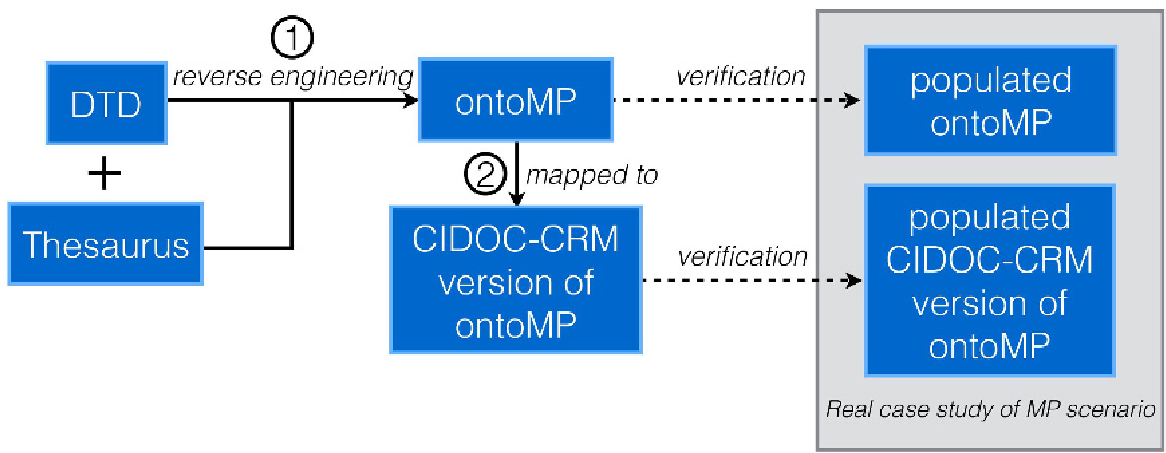 Figure 1: The workflow of transforming raw life stories into a standardized semantic repository.
Architecture of a Life Story
In the new model, a story is no longer a text file; it is an E31 Document about an E21 Person.
- Events as Nodes: Birth, education, and jobs are treated as E5 Events.
- Example: The life of "Maria Cacheira" is decomposed into specific nodes: her birth is an event at a specific E53 Place (Afurada) during a defined E52 Time-Span (1946).
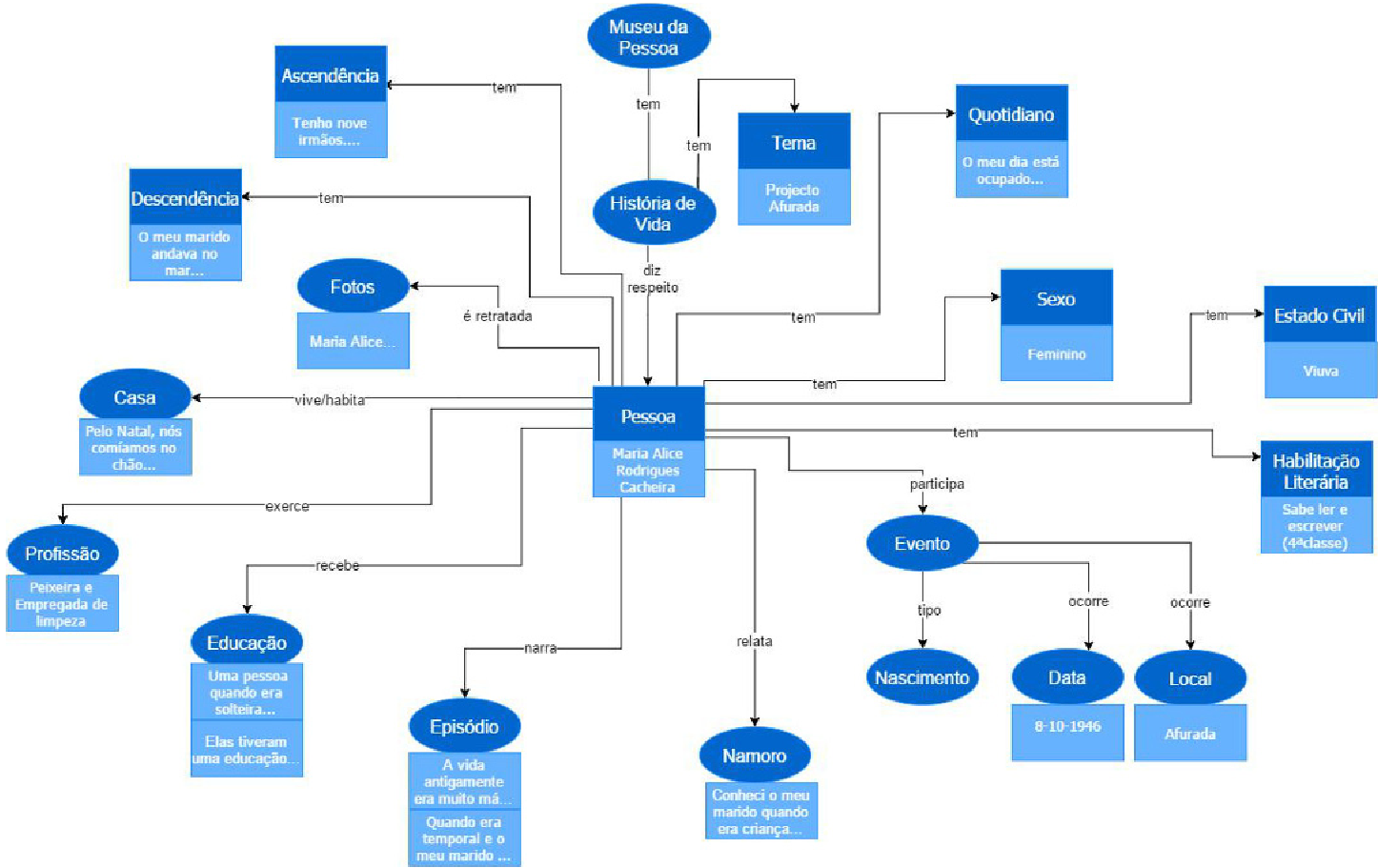 Figure 2: Conceptual breakdown showing how raw story elements are linked via semantic relations.
Experimental Validation
The authors validated their approach by mapping specific Portuguese life stories into the CIDOC-CRM structure. The mapping proved that even highly subjective data (like "life philosophy") could be categorized under the E55 Type class without losing the original context of the interview.
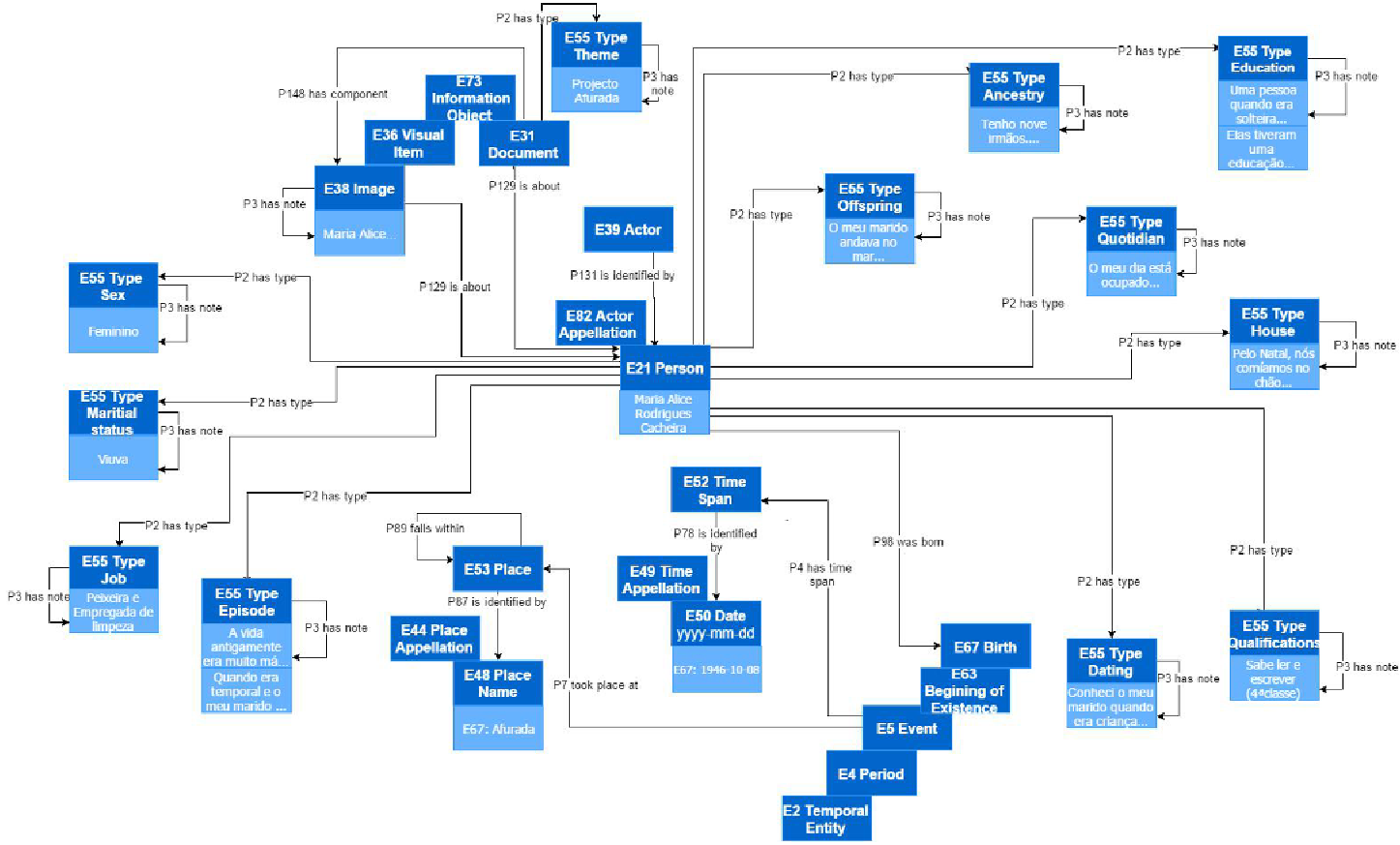 Figure 3: Mapping the "Maria Cacheira" story into standardized CIDOC-CRM classes and properties.
Deep Insights & Future Work
The core takeaway is that ontologies are the "connective tissue" for digital history. By moving to a standard like CIDOC-CRM, the Museum of the Person can now:
- Automate the creation of virtual exhibition rooms using the CaVa/Learning Spaces framework.
- Enable users to perform complex queries that were previously impossible.
Limitations & Future Outlook: The authors acknowledge that while CIDOC-CRM is great for events, it lacks some nuance for social networks. They propose integrating FOAF (Friend of a Friend) in the future to better describe the intricate interpersonal relationships that emerge in life stories. This move toward multi-ontology integration marks the next frontier for Virtual Museums.
Conclusion
OntoMP isn't just a database schema; it's a way to ensure that the "common man's" history is searchable and preserved with the same rigor as the history of kings and nations.