
Timely: Reimagining the Enterprise Calendar as a Social Stream
An Open, Social Microcalendar for the Enterprise: Timely?
The paper introduces Timely, an enterprise social microcalendar that blends traditional calendaring with microblogging paradigms (like Twitter). It aims to transform static, private calendars into open, social streams where employees can broadcast events, follow colleagues, and discover organizational activities.
TL;DR
Timely is a research prototype that shifts the enterprise calendar từ a private scheduling tool to a public social network. Inspired by the "micro" nature of Twitter, it allows users to broadcast their time commitments, follow colleagues to see what they are up to, and "retweet" events to their own schedules. The study proves that even in conservative corporate environments, users are surprisingly willing to share their schedules when provided with the right social incentives.
The Problem: The "Closed-Door" Calendar Culture
For decades, the enterprise calendar has been a silo. Systems like Lotus Notes or Microsoft Outlook typically default to a "Restricted Access" model: colleagues can see you are busy, but they have no idea why. This lack of transparency leads to missed opportunities for collaboration, redundant meetings, and a poor sense of "organizational pulse."
The researchers identified a gap: while we share photos, bookmarks, and status updates, our time—the most valuable resource in an enterprise—remains hidden.
Methodology: Applying the Social Web to Time
Timely was built on four "Social Web" pillars to deconstruct the traditional calendar:
- Open Access by Default: Unlike legacy systems, Timely encourages public broadcasting. You don't "invite" people; you post an event, and interested parties "follow" your stream.
- The Following Model: Using an asymmetric subscription model (like Twitter), users can discover what experts or teammates are doing without the social burden of a reciprocal "friend" request.
- Natural Language Entry: To lower the barrier to entry, Timely uses NLP to parse phrases like "Meeting with UI team tomorrow at 3 PM," instantly creating an event.
- User-Centric "Retweeting": If you see an interesting conference on a colleague’s stream, you can post it to your own. This preserves a "loose linkage" between instances, allowing you to modify the time for your own needs (e.g., "joining 15 mins late") while staying connected to the main event thread.
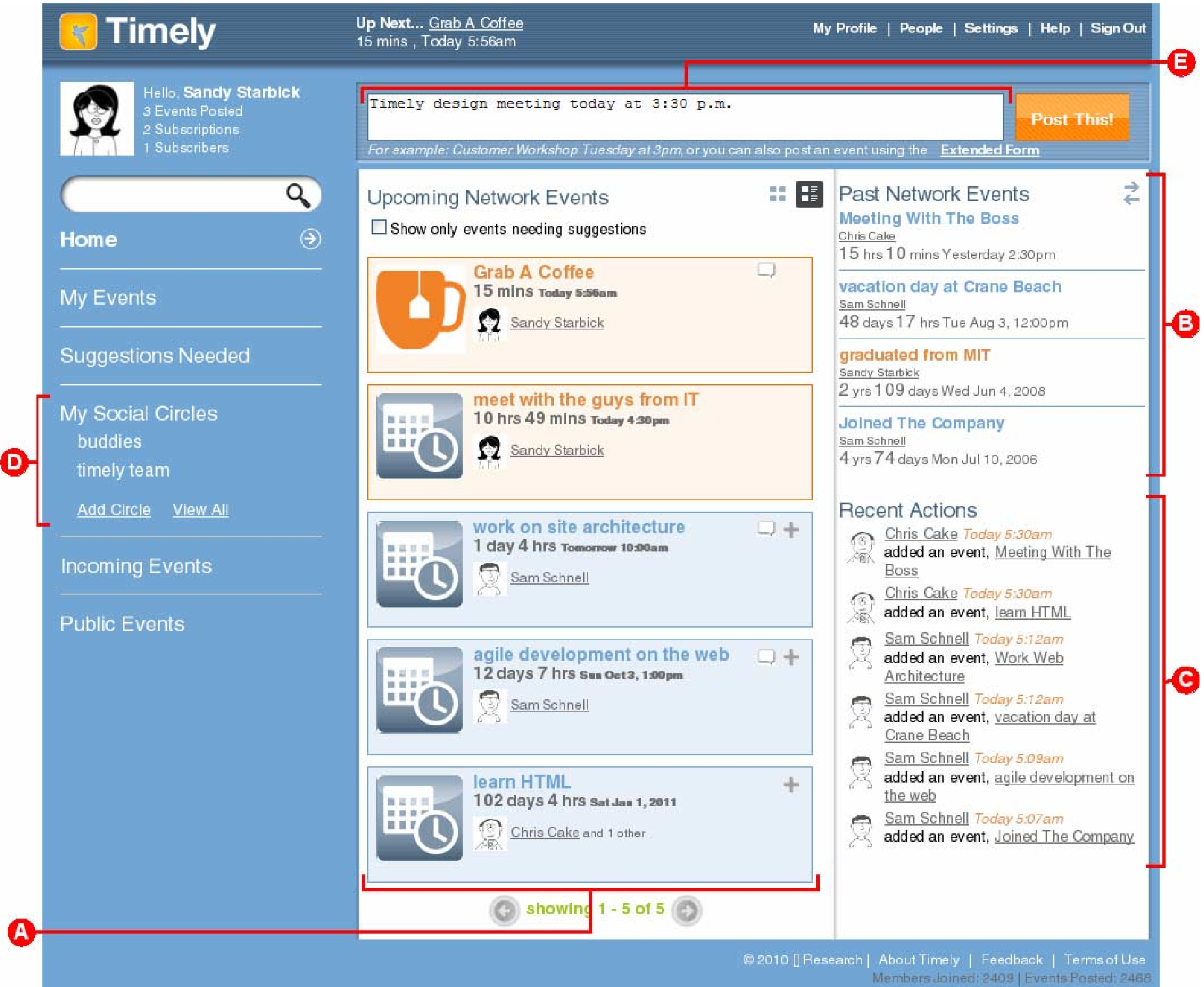 Figure 1: The Timely Interface featuring the main event stream (Upcoming vs. Past) and Social Circles.
Insights from 47 Days in the Wild
The deployment within IBM yielded fascinating data on how employees actually spend their time when "no one is looking" (or everyone is):
- Radical Transparency: 98.8% of events created were public. This suggests that the "privacy" of calendars is often a default setting of the software rather than a hard requirement of the user.
- Work vs. Personal: 83.6% of shared events were work-related, heavily dominated by Meetings (33%) and Customer Interactions (27%).
- The Discovery Engine: 40% of page views were users browsing others' events. This "serendipitous discovery" allowed employees to find out about client workshops or internal demos they would have otherwise never known existed.
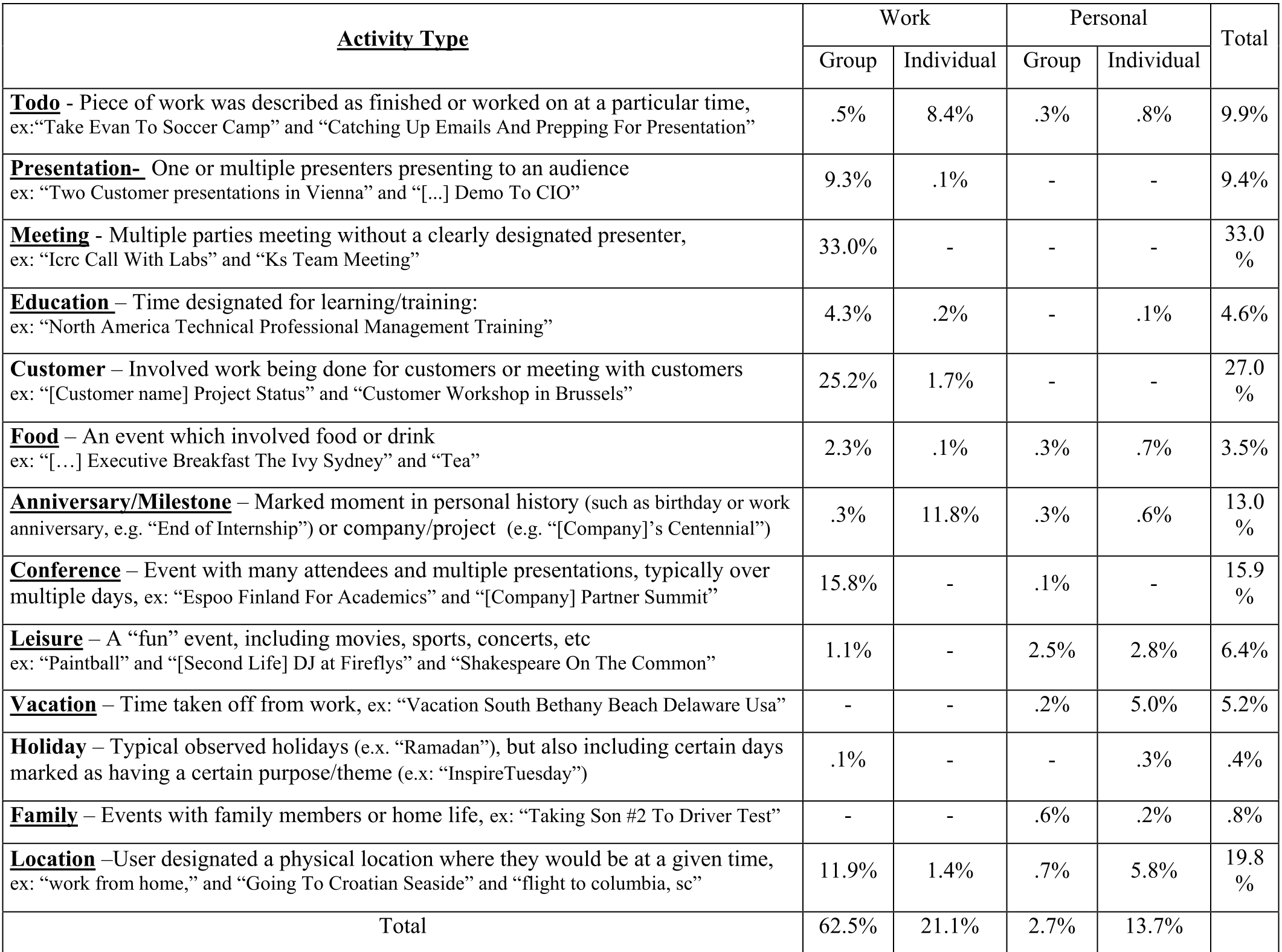 Table 1: Detailed breakdown of Work vs. Personal and Group vs. Individual events.
Critical Analysis: Why Aren't We All Using This?
While Timely was a success in its trial, two main friction points emerged:
- The "Double Entry" Penalty: Users hated re-typing events that were already in their official calendar. Without deep API integration into the primary work tool (e.g., Outlook), social calendars struggle with long-term retention.
- Parsing Frustration: The NLP (JChronic) failed in nearly 50% of cases, forcing users back into clunky forms. This highlights that for "micro" interactions to work, the "micro-entry" must be flawless.
Conclusion: The Future is Transparent
Timely proves that "Open Calendaring" isn't a privacy nightmare—it's a social opportunity. By treating time commitments as a discoverable social object, companies can foster better awareness and "social capital." The next generation of enterprise tools must move beyond the "invite-only" silo and toward a more fluid, broadcast-oriented view of time.
What would happen if your CEO's calendar was a public Twitter feed for the company? Timely suggests it might just be the "Organizational Self-Logging" tool we've been missing.