
Beyond Institutional Walls: A Social-Centric Approach to Scientific Group Authorization
Open Social and XACML Based Group Authorization Framework
The paper introduces a novel group authorization framework for scientific collaboration by integrating OpenSocial and XACML. It leverages the OAuth 2.0 protocol to enable ad-hoc, user-controlled resource sharing across administrative domains, eliminating the need for complex centralized PKI infrastructures.
TL;DR
Scientific collaboration often stalls at the "IT administration" gate. This paper proposes a decentralized authorization framework that replaces rigid, institutional PKI structures with an OpenSocial and XACML-based system. By using OAuth 2.0 for identity and XACML for fine-grained rules, researchers can now form ad-hoc teams and share resources (like Google Docs or AWS services) based on social trust and relationship depth rather than waiting for an administrator's blessing.
Background: The Grid Security Bottleneck
For over a decade, scientific "Virtual Organizations" (VOs) have been the standard for distributed collaboration. However, frameworks like VOMS and CAS are notoriously heavy. They require a centralized authority, complex PKI certificates, and manual intervention by IT staff to create groups or assign roles.
In modern, "ad-hoc" science—where a researcher in Beijing might suddenly need to share data with a collaborator in London—these traditional models fail. They act as barriers rather than facilitators, as they cannot handle the fluid nature of spontaneous research partnerships.
The Core Insight: Social Trust as Authorization
The authors suggest a shift in the "Inductive Bias" of security: Trust should follow social relationships, not just organizational charts.
They define a social network model where trust is quantified by "Relationship Depth" (e.g., Friend-of-Friend). Instead of checking if a user belongs to a specific university LDAP, the system checks if the user is a "Colleague" within a specific social distance from the resource owner.
The Multi-tenancy Authorization Model
To make this surgical and precise, they employ a 5-tuple policy structure:
[Issuer, Resource, Subject, Action, Condition]
This allows a resource owner (Issuer) to specify that a "Subject" (e.g., Bob) can perform an "Action" (e.g., Download) on a "Resource" (e.g., a specific Google Doc) only if "Conditions" (e.g., Time is between 9am-5pm AND Relationship is Colleague) are met.
Architecture: Mixing OAuth 2.0 and XACML
The methodology relies on two mature technologies working in tandem:
- OAuth 2.0 (The Handshake): Used to delegate access. It allows a third-party application to access a user's data (like Google Docs) without ever seeing their password.
- XACML (The Logic): The eXtensible Access Control Markup Language provides the "brain" for the decision-making process.
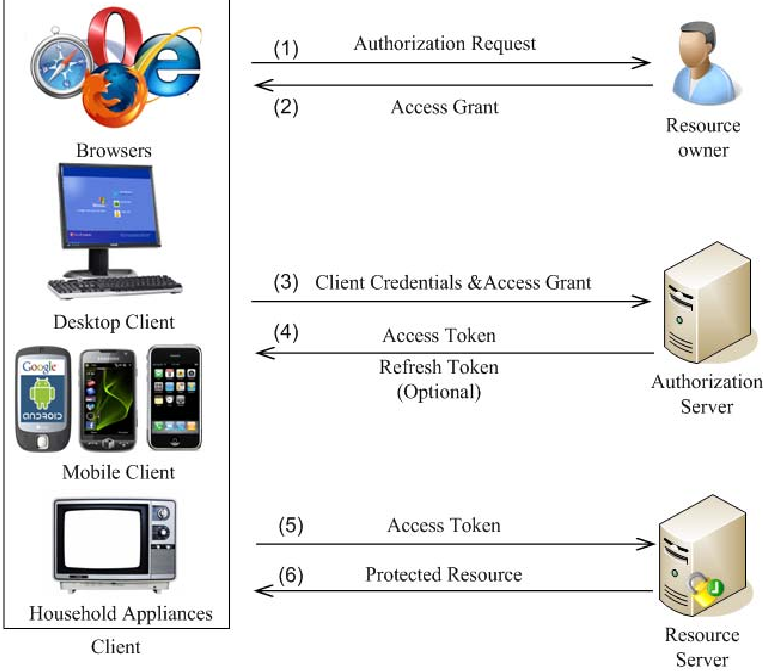 Figure 1: The XACML Flow, showing the Request-Response cycle from the Policy Enforcement Point (PEP) to the Policy Decision Point (PDP).
When a user requests a file, the Policy Decision Point (PDP) evaluates the XACML policies defined by the resource owner. If the social attributes and environmental conditions match, the request is permitted.
Real-World Application: Infant Birth-Defect Data Mining
To prove the framework's utility, the authors implemented a scenario where "Alice" (a data owner) and "Bob" (a tool developer) need to collaborate across domains:
- Alice has birth-defect data on Google Docs.
- Bob has a data mining web service on Amazon.
Using the proposed framework, Alice can grant Bob's service permission to "read" her specific dataset based on their social link, while Bob grants Alice permission to "execute" his mining tool.
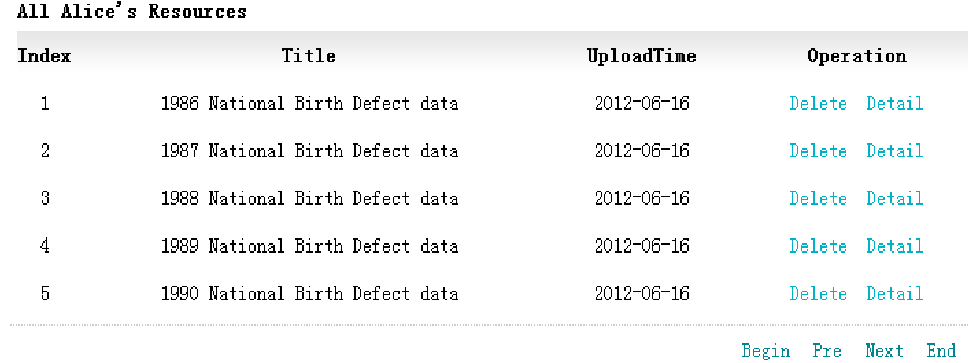 Figure 2: The user interface allowing researchers to define fine-grained XACML policies without writing XML code manually.
Experimental Outcomes
- Ad-hoc Formation: Teams were created dynamically without institutional IT involvement.
- Granularity: Access was restricted not just to specific users, but to specific actions and time windows.
- Interoperability: Successfully bridged heterogeneous platforms (Google Docs/Amazon Web Services) using a unified authorization logic.
Critical Insight & Limitations
This work represents an early and important move toward Sovereign Identity in science. By shifting the power to the user, it democratizes resource sharing. However, from a modern security perspective, the reliance on a central "XACML Context Handler" could still be a single point of failure. Future iterations would likely explore decentralized ledgers (Blockchain) or Zero-Knowledge Proofs to further enhance privacy while maintaining the "Social Trust" logic.
Conclusion
The legacy of this research is its proof that scientific security doesn't have to be cumbersome. By combining the social fabric of the web (OpenSocial) with enterprise-grade policy languages (XACML), we can create a collaborative environment that is both fluid and secure.