
Decoding Battlefield Dynamics: An SNA-Driven Evolutionary Model for Military Systems
Operational system model based on social network analysis and simulation
This paper proposes a dynamic evolving topological model for military operational systems based on Social Network Analysis (SNA). It introduces a multi-level hierarchy and non-linear priority growth rules to simulate the transition from peacetime construction to wartime dynamics, identifying military systems as scale-free networks with weak small-world characteristics.
TL;DR
Researchers have moved beyond simple attrition models to view the battlefield as a complex, evolving social network. By modeling military units as nodes with varying "polymerization capacities," this paper reveals that while armies are scale-free networks (highly dependent on command hubs), they do not exhibit the typical "small-world" effect found in social media, primarily due to their rigid hierarchical constraints.
Context: Why Traditional Models are Retreating
For decades, military performance was assessed using the Lanchester equations—linear models focused on numbers and fire rates. However, in the era of information warfare, the topology of the network (how units share data) is more important than the density of the units. Current complex network theories like the BA (Barabási–Albert) model provide a starting point, but they lack the "Inductive Bias" of military reality: the strict chain of command and the different capabilities of a Platoon versus a Division.
Methodology: High-Fidelity Network Evolution
The authors introduce a Dynamic Evolutionary Model that operates on five distinct levels of hierarchy. The core innovation lies in the Polymerization Capacity (), a quantitative measure representing a node's ability to integrate and command other units.
1. The Five Levels of Polymerization
Nodes are assigned a probability based on their rank:
- Army/Corps (): Highest authority, highest connectivity.
- ... down to Platoon (): Localized connectivity.
2. Evolution Rules
The model doesn't just grow; it breathes. It simulates five distinct events:
- Joining: New units enter the system ().
- Collaboration: Units establish synergy without direct command ().
- Interruption: Enemy action severs links ().
- Attrition: Nodes are destroyed or withdrawn ().
- Adjustment: Manual restructuring of the command hierarchy ().
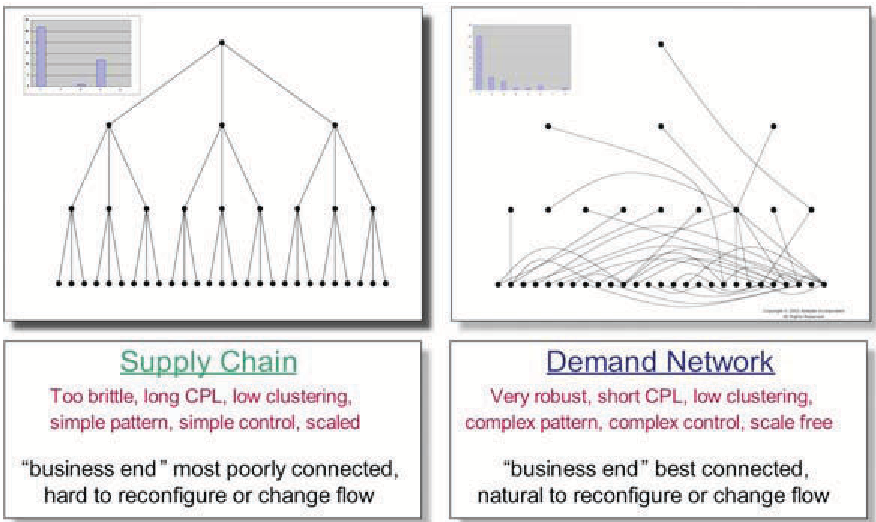 Figure 1: The conceptual breakdown of how military units interact and evolve over time.
Findings: The Scale-Free Reality
Through MATLAB simulations and mean-field theory, the paper proves that the military system follows a Scale-Free distribution. This means the system is dominated by a few highly connected "hub" nodes.
Interestingly, the Small-World effect is unobvious. In a typical social network (like Facebook), you are only "six degrees" from anyone else. In a military network, the hierarchical distance is rigid. The average path length stabilized at 5.016, reflecting the five layers of command defined in the model.
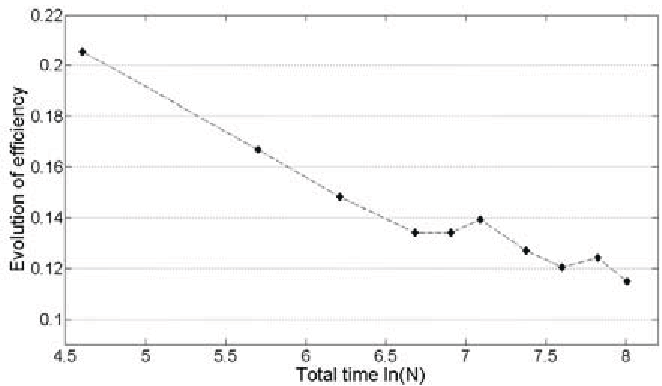 Figure 2: (a) Degree and (b) Betweenness distribution following the Power Law, confirming the scale-free nature.
Strategic Insights: Optimization Over Expansion
The paper provides a refreshing take on military construction:
- Anti-Expansionism: Rapidly increasing the number of units () without restructuring actually increases the average distance between units, slowing down information flow.
- Internal Refinement: By focusing on internal relation adjustments (), the "functional distance" between a General and a Frontline Sergeant can be reduced from 5.0 to 3.5, drastically increasing "Combat Efficiency" ().
- Targeting High-Betweenness: The research quantifies why "decapitation strikes" are so effective. Nodes with high betweenness (the earliest units to join or the highest-ranking ones) act as the glue of the system. Their removal causes the network efficiency to collapse faster than any other loss.
Critical Analysis & Future Outlook
Takeaway: The military is a "well-organized system" with stronger self-adapting power than the raw Internet. This model successfully replaces the Lanchester model in the "Integrated Information Systems of Joint Operations Training."
Limitations: While robust, the model assumes a somewhat static "polymerization capacity" for each level. In real-world scenarios, electronic warfare can temporarily downgrade an Army's capacity to that of a Battalion. Future research should investigate Dynamic Capacity Decay under adversarial conditions.
Conclusion: This research provides the mathematical "proof of work" for flattering command structures. To win the next war, don't just build more units—optimize the topology of the ones you have.