
Deciphering the Sarcastic Tweet: Boosting Sentiment Analysis via Linguistic Nuance
Opinion Mining in Twitter How to Make Use of Sarcasm to Enhance Sentiment Analysis
This paper introduces a robust framework for Twitter sentiment analysis that specifically integrates automatic sarcasm detection to refine polarity classification. By leveraging a minimal set of textual and non-textual features across diverse topics, the authors achieved an accuracy of over 80% and demonstrated significant gains in negative sentiment recall by correctly identifying sarcastic reversals.
TL;DR
In the noisy world of Twitter, what a user says is often the exact opposite of what they mean. This paper presents a methodology to enhance Sentiment Analysis by explicitly identifying Sarcasm. By moving beyond simple keyword matching and incorporating syntactic patterns and stylistic markers (like "looove" or excessive punctuation), the authors achieved a significant leap in classification accuracy, particularly for negative sentiments masked as irony.
The Motivation: Why Keyword Matching Fails
Most sentiment analysis tools act like "word counters": they see "love," "great," and "perfect," and immediately assign a positive score. However, on Twitter, a phrase like "The election went perfect, amazingly perfect, as usual perfect" is often a biting critique.
Existing models suffer from two main issues:
- Character Constraints: Short texts provide very little context for disambiguation.
- Sarcasm Blindness: Sarcasm flips the polarity of a sentence without changing the vocabulary.
The authors recognized that to solve Twitter sentiment, one must first solve the "Sarcasm Problem."
Methodology: The Two-Pillar Approach
The researchers split their technical contribution into two distinct modules: a baseline sentiment classifier and a specialized sarcasm detector.
1. Robust Sentiment Features
Instead of relying on massive N-gram tables, they used a "minimalist" feature set:
- Non-textual: Counting positive/negative hashtags, emoticons, and slang.
- Textual context: Using "NOT" tags for negation handling (e.g., "not happy" becomes "happy_NOT").
2. The Sarcasm Detector
This is where the paper innovates. They use four categories of features to "smell" sarcasm:
- Sentiment Contrast: If a tweet has a high-intensity positive word but an overall negative ratio (), it's a red flag.
- Pattern Matching: Using PoS-tags to find sequences that match known sarcastic "templates" (e.g., [Adverb] [Adjective] [Punctuation]).
- Stylistic Markers: Repeated vowels ("best daaaay") and interjections ("oh," "well").
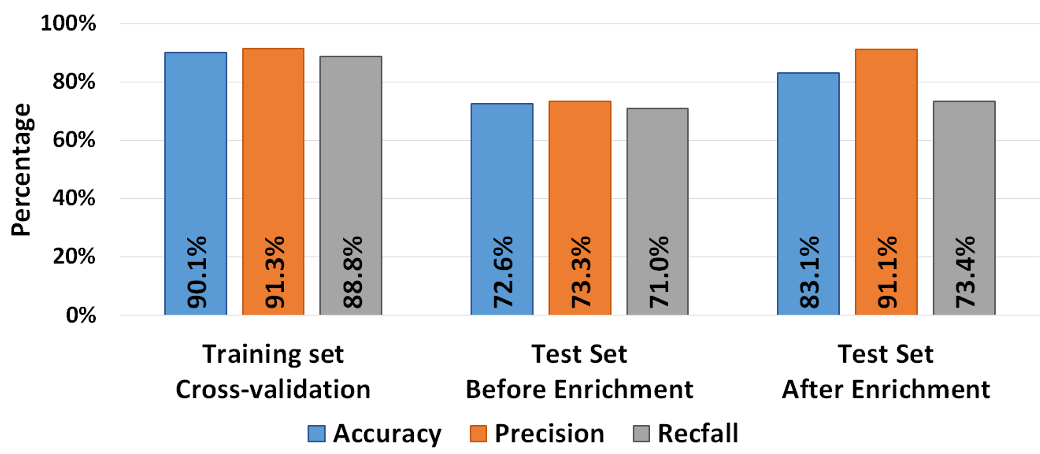 Figure 1: Sarcasm classification results showing high precision in identifying ironic intent.
Experimental Results: The Sarcasm Dividend
The team tested their approach against various classifiers (Naive Bayes, SVM, Max Entropy). While the initial sentiment model was strong, the "Sarcasm-Aware" version showed the real breakthrough.
- Accuracy Baseline: The proposed sentiment method yielded >80% accuracy.
- The Improvement: By adding 11 sarcasm-specific features, the SVM recall for negative tweets jumped to 92.0%.
| Classifier | Before Sarcasm Integration | After Sarcasm Integration |
|---|---|---|
| Naive Bayes | 83.9% | 85.9% |
| SVM | 85.7% | 92.0% |
| Max Entropy | 82.3% | 83.8% |
Table 1: Comparison of negative sentiment recall before and after sarcasm detection.
Critical Insights & Future Outlook
The core takeaway is that precision in sarcasm detection is more important than recall for sentiment tasks. If a model incorrectly labels a sincere tweet as sarcastic, it ruins the sentiment score. However, if it correctly identifies even a small percentage of sarcastic tweets with high confidence, the overall system accuracy improves drastically because those are the "hardest" cases for a machine to solve.
Limitations: The study notes that some sentiment is buried in "conversation threads." A tweet saying "He's such a baby" requires knowing who "He" is and what he just did—context that a single-tweet analyzer cannot currently reach.
Conclusion: This work serves as a foundational reminder that in NLP, social context and linguistic style are just as important as the dictionary definitions of the words themselves.