
Beyond Individual Follows: Optimizing Twitter Communities via the Knapsack Problem
Optimal Community-Generation Methods for Acquiring Extensive Knowledge on Twitter
This paper introduces an optimization framework for generating Twitter user communities that maximize the "amount of knowledge" acquired by a user. By formulating community selection as a multi-constraint non-linear knapsack problem and utilizing Word2vec for keyword expansion, the method effectively groups diverse users while balancing constraints like tweet density and frequency.
TL;DR
Navigating Twitter often feels like drinking from a firehose—full of noise, emotion, and redundancy. This paper proposes a mathematical shift: instead of following individual users, we should be building optimized communities. By treating user selection as a Knapsack Problem, the authors maximize the "Knowledge Volume" you receive while keeping tweet frequency and content density within practical limits.
Background Positioning
In the landscape of recommendation systems, most algorithms (like those used by Twitter or LinkedIn) focus on point-to-point relevance. This work moves into set-based optimization, addressing the "Information Overload" and "Social Media Fatigue" currently plaguing the industry. It sits at the intersection of Natural Language Processing (NLP) and Operations Research.
The Core Challenge: Combinatorial Explosion
Why don't we already have "Optimized Groups"? Because it's a computational nightmare. If you want to pick 8 users out of 6,000 to maximize knowledge without overlapping content, you are facing a combinatorial explosion.
The authors argue that previous SOTA methods for individual recommendations fail to consider the balance of a group. Their solution? Repurposing the Knapsack Problem—a classic optimization challenge—to find high-quality approximate solutions in seconds rather than years.
Methodology: Engineering the "Knowledge" Knapsack
The system operates on three primary pillars:
- Knowledge Quantification: Using Word2vec, the system identifies "surrounding words" for a topic (e.g., for "Soccer," it finds "Mallorca," "Goal," or "Striker"). Knowledge is calculated as: This prevents a single noisy user from dominating the score just by spamming one keyword.
- The Optimization Engine: They formulated a multi-constraint non-linear knapsack problem.
- Objective: Maximize total knowledge.
- Constraints: Limit average tweets per day (to prevent fatigue) and control "Density" (ratio of foreign words/idioms to filter out "meaningless" chatter).
- Cluster Diversity: To avoid redundant information, users are clustered via k-means based on their specific expertise areas within a topic.
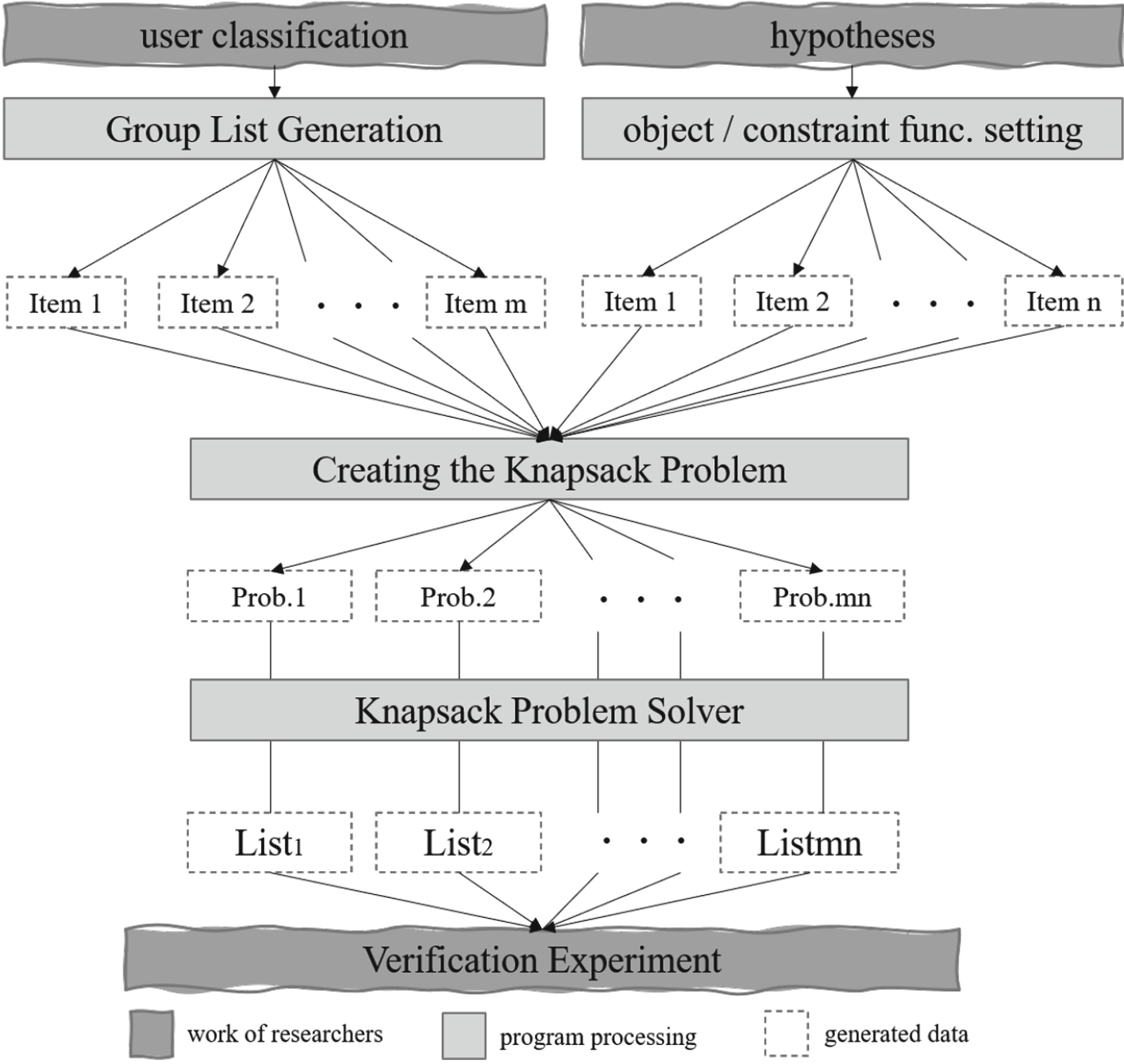 Fig 1: The workflow from raw Twitter data to an optimized user list.
Experimental Insights
The researchers conducted three subject experiments with university students to validate their approach:
- The Power of Optimization (Exp 2): Participants compared optimized communities (b1) against random selections. Optimized groups were perceived as having significantly more "core conversations" about the topic.
- Diversity via Clustering (Exp 3): By selecting users from different k-means clusters (c1), participants felt the community members had more distinct "specialized areas of interest" compared to a random split (c2).
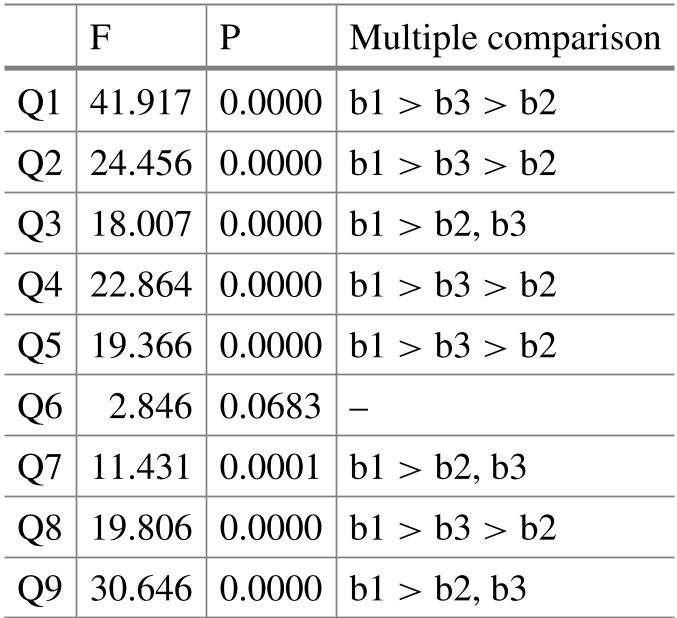 Table 1: Statistical significance (p-values) showing optimized communities (b1) consistently outperform random selections (b2, b3) across knowledge-related metrics.
Critical Analysis & Deep Insight
The brilliance of this paper lies in its Constraint Design. By adding constraints like "tweet density" and "average posts per day," the authors acknowledge a human reality: we don't just want more information; we want it at a digestible pace.
Limitations:
- Static vs. Dynamic: The knapsack problem here is static. In reality, Twitter is a moving target where user interests shift daily.
- The "Human" Element: The study found that while participants gained knowledge, they didn't necessarily feel "close" to the community (Q6 in Exp 2). Knowledge acquisition doesn't automatically equal social bonding.
Future Outlook
This work paves the way for "Smart Lists" on social platforms. Imagine an AI that doesn't just show you "People you may know," but offers to "Curate a 10-person expert panel for the 2026 World Cup" that fits your reading capacity. As Large Language Models (LLMs) evolve, replacing Word2vec with Embeddings from models like GPT-4 or Llama-3 could make this "Knowledge Volume" calculation even more precise.