
Optimal Consensus: Preventing Strategic Manipulation in Social Network GDM
10919_An Optimal Feedback Model to Prevent Manipulation Behavior in Consensus Under Social Network Group Decision Making.
This paper introduces an optimal feedback framework to counteract manipulation behaviors in Social Network Group Decision Making (SN-GDM). By utilizing Distributed Linguistic Trust Functions (DLTFs) and an optimization model, it achieves a stable consensus among experts while minimizing opinion adjustment costs.
TL;DR
In Group Decision Making (GDM), the path to consensus is often obstructed by "power plays." Experts may manipulate weights to dominate the outcome, or groups may "bully" outliers into changing their views at a high personal cost. This paper introduces an Optimal Feedback Model that uses mathematical optimization to determine the fairest weights and the smallest possible opinion changes required to reach a group consensus, effectively silencing the "manipulators" on both sides.
Problem & Motivation: The Hidden Cost of Agreement
Traditional GDM models assume experts are passive participants. In reality, experts are strategic actors. Two major bottlenecks exist:
- The Weight Problem (Individual Manipulation): Experts strive for higher "importance" (weights). If a model allows experts to influence how weights are assigned (e.g., pushing for "dictatorship" vs. "democracy"), they will choose the state that benefits them, often ballooning the total cost for the rest of the group.
- The Pressure Problem (Group Manipulation): When an expert disagrees, the group often forces a recommendation using a fixed "feedback parameter." This "group-think" mechanism can force individuals to abandon their independence unnecessarily when a much smaller adjustment would have sufficed to reach the threshold.
Methodology: The Architecture of Fairness
The authors build their framework on Social Network Analysis (SNA) and Distributed Linguistic Trust Functions (DLTFs), allowing for nuanced, word-based trust levels (e.g., "high trust," "medium trust").
1. Countering Individual Manipulation
The model uses Yager’s Regular Increasing Monotonic (RIM) quantifier to assign weights. By varying an attitude parameter (), the system can transition from a "Dictatorship" (power to the most trusted) to "Democracy" (equal power).
- The Insight: Instead of letting experts choose , the system selects the that results in the Minimum Group Adjustment Cost.
2. Countering Group Manipulation
When an expert's opinion is below the consensus threshold (), the model doesn't force them to adopt the group average. Instead, it solves an optimization problem:
- Objective: Minimize
- Constraint: The expert must just barely reach the threshold .
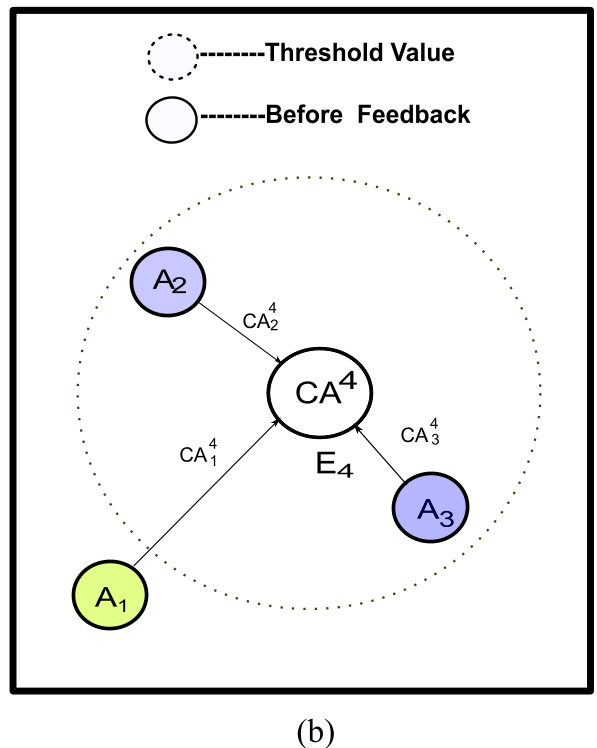 Fig 1. The three-level hierarchical consensus index used to identify inconsistent elements before the feedback loop.
Experiments & Results: Efficiency Through Precision
The paper validates the model through a travel destination selection case study involving four experts.
Performance Comparison
In the study, Expert 4 was identified as the outlier. Using a traditional feedback parameter (), the adjustment cost was high. However, by solving the proposed optimal feedback model, the system identified that a parameter of was sufficient to reach the consensus threshold of 0.8.
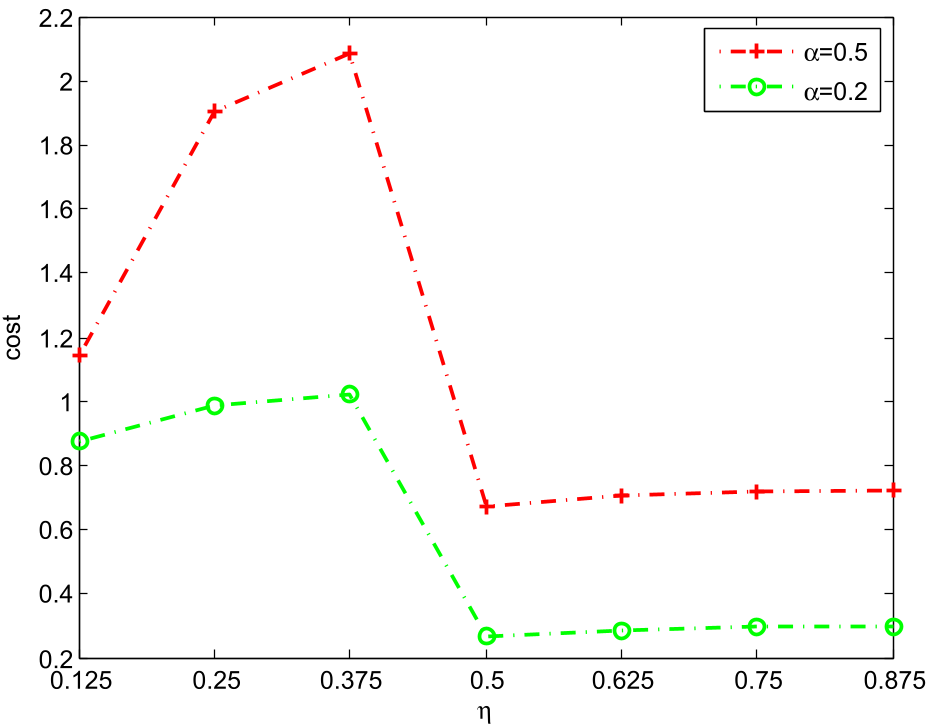 Fig 2. Cost Analysis: The blue line (Optimal ) consistently stays below the red line (Traditional fixed ), proving that finding the "equilibrium point" significantly reduces the burden on experts.
Key Result: At the optimal attitude parameter (), the total cost dropped from 0.672 (Traditional) to 0.269 (Optimal), effectively reducing the "cost of agreement" by over 60%.
Critical Analysis & Conclusion
Takeaway
The genius of this paper lies in its alignment of Group Aim (reaching consensus) with Individual Aim (maintaining independence). By making the consensus process "economically" optimal, it reduces friction and increases the likelihood that experts will actually follow the recommendations provided by the system.
Limitations & Future Work
- Scalability: The current model is tested on a small group (4 experts). While the authors suggest it can be applied to Large-Scale GDM (LSGDM), the computational complexity of solving optimization models for hundreds of participants needs further investigation.
- Trust Dynamics: The model assumes trust is static. In real-world social networks, trust evolves during the negotiation. Future iterations could incorporate Trust Propagation and dynamic relationship updates.
Final Thought: In an era of polarized social networks, this research provides a mathematical anchor for finding the "minimum viable compromise"—a vital tool for collaborative decision-making in everything from corporate boards to international policy.